Anti-acne activity of medicinal and herbal sources
Prem Jose Vazhacharickal
Kartoniert, Englisch
17,95 €
von Prem Jose Vazhacharickal, Jiby John Mathew, Sajeshkumar N. K und 1 weitere
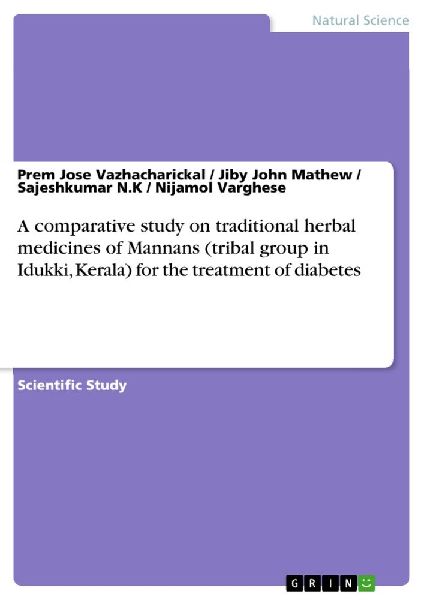
Scientific Study from the year 2016 in the subject Biology - Botany, Mar Augusthinose College, language: English, abstract: Diabetes is a complex metabolic disorder resulting from either insulin insufficiency or insulin dysfunction. Diabetes mellitus affects most of the people in both developed and developing countries. The treatment of diabetes with synthetic drugs is costly and chances of side effects are high.
Phytomedicine has been used since ancient times in various parts of the world where access to modern medicine is limited. Medicinal plants and phytoconstituents play an important role in the management of diabetes mellitus especially in developing countries where resources are meagre. Phytochemicals identified from medicinal plants present an exciting opportunity for the development of new types of therapeutics for diabetes mellitus.
Most prevalent among phytochemical groups are the alkaloids, glycosides, polysaccharides, and phenolics such as flavonoids, terpenoids and steroids. This study aims to provide a comparative information about various plants used for anti diabetes treatment in a trial community (Mann ans) and their constituents, which have been shown to display potent hypoglycemic activity.
The current study was focused on four plants named Tinospora cordifolia, Ensete superb um, Coccinia grandis wild and Apama siliquosa Lam. which is locally known as Amruthu, Kalluvazha, Kattukoval, and Alpam respectively. The plant parts such as seed, leaves, stem and bark were used by the local people.
The plant materials prepared as decoction, infusion, aqueous extracts in milk or honey were used for the treatment of diabetes. The plants that are being used by the local people of the study area have been isolated from plants for the treatment of diabetes. The efficacy of these ethnomedicinal plants needs to be subjected to pharmacological validation. it was found that Coccinia grandis was more efficient than the other plants.
Some antidiabetic plants may exert their action by stimulating the function or number of beta-cells and thus increasing insulin release. The study highlighted the central role of traditional herbal medicine for the treatment of diabetes in tribal community.
Ethnobotanical survey is most useful for scientists, research scholars and scientific companies for further studies on isolation and identification of active compounds that can be formulated into antidiabetic drugs.
Dr. Prem Jose Vazhacharickal is currently working as an assistant professor in the Department of Biotechnology, Mar Augusthinose College, Ramapuram, Kerala, India. He received the research training and academic guidance from Prof.
Dr. Andreas Buerkert, University of Kassel, Germany.
Standardversand: 1 bis 3 Werktage, 3,99 €, kostenlos ab 35 €
Liefergebiet: Deutschland
Rücksendung: 14 Tage Widerrufsrecht. Bei einem Widerruf tragen Sie die Kosten der Rücksendung. Bei einer Falschlieferung oder einem Fehler von uns erstatten wir Ihnen das Rückporto. Den Widerruf erklären Sie über den Knopf „Vertrag widerrufen“ im Fuß der Seite.
Prem Jose Vazhacharickal
Kartoniert, Englisch
17,95 €
Prem Jose Vazhacharickal
Kartoniert, Englisch
35,90 €
Prem Jose Vazhacharickal
Kartoniert, Englisch
17,95 €
Prem Jose Vazhacharickal
Kartoniert, Englisch
17,95 €
Zu diesem Titel gibt es noch keine Bewertung. Bewerten kann, wer ihn bei uns gekauft hat.