
Buch-OWLOnline-Buchhandel

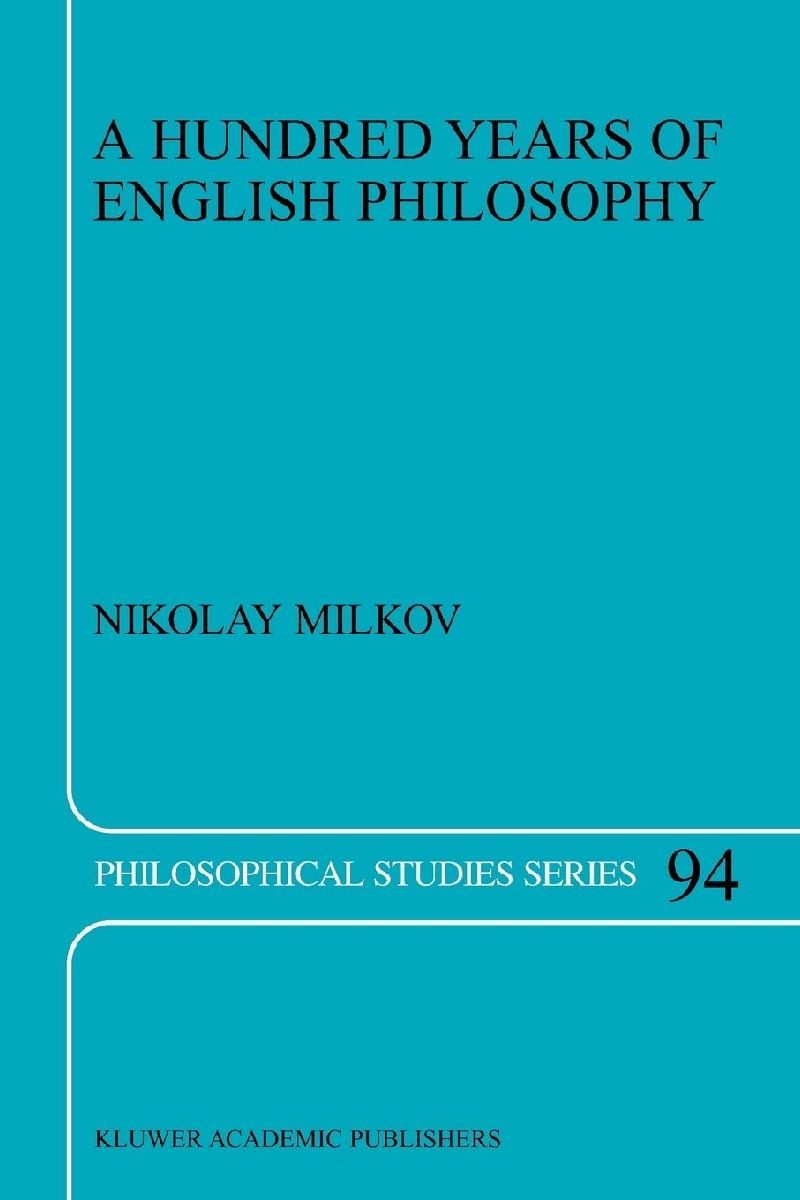
A Hundred Years of English Philosophy

von N. Milkov

Aus der Reihe Philosophical Studies Series

Einband
Kartoniert
Seiten
316
Sprache
Englisch
Erschienen
Oktober 2010
Verlag
Springer

Buchbeschreibung

This book is a historical investigation of the leading philosophical movement in England in the twentieth century.

In seven chapters, the intellectual development of the most prominent representatives of analytic philosophy-Moore, Russell and Wittgenstein in Cambridge, and Ryle, Austin, Strawson and Dummett in Oxford-is traced. The book does not aim, however, at delivering a story.

Ganze Beschreibung lesenWeniger anzeigen

This means, above all, that generalisations and conclusions are reduced to a minimum-an approach adopted in an endeavour to avert the danger of subjectivism that interpreting the philosophers under scrutiny would impose.

My hope is that by following this aproach, my inves­ tigation will stimulate readers to make their own generalisations and conclusions on the basis of the objectively presented data. Instead, my aim is to articulate a flawless, comprehensive description of the phil­ osophical texts of the seven most significant analytic philosophers in England in the twentieth century.

For this purpose, all their articles and books have been sifted through in order to pick out the most representative parts. For obvious reasons, only the chapters on Russell and Wittgenstein, and-to a lesser extent-the chapter on Moore, are more theoretical.

Inhaltsverzeichnis

  • Preface
  • Introduction
  • 1. Objectives and Authors
  • 2. Oxbridge Circles and Schools
  • I: Cambridge Analytical Philosophy
  • 1. G.E. Moore - The Project for a New Philosophy
  • 1. Moore's Development in the Ambience of Cambridge Esoteric Philosophy
  • 2. Examination of Moore's Method
Ganzes Inhaltsverzeichnis anzeigen (71 Einträge)Weniger anzeigen
  • 3. Basic Points of Moore's Philosophy
  • 4. Tractatus Logico-Ethicus
  • 5. Epistemology and Truth
  • 6. First Theses of 'Analytical Scholastics'.
  • 7. The Middle Moore
  • 8. The Later Moore
  • 9. Epilogue
  • Moore's Archimedean Point
  • 2: Bertrand Russell - The New Method as a Logic
  • 1. Russell Rejects Neo-Hegelianism
  • 2. The Turn of 1900 and Russell's Paradox
  • 4. Russell's Theory of Names
  • 5. The Historical Context of Russell's Theory of Descriptions
  • 6. Logic as the Organon of Philosophy
  • 7. Russell's Logic as Calculus Ratiocinator
  • 8. Epistemology and Ontology
  • 3: Ludwig Wittgenstein - Logical Meditations
  • 1. Wittgenstein's Method and System
  • 2. Logical Meditations
  • 3. Objects, States of Affairs, Propositions
  • 4. Implicit Metaphysics and Epistemology
  • 5. The Creative Turn
  • 6. The Dynamic Turn
  • 7. Was Wittgenstein a Philosopher of Language? II: Oxford Analytical Philosophy
  • 4: Gilbert Ryle - The Analytical Method Explained
  • 1. First Theses in Philosophy
  • 2. Pursuit of Philosophical Logic
  • 3. The Method of the Mind
  • 4. Ryle's Philosophical Psychology
  • 5. Conceptual Examination
  • 6. Ryle's Plato
  • 7. The Unrealised Project on Thinking
  • 5: J.L. Austin - Analytical Philosophy as a Strict Science
  • 1. Introduction
  • 2. The Pre-War Austin
  • 3. The Turn of 1946
  • 4. Radical Epistemology
  • 5. Linguistic Phenomenology
  • 6. Austin as a Philosopher
  • 7. Linguistic Phenomenology Applied
  • 8. Doing Things with Words
  • 9. `Philosophical Fun'.
  • 6: P.F. Strawson - The Justification Turn
  • 1. Forming Philosophical Institutions
  • 2. Strawson's 'Logical Neo-Traditionalism'.
  • 3. Influences
  • 4. The Problem of Individuals
  • 5. Reconstruction of Strawson's Scheme of Individuals
  • 6. Logical Subjects
  • 7. Subject and Predicate Again
  • 8. Strawson's `Dilemmas'.
  • 7: Michael Dummett - Revision of the Project
  • 1. Dummett's Approach
  • 2. Impacts
  • 3. Frege's Philosophy of Language
  • 4. Frege's Philosophy of Mathematics
  • 5. Basic Ideas
  • 6. Dummett's Philosophy of Language
  • 7. Theory of Meaning
  • 8. Dummett's Philosophy of Mathematics
  • Bibliography
  • Index of Names
  • Index of Concepts

Details

Erscheinungstermin
Oktober 2010
Kategorie
Fremdsprachige Bücher
Einband
Kartoniert
Seiten
316
Sprache
Englisch
Verlag
Springer
Reihe
Philosophical Studies Series
Format
24,0 × 16,0 cm
Dicke
1,8 cm
Gewicht
508 g
EAN / ISBN-13
9789048163458
Maßstabsgetreu: Deckel und Buchrücken neben einer Hand (18 cm).
Versand und Rückgabe

Standardversand: 1 bis 3 Werktage, 3,99 €, kostenlos ab 35 €

Liefergebiet: Deutschland

Rücksendung: 14 Tage Widerrufsrecht. Bei einem Widerruf tragen Sie die Kosten der Rücksendung. Bei einer Falschlieferung oder einem Fehler von uns erstatten wir Ihnen das Rückporto. Den Widerruf erklären Sie über den Knopf „Vertrag widerrufen“ im Fuß der Seite.

Hersteller und ProduktsicherheitSpringer Nature Customer Service Center GmbH
Springer Nature Customer Service Center GmbH
Europaplatz 3
69115 Heidelberg
Deutschland
ProductSafety@springernature.com

Mehr aus der Reihe Philosophical Studies Series

Ähnliche Titel

Bewertungen

Zu diesem Titel gibt es noch keine Bewertung. Bewerten kann, wer ihn bei uns gekauft hat.

So prüfen wir Bewertungen
Eine Bewertung kann bei uns nur abgeben, wer den Titel über sein Kundenkonto bei uns gekauft hat. Jede Bewertung ist fest mit der zugehörigen Bestellung verknüpft; anders kommt sie technisch gar nicht zustande. Deshalb trägt jede angezeigte Bewertung den Hinweis „Verifizierter Kauf". Wir zeigen positive wie negative Bewertungen und löschen nur bei Rechtsverstößen. Für Bewertungen gibt es keine Gegenleistung.
160,49 €Voraussichtlich 2. bis 4. Dez.

Inhalte ab 18

Cover von Titeln für Erwachsene, etwa erotische Romane, Manga oder Comics, bleiben unscharf, bis Sie bestätigen. Die Bestätigung gilt für alle Seiten und Tabs, bis Sie den Browser schließen.

Zurück zum Katalog