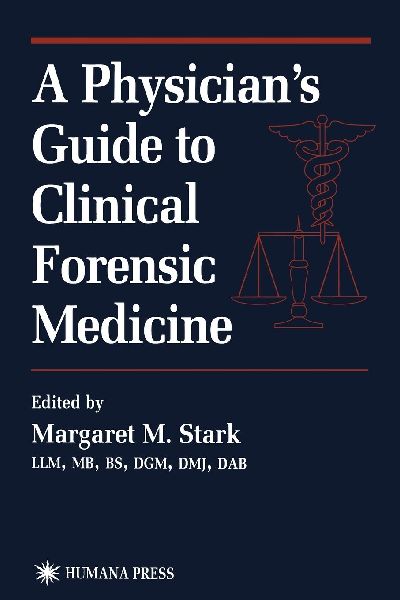
A Physician's Guide to Clinical Forensic Medicine
Herausgegeben von: Margaret M. Stark
Aus der Reihe Forensic Science and Medicine
- Einband
- Kartoniert
- Seiten
- 356
- Sprache
- Englisch
- Erschienen
- Dezember 2012
- Verlag
- Humana
Buchbeschreibung
Margaret Stark and a team of authoritative experts offer a timely survey of the fundamental principles and latest developments in clinical forensic medicine.
Topics range from sexual assault examination to injury interpretation, from nonaccidental injury in children, to crowd control agents.
Ganze Beschreibung lesenWeniger anzeigen
Also included are extensive discussions of the care of detainees, the management of substance abuse detainees in custody, the causes and prevention of deaths in custody, and the fundamentals of traffic medicine.
In the absence of international standards of training, the authors also address the basic issues of consent, confidentiality, note-keeping, court reporting, and attendance in court.
Comprehensive and authoritative, A Physicians Guide to Clinical Forensic Medicine offers forensic specialists and allied professionals a reliable, up-to-date guide to proven practices and procedures for a every variety of police inquiry requiring clinical forensic investigation.
Inhaltsverzeichnis
- 1: The History and Development of Clinical Forensic Medicine Worldwide
- 1. Introduction
- 2. Historical References
- 3. Contemporary Clinical Forensic Medicine
- 4. Clinical Forensic Medicine Around the World
- 5. Conclusions
- References
- 2: Fundamental Principles
Ganzes Inhaltsverzeichnis anzeigen (100 Einträge)Weniger anzeigen
- 1. Introduction
- 2. Consent
- 3. Confidentiality
- 4. Notekeeping
- 5. Access to Health Records
- 6. Preparation of Reports
- 7. Attendance at Court
- 8. The Duties of Expert Witnesses
- 9. Pitfalls
- References
- 3: Sexual Assault Examination
- 1. Introduction
- 2. Basic Principles of the Medical Examination
- 3. Basic Principles of the Forensic Analysis
- 4. Skin
- 5. Hair: Head and Pubic
- 6. Nails
- 7. Oral Cavity
- 8. Female Genitalia
- 9. Male Genitalia
- 10. Perianal Area and Anal Canal
- 11. Lubricants
- 12. Blood and Urine Analysis
- 13. Care of the Complainant
- References
- 4: Injury Interpretation
- 1. Introduction
- 2. Describing Injuries
- 23. Position of the Injury
- 3. Types of Injury
- 4. Firearm Injuries
- 5. Defense Injuries
- 6. Torture
- References
- 5: Nonaccidental Injury in Children
- I. Introduction
- 2. Nonaccidental Injury in Children
- 3. Types of Injuries
- 4. Summary
- References
- 6: Crowd Control Agents
- 1. Introduction
- 2. Clinical Features and Treatment
- 3. Conclusions
- References
- 7: Care of Detainees
- 1. Introduction
- 2. Administration of Medication
- 3. Conditions of Detention
- 4. Medical Problems
- 5. Mental Health
- 6. Personal Safety Issues
- 7. Drug Searches
- 8. Forensic Samples
- 9. Fitness to Be Interviewed
- 10. A Definition of Fit for Interview
- References
- 8: Substance Misuse
- 1. Introduction
- 2. General Principles
- 3. Specific Drugs
- 4. Alcohol
- References
- 9: Deaths in Custody
- 1. Introduction
- 2. Definition
- 3. Statistics
- 4. Investigation of Deaths in Custody
- 5. Deaths Related to the Phases of the Custodial Process
- 6. Causes of Death
- 7. Alcohol- and Drug-Related Deaths
- 8. Deliberate Injuries
- 9. Self--Inflicted Injuries
- 10. Excited Delerium
- 11. Rapid Unexplained Deaths During Restraint
- References
- 10: Traffic Medicine
- 1. Introduction
- 2. Medical Aspects of Fitness to Drive
- 3. Alcohol and Driving
- 4. Drugs and Driving
- References
- Appendices
- Preface
- 1. Ethical Documents
- 2. Guidance Notes on Statutory Provisions Governing Access to Health Records
- 3. Management of Head-Injured Detainees
- 4. Appropriate Adults
- 5. The Mini-Mental State Examination
- 6. Alcohol Assessment Questionnaires
- 7. Peak Effect, Half-Life, Duration of Action, and Times for Detection of Common Drugs
- 8. Drink/Drugs Driving Impairment Assessment Form
Details
- Erscheinungstermin
- Dezember 2012
- Kategorie
- Fremdsprachige Bücher
- Einband
- Kartoniert
- Seiten
- 356
- Sprache
- Englisch
- Verlag
- Humana
- Reihe
- Forensic Science and Medicine
- Format
- 22,9 × 15,2 cm
- Dicke
- 2,0 cm
- Gewicht
- 516 g
- EAN / ISBN-13
- 9781468496192
Versand und Rückgabe
Standardversand: 1 bis 3 Werktage, 3,99 €, kostenlos ab 35 €
Liefergebiet: Deutschland
Rücksendung: 14 Tage Widerrufsrecht. Bei einem Widerruf tragen Sie die Kosten der Rücksendung. Bei einer Falschlieferung oder einem Fehler von uns erstatten wir Ihnen das Rückporto. Den Widerruf erklären Sie über den Knopf „Vertrag widerrufen“ im Fuß der Seite.
Hersteller und ProduktsicherheitSpringer Nature Customer Service Center GmbH
Springer Nature Customer Service Center GmbH
Europaplatz 3
69115 Heidelberg
Deutschland
ProductSafety@springernature.com
Mehr aus der Reihe Forensic Science and Medicine

Buprenorphine Therapy of Opiate Addiction
Pascal Kintz (Hrsg.)
Kartoniert, Englisch, 2 Ausgaben
ab 117,69 €
Ähnliche Titel

Aids To Forensic Medicine And Toxicology (Part-I)
W. G. Aitchison Robertson
Kartoniert, Englisch
18,60 €
Bewertungen
Zu diesem Titel gibt es noch keine Bewertung. Bewerten kann, wer ihn bei uns gekauft hat.
So prüfen wir Bewertungen
Eine Bewertung kann bei uns nur abgeben, wer den Titel über sein Kundenkonto bei uns gekauft hat. Jede Bewertung ist fest mit der zugehörigen Bestellung verknüpft; anders kommt sie technisch gar nicht zustande. Deshalb trägt jede angezeigte Bewertung den Hinweis „Verifizierter Kauf". Wir zeigen positive wie negative Bewertungen und löschen nur bei Rechtsverstößen. Für Bewertungen gibt es keine Gegenleistung.
106,99 €Voraussichtlich 2. bis 4. Dez.