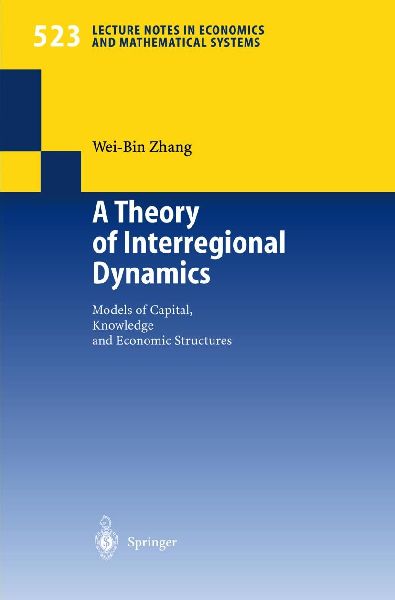
A Theory of Interregional Dynamics
Models of Capital, Knowledge and Economic Structures
von Wei-Bin Zhang
Aus der Reihe Lecture Notes in Economics and Mathematical Systems
- Einband
- Kartoniert
- Seiten
- 248
- Sprache
- Englisch
- Erschienen
- November 2002
- Verlag
- Springer
Buchbeschreibung
Over more than two centuries the development of economic theory has created a wide array of different theories, concepts and results.
Nevertheless, there is no general theory, which mrifies these varied theories into a comprehensive one. Economics has been split between partial and conflicting representations of the functioning of market economies.
Ganze Beschreibung lesenWeniger anzeigen
We have a collection of separate theories such as the Marxian economics, the Keynesian economics, the general equilibrium theory, and the neoclassical growth theory.
These diverse economic theories have co-existed but not in a structured relationship with each other. Economic students are trained to understand economic phenomena by severally incompatible theories one by one in the same course. Since the end of Second Wodd War many crises in economic theory have been announced.
The economist experienced the crisis of the general equilibrium economics, the crisis of the neoclassical growth economics, the crisis of the Keynesian economics, not to mention the crises of the Marxian economics. It is quite reasonable to expect the loss of confidence in theoretical economics even among professional economists after so many crises in a very short period of time.
But a crisis offers new opportmrities for change, either for better or for worse. The past crises in theoretical economics may be perceived as a historical opportmrity to construct a general economic theory by which the traditional theories are integrated into a higher whole.
Inhaltsverzeichnis
- 1 Introduction
- 2 Regional Growth with Productivity and Amenity Differentials
- 2.1 Regional Growth with Differences
- 2.2 Equal Propensities to Consume and to Hold Wealth
- 2.3 Changes in Region 1's Working Efficiency
- 2.4 Changes in Region 2's Amenity Level
- 2.5 On Regional Dynamics
- 3 Regional Growth with Endogenous Time Distribution
Ganzes Inhaltsverzeichnis anzeigen (64 Einträge)Weniger anzeigen
- 3.1 Growth with Regional Time Values
- 3.2 The Equilibrium Structure with Identical Propensities
- 3.3 The Working Efficiency and the Equilibrium Structure
- 3.4 The Regional Amenity and the Equilibrium Structure
- 3.5 Concluding Remarks
- Regional Sexual Division of Labor and Economic Growth
- 4.1 Regional Growth with Sexual Division of Labor
- 4.2 Equilibrium Structure of Regional Competition
- 4.3 Regional Amenity and the Equilibrium Structure
- 4.4 On Complex of Sexual Division of Labor and Consumption
- A Two-group Regional Growth Model
- 5.1 The Regional model with Multiple Groups
- 5.2 The Equilibrium Regional Structure
- 5.3 On Regional Dynamics with Multiple Groups
- 6 Urban and Rural Equilibrium Structures
- 6.1 The Economic Structure with Urban and Rural Areas
- 6.2 The Spatial Equilibrium Structure
- 6.3 City I's Amenity and the Economic Structure
- 6.4 On Spatial Economic Structure
- 7 Regional Economic Equilibrium with two Groups
- 7.1 The Agricultural Economy with two Groups
- 7.2 The Regional Economic Equilibrium Structure
- 7.3 The Farmers and the Economic Structure
- 7.4 The Amenity of Landlord Class and Economic Structure
- 7.5 On Classes and Regional Economic Structure
- 8 Regional Growth with Economic Structure
- 8.1 Regional Growth with Structural Change
- 8.2 The Regional Equilibrium Structure
- 8.3 The Regional Amenity and the Economic Structure
- 8.4 The Propensity to Hold Wealth and the Economic
- Structure
- 8.5 On Regional Growth and Structural Change
- 9 A Two-region Growth Model with Capital and Knowledge
- 9.1 Regional Growth with Endogenous Knowledge
- 9.2 Knowledge and the Equilibrium Structure
- 9.3 The Impact of Changes in some Parameters
- 9.4 On Knowledge and Regional Development
- 10 Regional Economic Structure with Endogenous Knowledge
- 10.1 The Dynamics of Regional Economic Structure
- 10.2 The Equilibria Structure and Stability
- 10.3 The Creativity and the Regional Economic Structure
- 10.4 Regional Dynamics with Knowledge
- 11 Regional Growth with Universities
- 11.1 The Regional Model with Universities
- 11.2 The Regional Equilibrium with Universities
- 11.3 The Education Policy and the Regional Structure
- 11.4 The Amenity Level and the Regional Structure
- 11.5 On Regional Dynamics with Universities
- 12 Regional Dynamics in an Isolated State
- 12.1 The General Model of the Isolated State
- 12.2 The Temporary Spatial Equilibrium
- 12.3 The Dynamics of Capital and Knowledge
- 12.4 The Population and the Spatial Structure
- 12.5 On Complexity of Economic Geography
- 13 Further Issues on Interregional Economics
- Name Index
Details
- Erscheinungstermin
- November 2002
- Kategorie
- Fremdsprachige Bücher
- Einband
- Kartoniert
- Seiten
- 248
- Sprache
- Englisch
- Verlag
- Springer
- Reihe
- Lecture Notes in Economics and Mathematical Systems
- Format
- 23,5 × 15,5 cm
- Dicke
- 1,4 cm
- Gewicht
- 382 g
- EAN / ISBN-13
- 9783540443063
Versand und Rückgabe
Standardversand: 1 bis 3 Werktage, 3,99 €, kostenlos ab 35 €
Liefergebiet: Deutschland
Rücksendung: 14 Tage Widerrufsrecht. Bei einem Widerruf tragen Sie die Kosten der Rücksendung. Bei einer Falschlieferung oder einem Fehler von uns erstatten wir Ihnen das Rückporto. Den Widerruf erklären Sie über den Knopf „Vertrag widerrufen“ im Fuß der Seite.
Hersteller und ProduktsicherheitSpringer Nature Customer Service Center GmbH
Springer Nature Customer Service Center GmbH
Europaplatz 3
69115 Heidelberg
Deutschland
ProductSafety@springernature.com
Mehr von Wei-Bin Zhang
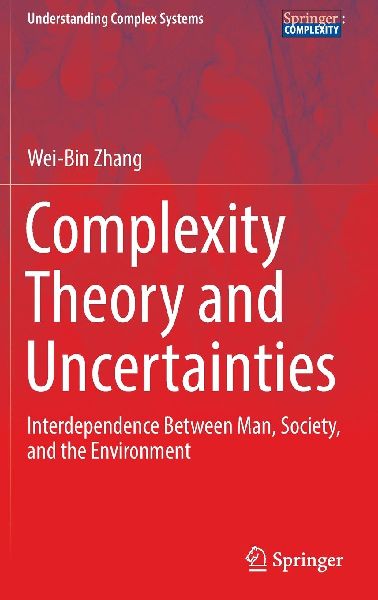
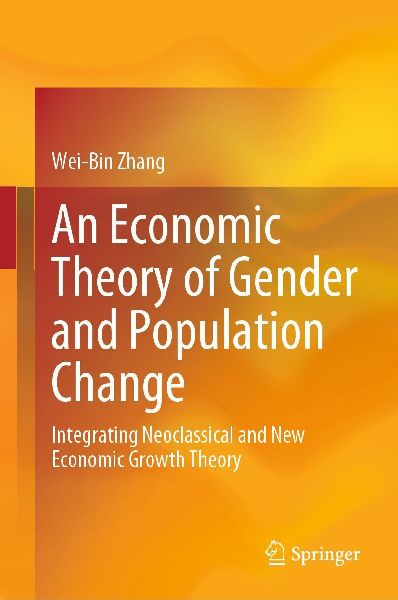
An Economic Theory of Gender and Population Change
Wei-Bin Zhang
Gebunden, Englisch, 2 Ausgaben
ab 139,09 €
Mehr aus der Reihe Lecture Notes in Economics and Mathematical Systems
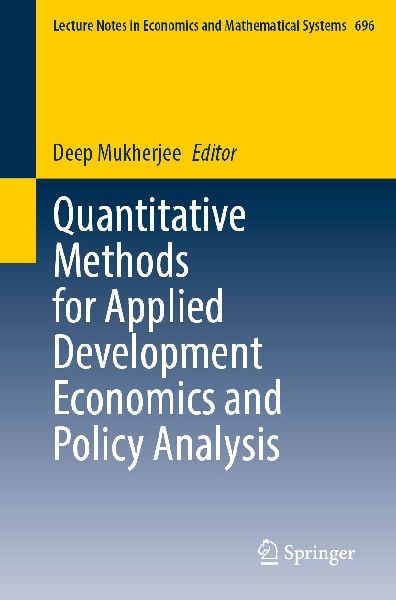
Quantitative Methods for Applied Development Economics and Policy Analysis
Deep Mukherjee (Hrsg.)
Kartoniert, Englisch
106,99 €


Advanced Mathematical Methods for Economic Efficiency Analysis
Pedro Macedo (Hrsg.)
Kartoniert, Englisch
128,39 €
Ähnliche Titel


Heterodox Approaches to Development in Central Asia
Kuat B. Akizhanov (Hrsg.)
Gebunden, Englisch
128,39 €
Bewertungen
Zu diesem Titel gibt es noch keine Bewertung. Bewerten kann, wer ihn bei uns gekauft hat.
So prüfen wir Bewertungen
Eine Bewertung kann bei uns nur abgeben, wer den Titel über sein Kundenkonto bei uns gekauft hat. Jede Bewertung ist fest mit der zugehörigen Bestellung verknüpft; anders kommt sie technisch gar nicht zustande. Deshalb trägt jede angezeigte Bewertung den Hinweis „Verifizierter Kauf". Wir zeigen positive wie negative Bewertungen und löschen nur bei Rechtsverstößen. Für Bewertungen gibt es keine Gegenleistung.
53,49 €Voraussichtlich 2. bis 4. Dez.