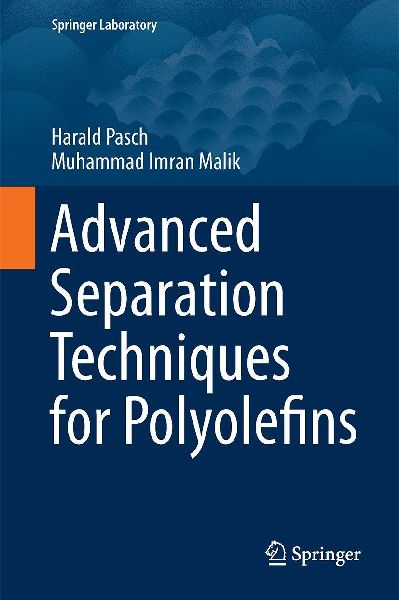
Advanced Separation Techniques for Polyolefins
von Harald Pasch und Muhammad Imran Malik
Aus der Reihe Springer Laboratory
- Einband
- Gebunden
- Seiten
- 192
- Sprache
- Englisch
- Erschienen
- September 2014
- Verlag
- Springer
Buchbeschreibung
This Springer Laboratory volume introduces the reader to advanced techniques for the separation and fractionation of polyolefins.
It includes detailed information on experimental protocols and procedures, addressing the experimental background of different polyolefin fractionation techniques in great detail. The book summarizes important applications in all major fractionation methods with emphasis on multidimensional analytical approaches.
Ganze Beschreibung lesenWeniger anzeigen
It comprises the most powerful modern techniques, such as high temperature size exclusion chromatography (HT-SEC) for molar mass analysis, temperature rising elution fractionation (TREF) and crystallization analysis fractionation (CRYSTAF) for the analysis of chemical composition and branching, high temperature two-dimensional liquid chromatography (HT-2D-LC), solvent and temperature gradient interaction chromatography (SGIC and TGIC) and crystallization elution fractionation (CEF).
Beginners as well as experiencedchromatographers will benefit from this concise introduction to a great variety in instrumentation, separation procedures and applications. With detailed descriptions of experimental approaches for the analysis of complex polyolefins, the readers are offered a toolbox to solve simple as well as sophisticated separation tasks.
The book starts with an introduction into the molecular complexity of polyolefins - the most widely used synthetic polymers with rapidly growing production capacities. It systematically discusses crystallization based fractionation techniques including TREF, CRYSTAF and CEF and column chromatographic techniques for molar mass, chemical composition and microstructure, as well as the combination of different fractionations in multidimensional experimental setups. This book also includes basic information on the application of high-temperature field-flow fractionation.
Inhaltsverzeichnis
- Part A Introduction
- Molecular Heterogeneity of Polyolefins
- Analytical Methods for Polyolefins
- Part B Crystallization-Based Fractionation Techniques
- Temperature Rising Elution Fractionation
- Crystallization Analysis Fractionation
- Crystallization Elution Fractionation
- Part C Column-Based Chromatographic Techniques
Ganzes Inhaltsverzeichnis anzeigen (17 Einträge)Weniger anzeigen
- Multidetector Size Exclusion Chromatography
- Solvent Gradient Interaction Chromatography
- Temperature Gradient Interaction Chromatography
- Two-Dimensional Liquid Chromatography
- Part D Field-Flow Fractionation
- Fundamentals
- Application of Field-Flow Fractionation of Polyolefins
- Analysis of Polyolefins by Asymmetric Flow FFF
- Conclusions and Future Trends
Details
- Erscheinungstermin
- September 2014
- Kategorie
- Fremdsprachige Bücher
- Einband
- Gebunden
- Seiten
- 192
- Sprache
- Englisch
- Verlag
- Springer
- Reihe
- Springer Laboratory
- Format
- 24,1 × 16,0 cm
- Dicke
- 1,7 cm
- Gewicht
- 407 g
- EAN / ISBN-13
- 9783319086316
Über Harald Pasch
Harald Pasch holds the SASOL Chair of Analytical Polymer Science at the Department of Chemistry and Polymer Science, University of Stellenbosch, South Africa.
Mehr über Harald PaschWeniger anzeigen
He has great experience in analytical polymer science and polymer separation and fractionation techniques. His research is focused on the development of multidimensional analytical techniques for complex polymers, in particular efficient multi-dimensional coupling of separation methods and hyphenation of separation methods through complementary analytical methodology. Harald Pasch is one of the series editors of the series Springer Laboratory: Manuals in Polymer Science. He has co-authored successful books introducing to HPLC and Multidimensional HPLC of Polymers as well as MALDI-TOF Mass Spectrometry, which were very positively received in the community (cf. DOI 10.1007/s00216-014-7632-z). This latest book by Pasch and Malik now focuses on "Advanced Separation Techniques for Polyolefins".Muhammad Imran Malik has a wide-ranging background in polymer science, including microwave-assisted synthetic strategies and a special focus on characterization and separation techniques for complex polymers. He has worked together with Harald Pasch as a postdoctoral fellow in developing multi-dimensional characterization techniques for polymers. He now holds a position as Assistant Professor at the H.E.J. Research Institute of Chemistry, International Center for Chemical and Biological Sciences (ICCBS) at the University of Karachi (Pakistan). His research focuses on Analytical Polymer Science.
Versand und Rückgabe
Standardversand: 1 bis 3 Werktage, 3,99 €, kostenlos ab 35 €
Liefergebiet: Deutschland
Rücksendung: 14 Tage Widerrufsrecht. Bei einem Widerruf tragen Sie die Kosten der Rücksendung. Bei einer Falschlieferung oder einem Fehler von uns erstatten wir Ihnen das Rückporto. Den Widerruf erklären Sie über den Knopf „Vertrag widerrufen“ im Fuß der Seite.
Hersteller und ProduktsicherheitSpringer Nature Customer Service Center GmbH
Springer Nature Customer Service Center GmbH
Europaplatz 3
69115 Heidelberg
Deutschland
ProductSafety@springernature.com
Mehr von Harald Pasch
Mehr aus der Reihe Springer Laboratory

Rheology Essentials of Cosmetic and Food Emulsions
Rüdiger Brummer
Kartoniert, Englisch, 2 Ausgaben
ab 85,59 €
Mechanical Properties of Polymers Measured through AFM Force-Distance Curves
Brunero Cappella
Gebunden, Englisch, 2 Ausgaben
ab 106,99 €
Ähnliche Titel
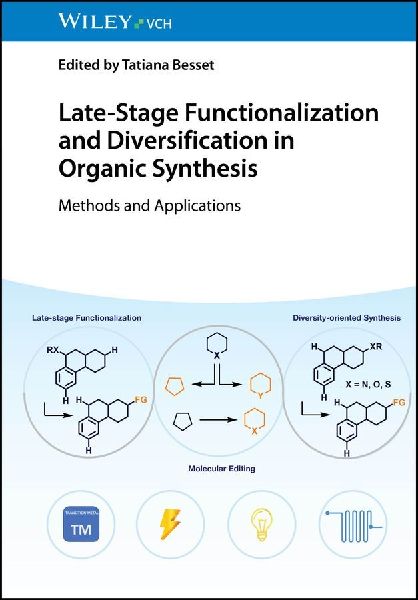
Late-Stage Functionalization and Diversification in Organic Synthesis
Tatiana Besset (Hrsg.)
Gebunden, Englisch
149,00 €
Bewertungen
Zu diesem Titel gibt es noch keine Bewertung. Bewerten kann, wer ihn bei uns gekauft hat.
So prüfen wir Bewertungen
Eine Bewertung kann bei uns nur abgeben, wer den Titel über sein Kundenkonto bei uns gekauft hat. Jede Bewertung ist fest mit der zugehörigen Bestellung verknüpft; anders kommt sie technisch gar nicht zustande. Deshalb trägt jede angezeigte Bewertung den Hinweis „Verifizierter Kauf". Wir zeigen positive wie negative Bewertungen und löschen nur bei Rechtsverstößen. Für Bewertungen gibt es keine Gegenleistung.
53,49 €Voraussichtlich 4. bis 8. Dez.