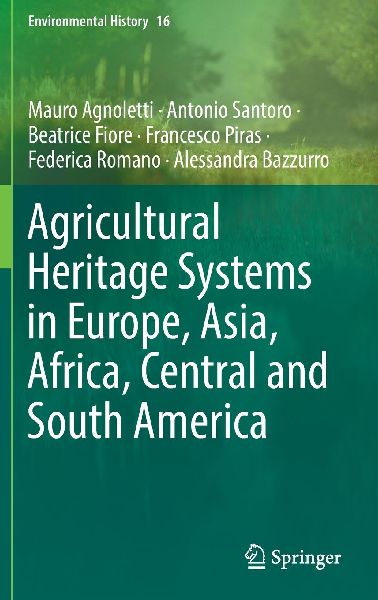
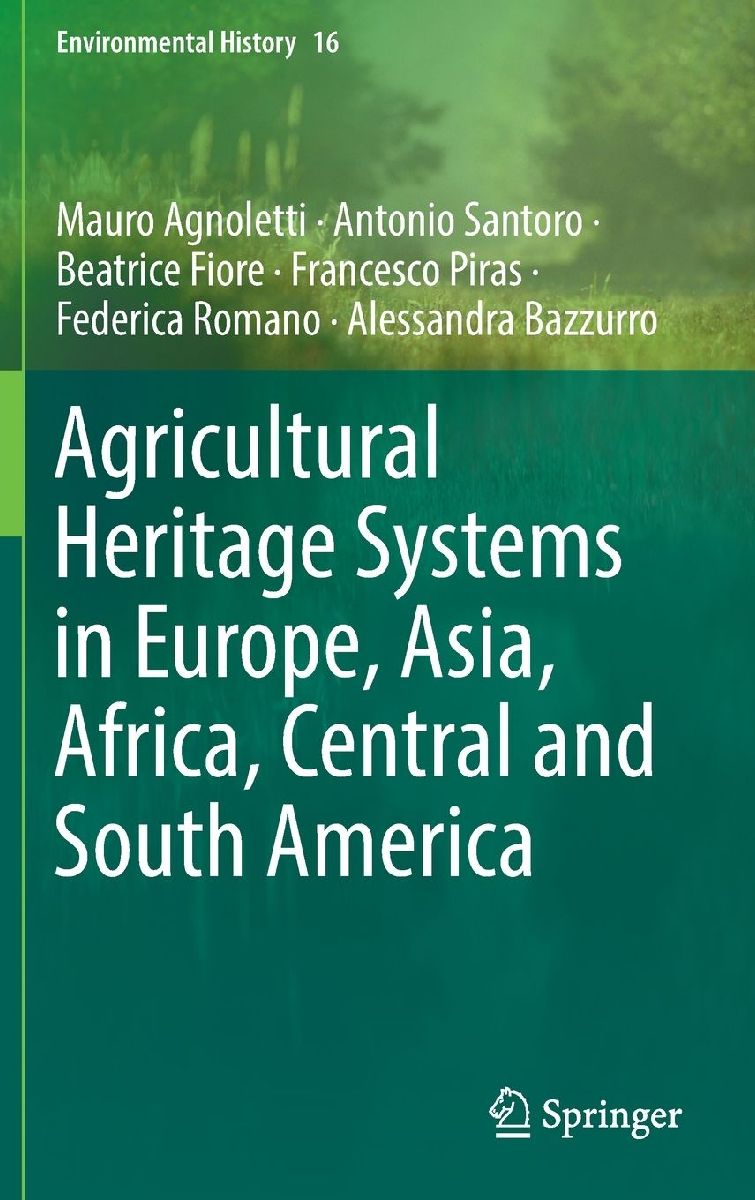
Agricultural Heritage Systems in Europe, Asia, Africa, Central and South America
von Mauro Agnoletti, Antonio Santoro, Beatrice Fiore und 3 weitere
Aus der Reihe Environmental History
- Einband
- Gebunden
- Seiten
- 384
- Sprache
- Englisch
- Erschienen
- November 2023
- Verlag
- Palgrave Macmillan
Buchbeschreibung
Agriculture is often considered as one of the main threats to ecosystems.
Unsustainable farming practices often result in habitat loss, inefficient use of water, soil degradation, pollution, genetic erosion, among other negative impacts on human life, including hunger, low food quality, reduced access to food resources, as well as the abandonment of rural areas.
Ganze Beschreibung lesenWeniger anzeigen
Nevertheless, when agriculture is practiced in a sustainable way, it can contribute to the preservation of many habitats, to the protection of watersheds, to the preservation and improvement of soil health.
The use of sustainable and ecological practices is the key feature distinguishing traditional agriculture from intensive one. It may not provide very high yields, but ensures sustainable harvests over time, thanks to time-tested technologies and traditional know-hows and also represent examples of adaptation to harsh environmental conditions.
Based on this approach, in 2002, FAO launched the concept of Globally Important Agricultural Heritage Systems (GIAHS) Programme, to identify and safeguard agricultural systems that are ensuring food and livelihood security, while maintaining magnificent landscapes, agricultural biodiversity, traditional knowledge, cultural and social values.
This book presents 18 examples of these traditional agriculture systems around the world, with a special focus on Europe, Asia, Africa, Central and South America, as a result of the "GIAHS Building Capacity" project co-funded by the Italian Agency for Development Cooperation (AICS) and carried out by the Department of Agriculture, Food, Environment and Forestry (DAGRI) of the University of Florence (Italy).
Inhaltsverzeichnis
- Introduction
- 1. The FAO Globally Important Agricultural Heritage Systems (GIAHS) programme
- 2. Potential GIAHS sites in Africa
- 2.1. The jessour system, Tunisia; Afef Zanzana
- 2.2. The Mountain Oases, Tunisia; Fadwa Benyahia
- 2.3 The Ketaba agroecology system, Senegal; Alioune Badara Fall
- 2.4 The cultural landscape of Konso, Ethiopia; Yenewa Dessie Alemu, Fethia Abdullahi Ahmed
- 2.5. The Marakwet traditional irrigation system, Kenya; Sheilla Jeruto Tallam
Ganzes Inhaltsverzeichnis anzeigen (29 Einträge)Weniger anzeigen
- 2.6. The agroforestry system in Sao Tome and Principe; Joana Rocha Dias
- 3. Potential GIAHS sites in Asia
- 3.1. The floating garden system of the Inle Lake, Myanmar; Moe Thae Oo, Zin Wai Aung
- 3.2. The traditional Naga agricultural system, Myanamr; Ti Chia
- 3.3. The lychee cultivation system in Haikou City, China; Xieli Bai
- 3.4. The ancient terraced agricultural system in Shouf, Lebanon; Marwa Abou Assi
- 3.5. Cultivation of Mohammadi flower and rosewater production system in Barzok, Iran; Mohammad Amin Emadi
- 4. Potential GIAHS sites in Europe
- 4.1. The rainfed mulching agriculture in the volcanic island of Lanzarote, Spain; Marta Arnés
- 4.2. The traditional alpine agriculture in Valtellina and Valposchiavo, Italy-Switzerland; Michelangelo Ferri
- 4.3. The terraced vineyards of Lamole in Chianti, Italy; Francesco Piras
- 4.4. The traditional agricultural system of the hills of Vertop, Albania; Florjan Boduri
- 5. Potential GIAHS sites in Central and South America
- 5.1. The traditional agricultural system in the Sierra del Rosario, Cuba; Alejandro Gonzalez
- 5.2. The sustainable agricultural system of the Sierra Maestra, Cuba; Yenia Molina Pelegrín
- 5.3. The traditional agricultural system of tobacco in Viñales, Cuba; Liane Bárbara Portuondo Farías
- 5.4. The Sabana de Morro agroforestry system in Dolores, El Salvador; Ever Alexis Martínez Aguilar
- 5.5. The "Chakra" agroforestry system of the Kichwa communities, Ecuador; Erika Zárate
- 5.6. The "Chagras" agroforestry system in the Amazon, Colombia; María Alejandra Hernández Marentes
- 5.7. The vertical productive system in the Charazani Valley, Bolivia; Fabiana Navia
- Conclusions
Details
- Erscheinungstermin
- November 2023
- Kategorie
- Fremdsprachige Bücher
- Einband
- Gebunden
- Seiten
- 384
- Sprache
- Englisch
- Verlag
- Palgrave Macmillan
- Reihe
- Environmental History
- Format
- 24,1 × 16,0 cm
- Dicke
- 2,7 cm
- Gewicht
- 689 g
- EAN / ISBN-13
- 9783031448805
Versand und Rückgabe
Standardversand: 1 bis 3 Werktage, 3,99 €, kostenlos ab 35 €
Liefergebiet: Deutschland
Rücksendung: 14 Tage Widerrufsrecht. Bei einem Widerruf tragen Sie die Kosten der Rücksendung. Bei einer Falschlieferung oder einem Fehler von uns erstatten wir Ihnen das Rückporto. Den Widerruf erklären Sie über den Knopf „Vertrag widerrufen“ im Fuß der Seite.
Hersteller und ProduktsicherheitSpringer Nature Customer Service Center GmbH
Springer Nature Customer Service Center GmbH
Europaplatz 3
69115 Heidelberg
Deutschland
ProductSafety@springernature.com
Mehr von Mauro Agnoletti


Cultivating Continuity of the European Landscape
Mauro Agnoletti (Hrsg.)
Gebunden, Englisch, 2 Ausgaben
ab 246,09 €
Mehr aus der Reihe Environmental History
Environmental Histories of the Dinaric Karst
Borna Fuerst-Bjeli¿ (Hrsg.)
Kartoniert, Englisch, 2 Ausgaben
ab 117,69 €

The Timber Economy in the Baltic Sea (1600-1939)
Luciano Segreto
Gebunden, Englisch, 2 Ausgaben
ab 139,09 €
Cultivating Continuity of the European Landscape
Mauro Agnoletti (Hrsg.)
Gebunden, Englisch, 2 Ausgaben
ab 246,09 €
Ähnliche Titel
Urban Wetlands in Latin America
Carolina Rojas Quezada (Hrsg.)
Kartoniert, Englisch, 2 Ausgaben
ab 246,09 €
Climate-Smart Technologies for Sustainable Agricultural Production
Dillip Kumar Swain (Hrsg.)
Gebunden, Englisch
213,99 €

Wildlife Conservation and Agriculture Development in Africa
Edward Debrah Wiafe
Gebunden, Englisch
213,99 €
Bewertungen
Zu diesem Titel gibt es noch keine Bewertung. Bewerten kann, wer ihn bei uns gekauft hat.
So prüfen wir Bewertungen
Eine Bewertung kann bei uns nur abgeben, wer den Titel über sein Kundenkonto bei uns gekauft hat. Jede Bewertung ist fest mit der zugehörigen Bestellung verknüpft; anders kommt sie technisch gar nicht zustande. Deshalb trägt jede angezeigte Bewertung den Hinweis „Verifizierter Kauf". Wir zeigen positive wie negative Bewertungen und löschen nur bei Rechtsverstößen. Für Bewertungen gibt es keine Gegenleistung.
117,69 €Voraussichtlich 7. bis 9. Dez.