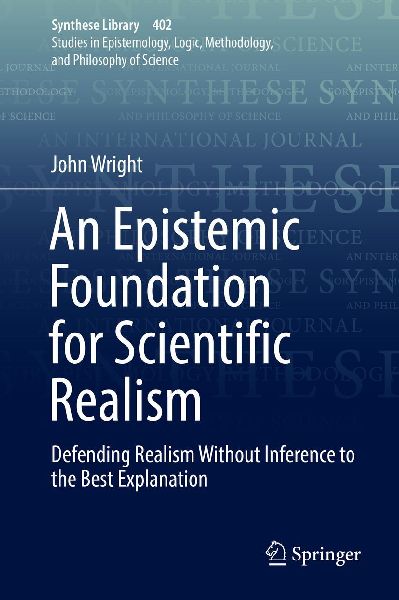
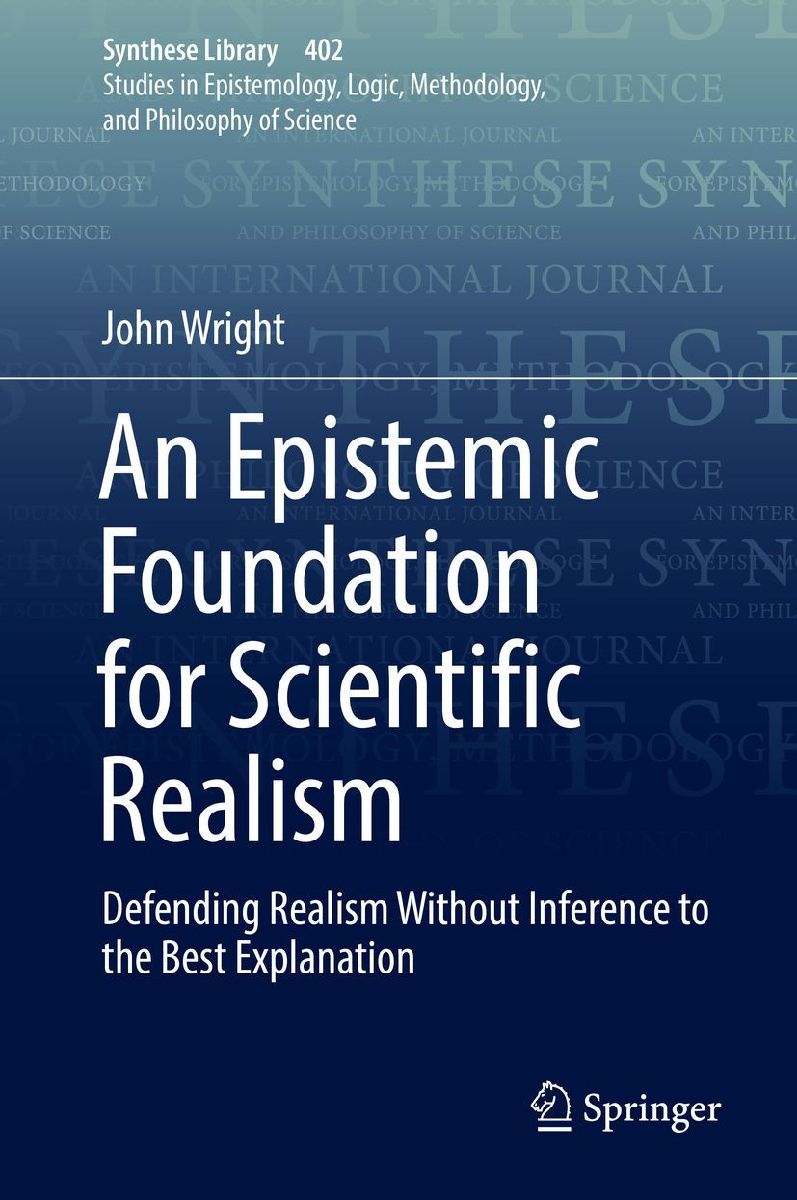
An Epistemic Foundation for Scientific Realism
Defending Realism Without Inference to the Best Explanation
von John Wright
Aus der Reihe Synthese Library
- Einband
- Gebunden
- Seiten
- 228
- Sprache
- Englisch
- Erschienen
- November 2018
- Verlag
- Springer
Buchbeschreibung
This monograph develops a new way of justifying the claims made by science about phenomenon not directly observable by humans, such as atoms and black holes.
It details a way of making inferences to the existence and properties of unobservable entities and states of affairs that can be given a probabilistic justification. The inferences used to establish realist claims are not a form of, and neither do they rely on, inference to the best explanation.
Ganze Beschreibung lesenWeniger anzeigen
Scientific Realism maintains that scientific theories and hypotheses refer to real entities, forces, and relations, even if one cannot examine them.
But, there are those who doubt these claims. The author develops a novel way of defending Scientific Realism against a range of influential attacks. He argues that in some cases, at least, we can make probabilistically justifiable inferences from observed data to claims about unobservable, theoretical entities.
He shows how this enables us to place some scientific realist claims on a firmer epistemological footing than has previously been the case. This also makes it possible to give a unified set of replies to the most common objections to Scientific Realism. The final chapters apply the developed conceptual apparatus to key cases from the history of science and from recent science.
One example concerns realism with respect to atoms. Another looks at inferences from recent astronomical data to conclusions about the size and shape of those parts of the universe lying beyond that which we can observe.
Inhaltsverzeichnis
- Chapter 1. Introduction: Realism and Reason
- Chapter 2. The Skeptical Arguments Against Realism- 1: Inductive Skepticism
- Chapter 3. The Skeptical Arguments - 2: The Pessimistic Meta-Induction
- Chapter 4. Realism and Inference to the Best Explanation
- Chapter 5. On the Inference to Unobservables
- Chapter 6. Underdetermination and Theory Preference
- Chapter 7. Eddington Inferences in Science - 1: Atoms and Molecules
- Chapter 8. Eddington Inferences in Science - 2: The Size and Shape of the Universe
- Bibliography
Details
- Erscheinungstermin
- November 2018
- Kategorie
- Fremdsprachige Bücher
- Einband
- Gebunden
- Seiten
- 228
- Sprache
- Englisch
- Verlag
- Springer
- Reihe
- Synthese Library
- Format
- 24,1 × 16,0 cm
- Dicke
- 1,8 cm
- Gewicht
- 460 g
- EAN / ISBN-13
- 9783030022174
Über John Wright
John Wright is Senior Lecturer in Philosophy at the University of Newcastle, Australia. He has published books in philosophy of science, metaphysics and ethics and economics as well as numerous articles in peer-reviewed journals.
Versand und Rückgabe
Standardversand: 1 bis 3 Werktage, 3,99 €, kostenlos ab 35 €
Liefergebiet: Deutschland
Rücksendung: 14 Tage Widerrufsrecht. Bei einem Widerruf tragen Sie die Kosten der Rücksendung. Bei einer Falschlieferung oder einem Fehler von uns erstatten wir Ihnen das Rückporto. Den Widerruf erklären Sie über den Knopf „Vertrag widerrufen“ im Fuß der Seite.
Hersteller und ProduktsicherheitSpringer Nature Customer Service Center GmbH
Springer Nature Customer Service Center GmbH
Europaplatz 3
69115 Heidelberg
Deutschland
ProductSafety@springernature.com
Mehr von John Wright


Mushrooms for the Million - Growing, Cultivating & Harvesting Mushrooms
John Wright
Kartoniert, Englisch, 2 Ausgaben
ab 31,00 €


Mehr aus der Reihe Synthese Library
Reals by Abstraction. An Inquiry about Epistemic Economy in Mathematics: Volume II
Marco Panza
Gebunden, Englisch
128,39 €
Proofs and Research Programmes: Lakatos at 100
Roman Frigg (Hrsg.)
Kartoniert, Englisch, 2 Ausgaben
ab 42,79 €

Bewertungen
Zu diesem Titel gibt es noch keine Bewertung. Bewerten kann, wer ihn bei uns gekauft hat.
So prüfen wir Bewertungen
Eine Bewertung kann bei uns nur abgeben, wer den Titel über sein Kundenkonto bei uns gekauft hat. Jede Bewertung ist fest mit der zugehörigen Bestellung verknüpft; anders kommt sie technisch gar nicht zustande. Deshalb trägt jede angezeigte Bewertung den Hinweis „Verifizierter Kauf". Wir zeigen positive wie negative Bewertungen und löschen nur bei Rechtsverstößen. Für Bewertungen gibt es keine Gegenleistung.
96,29 €Voraussichtlich 4. bis 8. Dez.