Buch-OWLOnline-Buchhandel

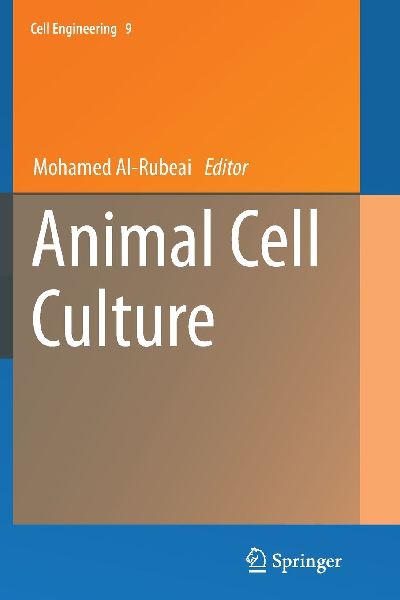
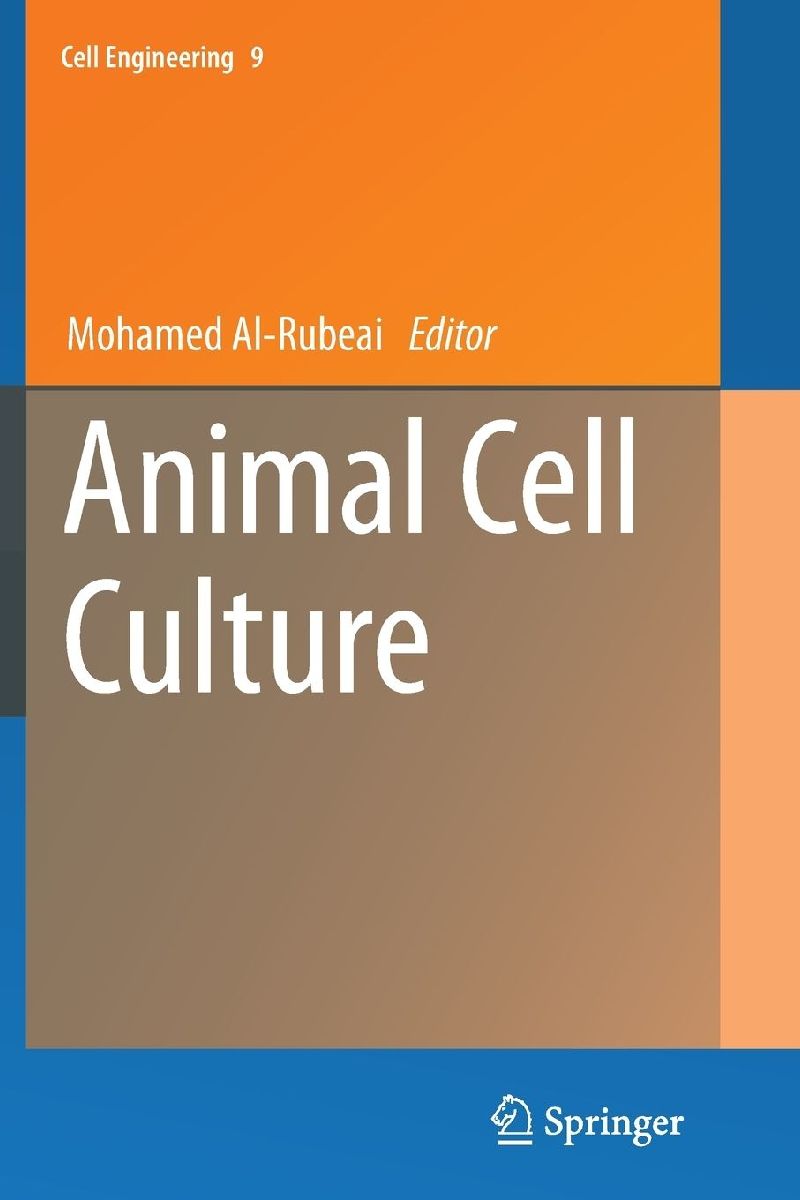
Animal Cell Culture

von Mohamed Al-Rubeai (Hrsg.)

Herausgegeben von: Mohamed Al-Rubeai

Aus der Reihe Cell Engineering

Einband
Kartoniert
Seiten
776
Sprache
Englisch
Erschienen
August 2016
Verlag
Springer

Buchbeschreibung

Animal cells are the preferred "cell factories" for the production of complex molecules and antibodies for use as prophylactics, therapeutics or diagnostics.

Animal cells are required for the correct post-translational processing (including glycosylation) of biopharmaceutical protein products. They are used for the production of viral vectors for gene therapy. Major targets for this therapy include cancer, HIV, arthritis, cardiovascular and CNS diseases and cystic fibrosis.

Ganze Beschreibung lesenWeniger anzeigen

Animal cells are used as in vitro substrates in pharmacological and toxicological studies.

This book is designed to serve as a comprehensive review of animal cell culture, covering the current status of both research and applications. For the student or R&D scientist or new researcher the protocols are central to the performance of cell culture work, yet a broad understanding is essential for translation of laboratory findings into the industrial production.

Within the broad scope of the book, each topic is reviewed authoritatively by experts in the field to produce state-of-the-art collection of current research. A major reference volume on cell culture research and how it impacts on production of biopharmaceutical proteins worldwide, the book is essential reading for everyone working in cell culture and is a recommended volume for all biotechnology libraries.

Inhaltsverzeichnis

  • Preface
  • Chapter 1: Cell line development
  • Hansjoerg Hauser
  • Chapter 2: Transient recombinant protein expression in mammalian cells
  • Volker Jäger, Konrad Büssow, Thomas Schirrmann
  • Chapter 3: Hybridoma technology for the in vitro production of therapeutic antibodies
  • Susan McDonnell
  • Chapter 4: Bioreactors for mammalian cells R. Pörtner
Ganzes Inhaltsverzeichnis anzeigen (42 Einträge)Weniger anzeigen
  • Chapter 5: Mass Transfer and Mixing Across the Scales in Animal Cell Culture
  • Alvin W Nienow
  • Chapter 6: Hydrodynamic Damage to Animal Cells
  • Jeffrey J Chalmers and Ningning Ma
  • Chapter 7: Monitoring of cell culture
  • Sebastian Schwamb, Robert Puskeiler, Philipp Wiedemann
  • Chapter 8: Serum and protein free media Michael Butler
  • Chapter 9: Glycosylation in Cell Culture
  • Maureen Spearman and Michael Butler
  • Chapter 10: Modelling of mammalian cell cultures Nishikant P. Shirsat, Niall J. English, Brian Glennon and Mohamed Al-Rubeai
  • Chapter 11: Mammalian Cell Line Selection Strategies for High-Producers
  • Darrin Kuystermans and Mohamed Al-Rubeai
  • Chapter 12: Building a Cell Culture Process with Stable Foundations: Searching for Certainty in an Uncertain World
  • Peter M O¿Callaghan and Andrew J Racher
  • Chapter 13: Perfusion Processes
  • Veronique Chotteau
  • Chapter 14 : Single-use bioreactors for animal and human cells
  • Stephan C. Kaiser, Matthias Kraume, Dieter Eibl, and Regine Eibl
  • Chapter 15 : An Overview of Cell Culture Engineering for the Insect Cell-Baculovirus Expression Vector System (BEVS)Laura A. Palomares, Mauricio Realpe and Octavio T. Ramirez
  • Chapter 16 : Metabolic flux analysis: a powerful tool in animal cell culture
  • João V. Sá, Tiago M. Duarte, Manuel J. T. Carrondo, Paula M. Alves, Ana P. Teixeira
  • Chapter 17 : Cell immobilization for the production of viral vaccines
  • Ana Carina Silva, António Roldão, Ana Teixeira, Paulo Fernandes, Marcos F.Q. Sousa, Paula M. Alves
  • Chapter 18 : Cell Engineering for Therapeutic Protein Production
  • Eric Baek, Che Lin Kim, Jin Hyoung Park, and Gyun Min Lee
  • Chapter 19 : Proteomics in Cell Culture: From genomics to combined `omics for cell line engineering and bioprocess development
  • Kelley Heffner, Christian Kaas, Amit Kumar, Deniz Baycin-Hizal, Michael Betenbaugh
  • Chapter 20 : Metabolomics in animal cell culture
  • Miroslava ¿uperlovi¿-Culf
  • Chapter 21 : Process Analytical Technology and Quality-by-Design for Animal Cell Culture Stephen Craven and Jessica Whelan
  • Chapter 22 : Biosafety recommendations on the handling of animal cell cultures Philippe Herman and Katia Pauwels
  • Chapter 23 : Biopharmaceutical products from animal cell culture
  • Darrin Kuystermans and Mohamed Al-Rubeai
  • Index

Details

Erscheinungstermin
August 2016
Kategorie
Fremdsprachige Bücher
Einband
Kartoniert
Seiten
776
Sprache
Englisch
Verlag
Springer
Reihe
Cell Engineering
Format
23,5 × 15,5 cm
Dicke
4,2 cm
Gewicht
1.153 g
EAN / ISBN-13
9783319354521
Maßstabsgetreu: Deckel und Buchrücken neben einer Hand (18 cm).
Versand und Rückgabe

Standardversand: 1 bis 3 Werktage, 3,99 €, kostenlos ab 35 €

Liefergebiet: Deutschland

Rücksendung: 14 Tage Widerrufsrecht. Bei einem Widerruf tragen Sie die Kosten der Rücksendung. Bei einer Falschlieferung oder einem Fehler von uns erstatten wir Ihnen das Rückporto. Den Widerruf erklären Sie über den Knopf „Vertrag widerrufen“ im Fuß der Seite.

Hersteller und ProduktsicherheitSpringer Nature Customer Service Center GmbH
Springer Nature Customer Service Center GmbH
Europaplatz 3
69115 Heidelberg
Deutschland
ProductSafety@springernature.com

Mehr von Mohamed Al-Rubeai

Mehr aus der Reihe Cell Engineering

Ähnliche Titel

Bewertungen

Zu diesem Titel gibt es noch keine Bewertung. Bewerten kann, wer ihn bei uns gekauft hat.

So prüfen wir Bewertungen
Eine Bewertung kann bei uns nur abgeben, wer den Titel über sein Kundenkonto bei uns gekauft hat. Jede Bewertung ist fest mit der zugehörigen Bestellung verknüpft; anders kommt sie technisch gar nicht zustande. Deshalb trägt jede angezeigte Bewertung den Hinweis „Verifizierter Kauf". Wir zeigen positive wie negative Bewertungen und löschen nur bei Rechtsverstößen. Für Bewertungen gibt es keine Gegenleistung.
213,99 €Voraussichtlich 1. bis 3. Dez.

Inhalte ab 18

Cover von Titeln für Erwachsene, etwa erotische Romane, Manga oder Comics, bleiben unscharf, bis Sie bestätigen. Die Bestätigung gilt für alle Seiten und Tabs, bis Sie den Browser schließen.

Zurück zum Katalog