Excerpta Ex Aristotelis Organo, De Simplicibus Terminis, De Propositione, Et De Syllogismo (1802)
Aristotle
Kartoniert, Latein
32,50 €
von Aristotle und Silvestro Mauro
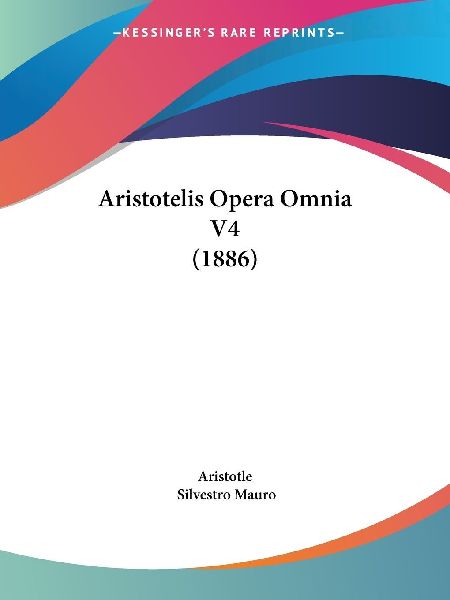
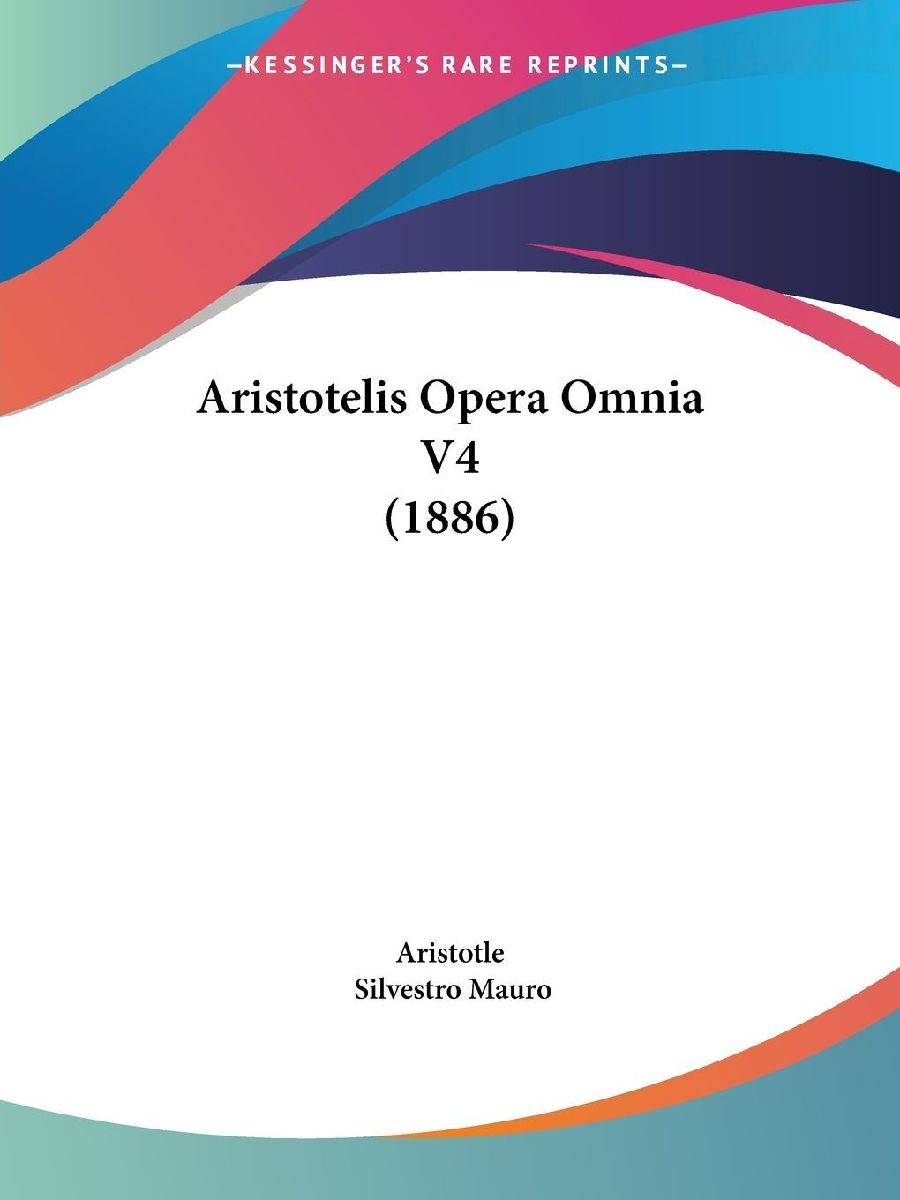
Aristotelis Opera Omnia V4 (1886) est volumen quartum ex serie operum collectorum Aristotelis.
In hoc volumine continentur opera Aristotelis quae ad scientiam naturalem pertinent, inter quae sunt Physica, De Caelo, De Generatione et Corruptione, De Anima, Metaphysica, et alia. Haec opera Aristotelis sunt considerata maxime influentia in historia philosophiae occidentalis et adhuc usque hodie studiis philosophicis sunt utiles.
Editio huius voluminis facta est a Immanuelis Bekkeri, qui adhibuit textum graecum et commentarios.
This Book Is In Latin. This scarce antiquarian book is a facsimile reprint of the old original and may contain some imperfections such as library marks and notations. Because we believe this work is culturally important, we have made it available as part of our commitment for protecting, preserving, and promoting the world's literature in affordable, high quality, modern editions, that are true to their original work.
Aristotle (Greek: ¿¿¿¿¿¿¿¿¿¿¿ Aristotél¿s, pronounced [aristotél¿¿s]; 384-322 BC)[A] was a Greek philosopher and polymath during the Classical period in Ancient Greece.
Taught by Plato, he was the founder of the Lyceum, the Peripatetic school of philosophy, and the Aristotelian tradition. His writings cover many subjects. including physics, biology, zoology, metaphysics, logic, ethics, estheticspoetry, theatre, music, rhetoric, psychology, linguistics, economics, politics, and government. Aristotle provided a complex synthesis of the various philosophies existing prior to him. It was above all from his teachings that the West inherited its intellectual lexicon, as well as problems and methods of inquiry. As a result, his philosophy has exerted a unique influence on almost every form of knowledge in the West and it continues to be a subject of contemporary philosophical discussion.
Little is known about his life. Aristotle was born in the city of Stagira in Northern Greece. His father, Nicomachus, died when Aristotle was a child, and he was brought up by a guardian. At seventeen or eighteen years of age he joined Plato's Academy in Athens and remained there until the age of thirty-seven (c. 347 BC).[4] Shortly after Plato died, Aristotle left Athens and, at the request of Philip II of Macedon, tutored Alexander the Great beginning in 343 BC.[5] He established a library in the Lyceum which helped him to produce many of his hundreds of books on papyrus scrolls. Though Aristotle wrote many elegant treatises and dialogues for publication, only around a third of his original output has survived, none of it intended for publication.[6]Aristotle's views on physical science profoundly shaped medieval scholarship. Their influence extended from Late Antiquity and the Early Middle Ages into the Renaissance, and were not replaced systematically until the Enlightenment and theories such as classical mechanics. Some of Aristotle's zoological observations found in his biology, such as on the hectocotyl (reproductive) arm of the octopus, were disbelieved until the 19th century. His works contain the earliest known formal study of logic, studied by medieval scholars such as Peter Abelard and John Buridan. Aristotle's influence on logic also continued well into the 19th century.
He influenced Islamic thought during the Middle Ages, as well as Christian theology, especially the Neoplatonism of the Early Church and the scholastic tradition of the Catholic Church. Aristotle was revered among medieval Muslim scholars as "The First Teacher" and among medieval Christians like Thomas Aquinas as simply "The Philosopher". His ethics, though always influential, gained renewed interest with the modern advent of virtue ethics, such as in the thinking of Alasdair MacIntyre and Philippa Foot.
Standardversand: 1 bis 3 Werktage, 3,99 €, kostenlos ab 35 €
Liefergebiet: Deutschland
Rücksendung: 14 Tage Widerrufsrecht. Bei einem Widerruf tragen Sie die Kosten der Rücksendung. Bei einer Falschlieferung oder einem Fehler von uns erstatten wir Ihnen das Rückporto. Den Widerruf erklären Sie über den Knopf „Vertrag widerrufen“ im Fuß der Seite.
Aristotle
Kartoniert, Latein
32,50 €
Sebastiano Basso
Kartoniert, Latein
53,90 €
Julius Theodorus Zenker
Kartoniert, Latein
25,20 €
Zu diesem Titel gibt es noch keine Bewertung. Bewerten kann, wer ihn bei uns gekauft hat.