Aristotle's Theory of Knowledge
von Thomas Kiefer
- Einband
- Gebunden
- Seiten
- 248
- Sprache
- Englisch
- Erschienen
- Juni 2007
- Verlag
- Bloomsbury 3PL
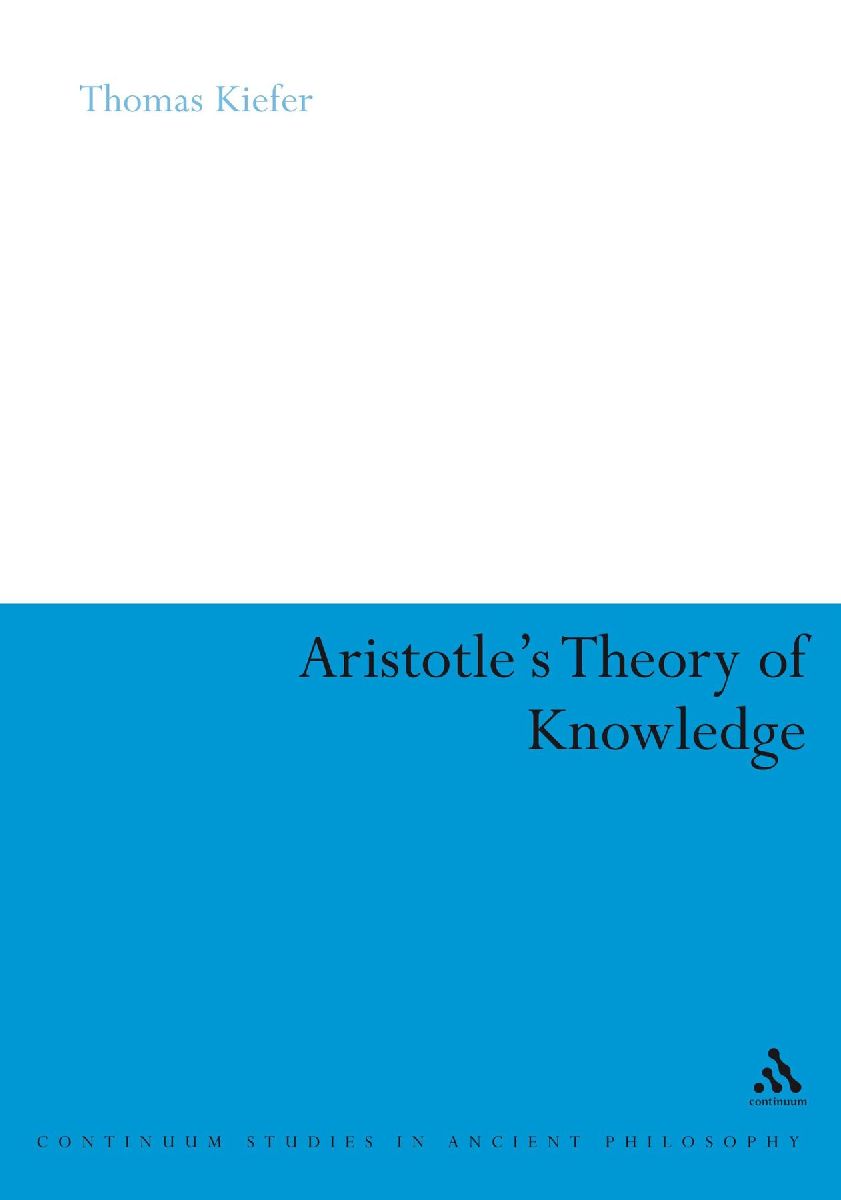
Buchbeschreibung
Nominated for the 2009 American Philosophical Association Book Prize.
The work of Aristotle (384-322 bc) is considered to be one of the great achievements of the ancient world, and is a foundation of both Western and Middle Eastern philosophy and science. Although Aristotle left significant material on almost all branches of learning, what has survived is a somewhat disorganized collection of notes and lectures.
Ganze Beschreibung lesenWeniger anzeigen
Moreover, the centuries of interpretation across various epochs and cultures tend to cloud our understanding of him. Thomas Kiefer breaks through this cloud of interpretation and provides an organized account of one key part of Aristotle's philosophy, namely his theory of knowledge. This theory concerns what is knowledge, what we can know, and how we can do so.
Kiefer's book is the first work that takes this theory as its sole focus and reconstructs it systematically. Kiefer's work throughout provides many new interpretations of key parts of Aristotle's philosophy, including an unnoticed -but crucial- distinction between knowledge in general and knowledge for us, the differences between his semantic and psychological requirements for knowledge, and 'nous', which is perhaps the most obscure notion in Aristotle's work.
He also concludes with a summary of Aristotle's theory in the terms and style of contemporary epistemology. Kiefer's work should be of interest to anyone involved in the history of philosophy or contemporary epistemology.
Inhaltsverzeichnis
- Introduction
- Section I: The Definition and Subject Matter of Knowledge
- 1. Knowledge as a Kind of Linguistically Expressed Thought
- 2. Knowledge as Hexis
- 3. Knowledge for Us versus Knowledge by Itself
- 4. Universality, Necessity and Unconditionality
- Section II: The Semantic Requirements of Knowledge for Us
- 5. Having a Logos
Ganzes Inhaltsverzeichnis anzeigen (23 Einträge)Weniger anzeigen
- 6. Primary Knowledge
- 7. Derivative Knowledge
- 8. Ignorance
- 9. 'Kath'hauto', 'Beneath Every', and 'For the Most Part'
- Section III: The Psychological Requirements of Knowledge for Us
- 10. Recognition
- 11. Confidence and the Unthinkability of Mistake
- Section IV: The Possibility of Knowledge
- 12. Foundations 1: What Makes Primary Knowledge Possible for Us
- 13. Foundations 2: Nous as the Elements of Primary Knowledge
- 14. Nous and Knowledge by Itself
- Section V: Aristotle's Theory Outlined in Modern Form
- Glossary
- Bibliography
- Index
Details
- Erscheinungstermin
- Juni 2007
- Kategorie
- Fremdsprachige Bücher
- Einband
- Gebunden
- Seiten
- 248
- Sprache
- Englisch
- Verlag
- Bloomsbury 3PL
- Format
- 24,0 × 16,1 cm
- Dicke
- 1,8 cm
- Gewicht
- 490 g
- EAN / ISBN-13
- 9780826494856
Über Thomas Kiefer
Thomas Kiefer teaches Philosophy at Creighton University and Southeast Community College, Lincoln, USA
Versand und Rückgabe
Standardversand: 1 bis 3 Werktage, 3,99 €, kostenlos ab 35 €
Liefergebiet: Deutschland
Rücksendung: 14 Tage Widerrufsrecht. Bei einem Widerruf tragen Sie die Kosten der Rücksendung. Bei einer Falschlieferung oder einem Fehler von uns erstatten wir Ihnen das Rückporto. Den Widerruf erklären Sie über den Knopf „Vertrag widerrufen“ im Fuß der Seite.
Hersteller und ProduktsicherheitBloomsbury 3PL
Bloomsbury 3PL
Europaallee 1
36244 Bad Hersfeld
Deutschland
gpsr@libri.de
Verantwortliche Person in der EU
Libri GmbHEuropaallee 1
36244 Bad Hersfeld
Deutschland
gpsr@libri.de
Mehr von Thomas Kiefer


Ähnliche Titel



Bewertungen
Zu diesem Titel gibt es noch keine Bewertung. Bewerten kann, wer ihn bei uns gekauft hat.
So prüfen wir Bewertungen
Eine Bewertung kann bei uns nur abgeben, wer den Titel über sein Kundenkonto bei uns gekauft hat. Jede Bewertung ist fest mit der zugehörigen Bestellung verknüpft; anders kommt sie technisch gar nicht zustande. Deshalb trägt jede angezeigte Bewertung den Hinweis „Verifizierter Kauf". Wir zeigen positive wie negative Bewertungen und löschen nur bei Rechtsverstößen. Für Bewertungen gibt es keine Gegenleistung.
212,30 €Voraussichtlich 7. bis 9. Dez.