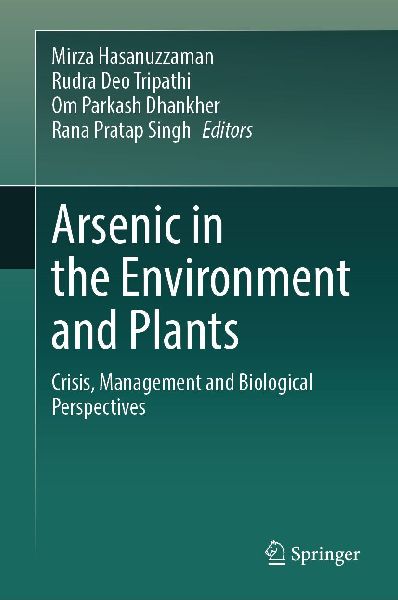
Arsenic in the Environment and Plants
Crisis, Management and Biological Perspectives
von Mirza Hasanuzzaman (Hrsg.)
Herausgegeben von: Mirza Hasanuzzaman, Herausgegeben von: Rudra Deo Tripathi, Herausgegeben von: Om Parkash Dhankher, und weitere
- Einband
- Gebunden
- Seiten
- 855
- Sprache
- Englisch
- Erschienen
- Februar 2027
- Verlag
- Springer Nature Switzerland AG
Buchbeschreibung
This book compiles the latest research and insights on arsenic's impact on the environment, emphasizing the urgency and scale of this issue.
The complexity of As contamination demands a multidisciplinary approach. This book brings together experts from environmental science, biology, public health, and policy to provide a comprehensive overview of arsenic's environmental impact, biological consequences, and the strategies for its management.
Ganze Beschreibung lesenWeniger anzeigen
The book serves as an essential resource for students, researchers, and professionals in environmental sciences, offering a detailed study of As behavior in the environment and its biological effects. It bridges the gap between theoretical knowledge and practical applications. By including sections on management strategies and policy recommendations, the book serves as a guide for policymakers and environmental managers.
It offers evidence-based strategies for mitigating arsenic contamination and protecting public health. The book provides an updated compilation of the latest research, including cutting-edge methods for As detection, removal, and management. This makes it a valuable resource for staying abreast of recent advancements in the field.
Incorporating case studies from different regions of the world, the book highlights the global nature of arsenic contamination while also providing insights into local challenges and solutions. This helps in understanding the diverse impacts and management strategies across various geographical contexts. Given the toxicological significance of As, the book emphasizes its implications for public health.
The collaborative nature of this book project fosters networking among professionals and researchers from different fields, promoting interdisciplinary collaboration and knowledge exchange.
Ultimately, the book aims to have a long-term impact on how arsenic contamination is understood, managed, and mitigated, contributing to safer, healthier environments and communities. Editing this book is not only about compiling scientific knowledge but also about making a tangible impact in the field of environmental management and public health, addressing a critical issue that affects both ecosystems and human societies worldwide.
Inhaltsverzeichnis
- The current status and historical context of arsenic toxicity in the world
- Arsenic in thesoil-plant-water continuum of bangladesh: mechanisms, health impacts, and evidence-based interventions
- Prevalence and mitigation of arsenic in soil and ground water in the global ecosystems
- Factors influencing bioavailability of arsenic to crops
- Arsenic dynamics in the soil–water continuum: sources, bioavailability, and remediation strategies
- Arsenic toxicity in crop plants: responses and remediation strategies
- Arsenic contamination and plant responses: from uptake to genetic mitigation strategies
- Plants response and tolerance to arsenic-induced oxidative stress
Ganzes Inhaltsverzeichnis anzeigen (30 Einträge)Weniger anzeigen
- Modulation of antioxidant defense in arsenic stressed rice (oryza sativa l.) by phytoextract pretreatment: mechanistic insights
- Biotransformation of arsenic salts in rhizosphere, uptake and genomic regulation for tolerance in crop plants: a chemical signaling
- Biotransformation of arsenic in soil and adequate environments
- Arsenic stress in plants: a minireview on toxicity, uptake, and prospects for phytoremediation
- Managing arsenic in crops: advances in soil interactions and plant transport mechanisms
- Understanding the toxic effects of arsenic on environment and human health: challenges and mitigation strategies
- Recent advances in selenium and nano-selenium mediated mitigation of arsenic stress in plants
- Using gene editing tools in conferring arsenic tolerance in plants
- adsorbent-based remediation of arsenic pollution in the environment
- Removal of arsenic from water by adsorption
- Arbuscular mycorrhizal associations as a bioremediation strategy for arsenic contaminated soils
- Algae based systems for bioremediation of arsenic contaminated environments
- Plant growth-promoting microorganisms in arsenic stress alleviation: physiological, biochemical, and molecular perspectives
- Arsenic stress reduction: function of endophytic microbes
- microbial mechanisms and applications in arsenic bioremediation
- The mutual influence of arsenic, iron and zinc on their bioavailability in soil and their uptake in crop plants: challenges for micronutrient deficiency
- Potential use of soil amendments in mitigating arsenic stress in plants
- Sustainable interventions for arsenic stress management in crop plants
- Enrichment and modification of biochar for mitigation of arsenic toxicity
- Soil amendment and remediation arsenic toxicity in crop fields: case studies and challenges
- Nanotechnology for the mitigation of arsenic toxicity
- Omics advancements towards exploring arsenic stress and its regulation in plants
Details
- Erscheinungstermin
- Februar 2027
- Kategorie
- Fremdsprachige Bücher
- Einband
- Gebunden
- Seiten
- 855
- Sprache
- Englisch
- Verlag
- Springer Nature Switzerland AG
- EAN / ISBN-13
- 9783032271952
Über Mirza Hasanuzzaman (Hrsg.)
Dr. Mirza Hasanuzzaman is a Professor of Agronomy at Sher-e-Bangla Agricultural University, Dhaka. He earned his Ph. D.
Mehr über Mirza Hasanuzzaman (Hrsg.)Weniger anzeigen
from Ehime University, Japan, completed postdoctoral research at the University of the Ryukyus, and later served as an Adjunct Senior Researcher at the University of Tasmania. He has supervised 50+ Master’s, 5 Ph. D., and 4 postdoctoral researchers, and published over 300 Scopus-indexed papers, 25 books, and 50+ book chapters, with 38,000+ citations (h-index 98). He is an editor/reviewer for 80+ journals, a recipient of major awards including TWAS (2014), UGC Gold Medal (2018), and BAS Gold Medal (2022), and a fellow of several international scientific societies.
Dr. Om Parkash Dhankher is a Professor of Agricultural Biotechnology at the University of Massachusetts Amherst, USA. He earned his M.Sc. and M.Phil from Kurukshetra University, India, his Ph. D. from Durham University, UK, and completed postdoctoral training at the University of Georgia, USA. He is a recognized leader in climate-resilient crops, environmental remediation, and sustainable biotechnology, with 150+ publications, 7 edited books, and 6 international patents. He has received several awards including the Commonwealth Scholarship and honors from the American Chemical Society and UMass Amherst, and is a Fellow of multiple international scientific societies including AAAS, CSSA, ASA, and ASPB.Dr. Rudra Deo Tripathi earned his Ph. D. (1979) in Botany from DDU Gorakhpur University and later joined CSIR–National Botanical Research Institute, Lucknow, where he became Chief Scientist and Professor. He also served as CSIR-Emeritus Scientist and is currently NASI Senior Scientist Fellow and Emeritus Professor (AcSIR). He has led 21 research projects and conducted postdoctoral research in India, the UK, and Germany, with contributions to metal uptake and phytochelatin regulation. A Fellow of several academies, he has received multiple awards including the INSA Young Scientist Medal (1981) and Panchanan Maheshwari Medal (2023). With 250+ publications (23,000+ citations; h-index 85), he has guided 15 Ph. D. scholars and works on phytoremediation, arsenic metabolism, and low-arsenic rice development.
Dr. Rana Pratap Singh is a former Senior Professor at Babasaheb Bhimrao Ambedkar University, Lucknow, and currently serves as Editor-in-Chief and Honorary Director at PHSS Foundation. He earned his Ph. D. from Devi Ahilya University and held several key academic and administrative roles, including Dean, Controller of Examinations, and Chairman of SEIAA, UP. A Fellow of NASI and other societies, he has mentored 8 postdocs and 42 Ph. D. scholars, with 200+ publications and over 8,000 citations (h-index 48), contributing extensively to biochemistry, biotechnology, and environmental sciences.
Versand und Rückgabe
Standardversand: 1 bis 3 Werktage, 3,99 €, kostenlos ab 35 €
Liefergebiet: Deutschland
Rücksendung: 14 Tage Widerrufsrecht. Bei einem Widerruf tragen Sie die Kosten der Rücksendung. Bei einer Falschlieferung oder einem Fehler von uns erstatten wir Ihnen das Rückporto. Den Widerruf erklären Sie über den Knopf „Vertrag widerrufen“ im Fuß der Seite.
Hersteller und ProduktsicherheitSpringer Nature Customer Service Center GmbH
Springer Nature Customer Service Center GmbH
Europaplatz 3
69115 Heidelberg
Deutschland
ProductSafety@springernature.com
Mehr von Mirza Hasanuzzaman
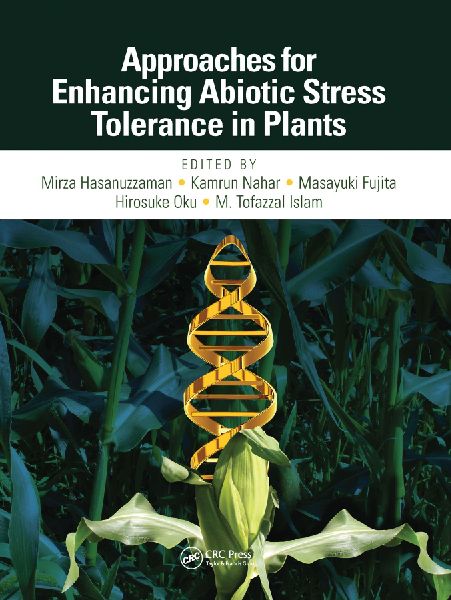
Approaches for Enhancing Abiotic Stress Tolerance in Plants
Mirza Hasanuzzaman (Hrsg.)
Kartoniert, Englisch, 2 Ausgaben
ab 79,70 €
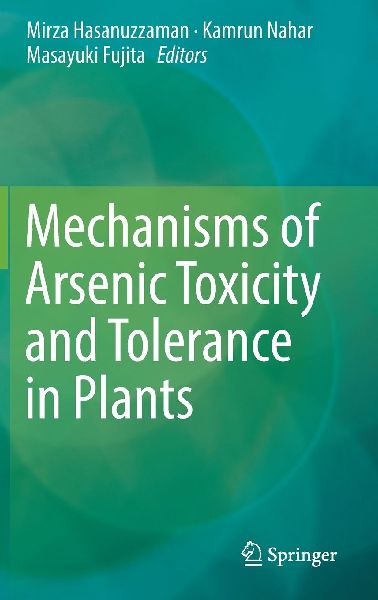
Mechanisms of Arsenic Toxicity and Tolerance in Plants
Mirza Hasanuzzaman (Hrsg.)
Gebunden, Englisch
213,99 €
Ähnliche Titel

Bewertungen
Zu diesem Titel gibt es noch keine Bewertung. Bewerten kann, wer ihn bei uns gekauft hat.
So prüfen wir Bewertungen
Eine Bewertung kann bei uns nur abgeben, wer den Titel über sein Kundenkonto bei uns gekauft hat. Jede Bewertung ist fest mit der zugehörigen Bestellung verknüpft; anders kommt sie technisch gar nicht zustande. Deshalb trägt jede angezeigte Bewertung den Hinweis „Verifizierter Kauf". Wir zeigen positive wie negative Bewertungen und löschen nur bei Rechtsverstößen. Für Bewertungen gibt es keine Gegenleistung.
230,50 €Erscheint 02/2027