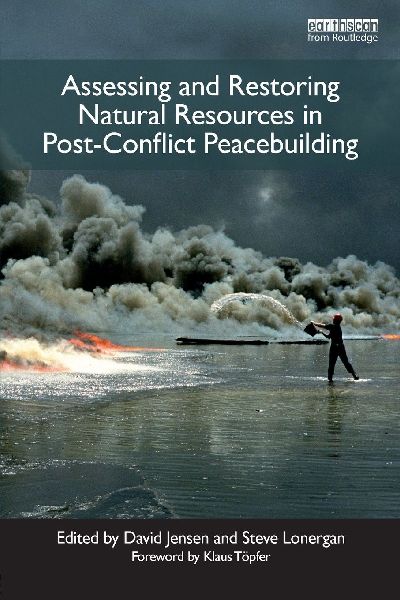
Assessing and Restoring Natural Resources In Post-Conflict Peacebuilding
Herausgegeben von: David Jensen, Herausgegeben von: Stephen Lonergan
- Einband
- Kartoniert
- Seiten
- 536
- Sprache
- Englisch
- Erschienen
- Oktober 2012
- Verlag
- Routledge
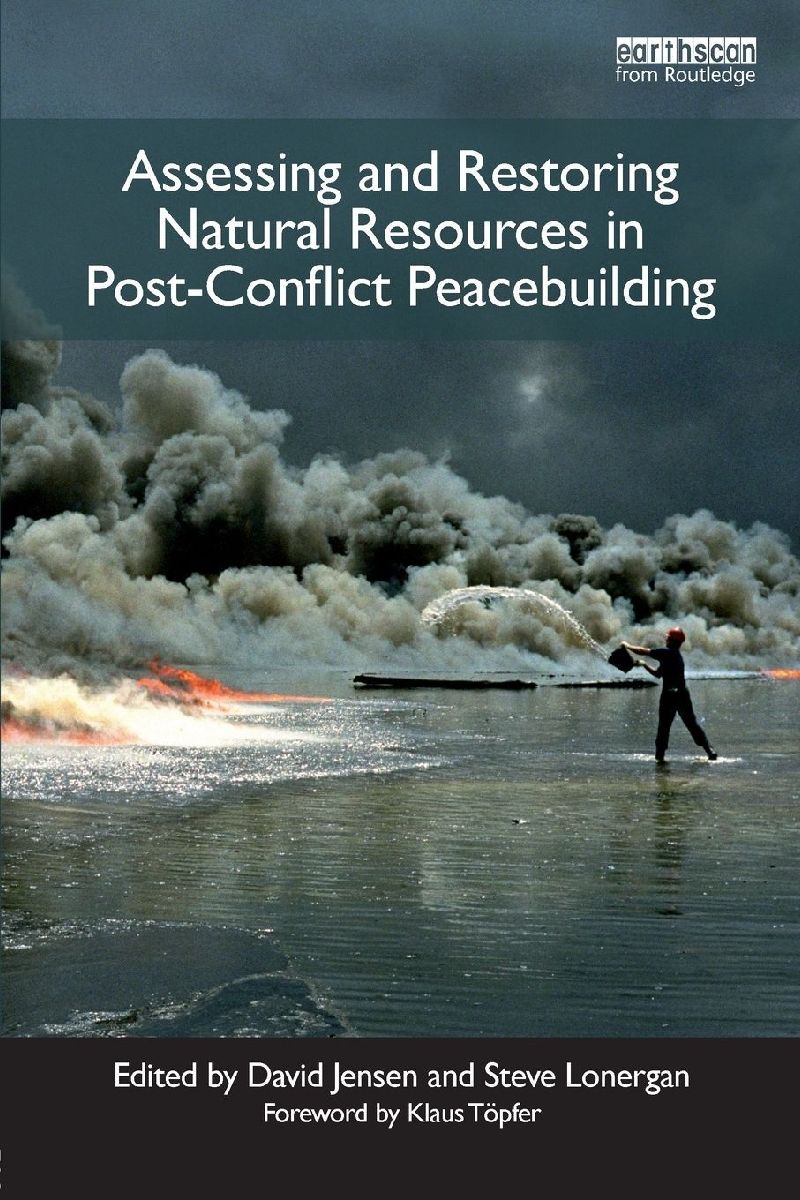
Buchbeschreibung
When a country emerges from violent conflict, the management of the environment and natural resources has important implications for short-term peacebuilding and long-term stability, particularly if natural resources were a factor in the conflict, play a major role in the national economy, or broadly support livelihoods.
Ganze Beschreibung lesenWeniger anzeigen
Only recently, however, have the assessment, harnessing, and restoration of the natural resource base become essential components of postconflict peacebuilding.
This book, by thirty-five authors, examines the experiences of more than twenty countries and territories in assessing post-conflict environmental damage and natural resource degradation and their implications for human health, livelihoods, and security. The book also illustrates how an understanding of both the risks and opportunities associated with natural resources can help decision makers manage natural resources in ways that create jobs, sustain livelihoods, and contribute to economic recovery and reconciliation, without creating new grievances or significant environmental degradation.
Finally, the book offers lessons from the remediation of environmental hot spots, restoration of damaged ecosystems, and reconstruction of the environmental services and infrastructure necessary for a sustainable peace.
Assessing and Restoring Natural Resources in Post-Conflict Peacebuilding is part of a global initiative to identify and analyze lessons in post-conflict peacebuilding and natural resource management. The project has generated six books of case studies and analyses, with contributions by practitioners, policy makers, and researchers. Other books address highvalue resources, land, water, livelihoods, and governance.
Inhaltsverzeichnis
- Foreword Placing Environment and Natural Resource Risks, Impacts, and Opportunities on the Post-Conflict Peacebuilding Agenda Part 1: Post-Conflict Environmental Assessments Introduction
- 1. Evaluating the Impact of UNEP's Post-Conflict Environmental Assessments
- 2. Environment and Peacebuilding in War-torn Societies: Lessons from the UN Environment Programme's Experience with Post-Conflict Assessment
- 3. Medical and Environmental Intelligence in Peace and Crisis-Management Operations
- 4. Thinking Back-end: Improving Post-Conflict Analysis through Consulting, Adapting to Change, and Scenario Building Part 2: Remediation of Environmental Hot Spots Introduction
- 5. Salting the Earth: Environmental Health Challenges in Post-Conflict Reconstruction
- 6. Remediation of Polluted Sites in the Balkans, Iraq, and Sierra Leone
- 7. The Risks of Depleted Uranium Contamination in Post-Conflict Countries: Findings and Lessons learned from UNEP Field Assessments
Ganzes Inhaltsverzeichnis anzeigen (22 Einträge)Weniger anzeigen
- 8. Linking Demining to Post-Conflict Peacebuilding: A Case Study of Cambodia Part 3: Restoration of Natural Resources and Ecosystems Introduction
- 9. Restoration of Damaged Land in Societies Recovering from Conflict: The Case of Lebanon
- 10. Ecological Restoration and Peacebuilding: The Case of the Iraqi Marshes
- 11. Haiti: Lessons Learned and Way Forward in Natural Resource Management Projects
- 12. Peacebuilding and Adaptation to Climate Change Part 4: Environmental Dimensions of Infrastructure and Reconstruction Introduction
- 13. Addressing Infrastructure Needs in Post-Conflict Reconstruction: An Introduction to Alternative Planning Approaches
- 14. Mitigating the Environmental Impacts of Post-Conflict Assistance: Assessing USAID's Approach
- 15. Challenges and Opportunities for Mainstreaming Environmental Assessment Tools in Post-Conflict Settings
- 16. Environmental Assessment as a Tool for Peacebuilding and Development: Initial Lessons from Capacity Building in Sierra Leone
- 17. Natural Resources, Post-Conflict Reconstruction, and Regional Integration: Lessons from the Marshall Plan and other Regional Reconstruction Efforts
- 18. Making Best use of Domestic Energy Sources: The Priority Production System for Coal Mining and Steel Production in Post-World War II Japan
- 19. Road Infrastructure Reconstruction as a Peacebuilding Priority in Afghanistan: Negative Implications for Land Rights
- 20. Evaluating Post-Conflict Assistance Part 5: Lessons Learned
- 21. Natural Resources and Post-Conflict Restoration, Remediation, and Reconstruction: Lessons and Way Forward
Details
- Erscheinungstermin
- Oktober 2012
- Kategorie
- Fremdsprachige Bücher
- Einband
- Kartoniert
- Seiten
- 536
- Sprache
- Englisch
- Verlag
- Routledge
- Format
- 22,9 × 15,2 cm
- Dicke
- 2,9 cm
- Gewicht
- 767 g
- EAN / ISBN-13
- 9781849712347
Über David Jensen (Hrsg.)
David Jensen manages the Environmental Cooperation for Peacebuilding Programme of the UN Environment Programme (UNEP).
Mehr über David Jensen (Hrsg.)Weniger anzeigen
Steve Lonergan is a Professor Emeritus of Geography at the University of Victoria and former director of the UNEP Division of Early Warning and Assessment.
Versand und Rückgabe
Standardversand: 1 bis 3 Werktage, 3,99 €, kostenlos ab 35 €
Liefergebiet: Deutschland
Rücksendung: 14 Tage Widerrufsrecht. Bei einem Widerruf tragen Sie die Kosten der Rücksendung. Bei einer Falschlieferung oder einem Fehler von uns erstatten wir Ihnen das Rückporto. Den Widerruf erklären Sie über den Knopf „Vertrag widerrufen“ im Fuß der Seite.
Hersteller und ProduktsicherheitRoutledge
Routledge
Europaallee 1
36244 Bad Hersfeld
Deutschland
gpsr@libri.de
Verantwortliche Person in der EU
Libri GmbHEuropaallee 1
36244 Bad Hersfeld
Deutschland
gpsr@libri.de
Mehr von David Jensen




Ähnliche Titel
Federalism, Preemption, and the Nationalization of American Wildlife Management
Lowell E. Baier
Kartoniert, Englisch, 2 Ausgaben
ab 49,70 €
Economics and Contemporary Land Use Policy
Robert J. Johnston (Hrsg.)
Kartoniert, Englisch, 2 Ausgaben
ab 84,30 €
Governance, Natural Resources and Post-Conflict Peacebuilding
Carl Bruch (Hrsg.)
Kartoniert, Englisch, 2 Ausgaben
ab 140,90 €
Bewertungen
Zu diesem Titel gibt es noch keine Bewertung. Bewerten kann, wer ihn bei uns gekauft hat.
So prüfen wir Bewertungen
Eine Bewertung kann bei uns nur abgeben, wer den Titel über sein Kundenkonto bei uns gekauft hat. Jede Bewertung ist fest mit der zugehörigen Bestellung verknüpft; anders kommt sie technisch gar nicht zustande. Deshalb trägt jede angezeigte Bewertung den Hinweis „Verifizierter Kauf". Wir zeigen positive wie negative Bewertungen und löschen nur bei Rechtsverstößen. Für Bewertungen gibt es keine Gegenleistung.
137,20 €Voraussichtlich 2. bis 4. Dez.