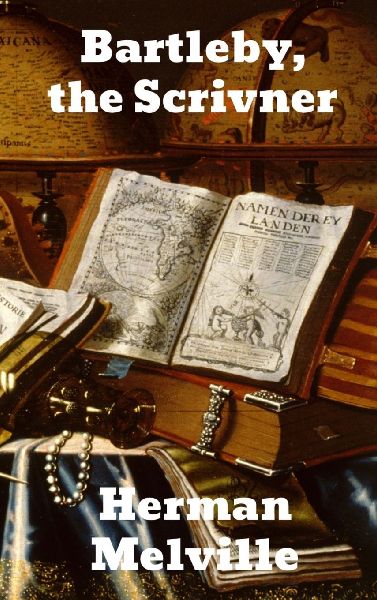
Bartleby, The Scrivener
von Herman Melville
- Einband
- Gebunden
- Seiten
- 50
- Sprache
- Englisch
- Erschienen
- November 1853
- Verlag
- Binker North
Buchbeschreibung
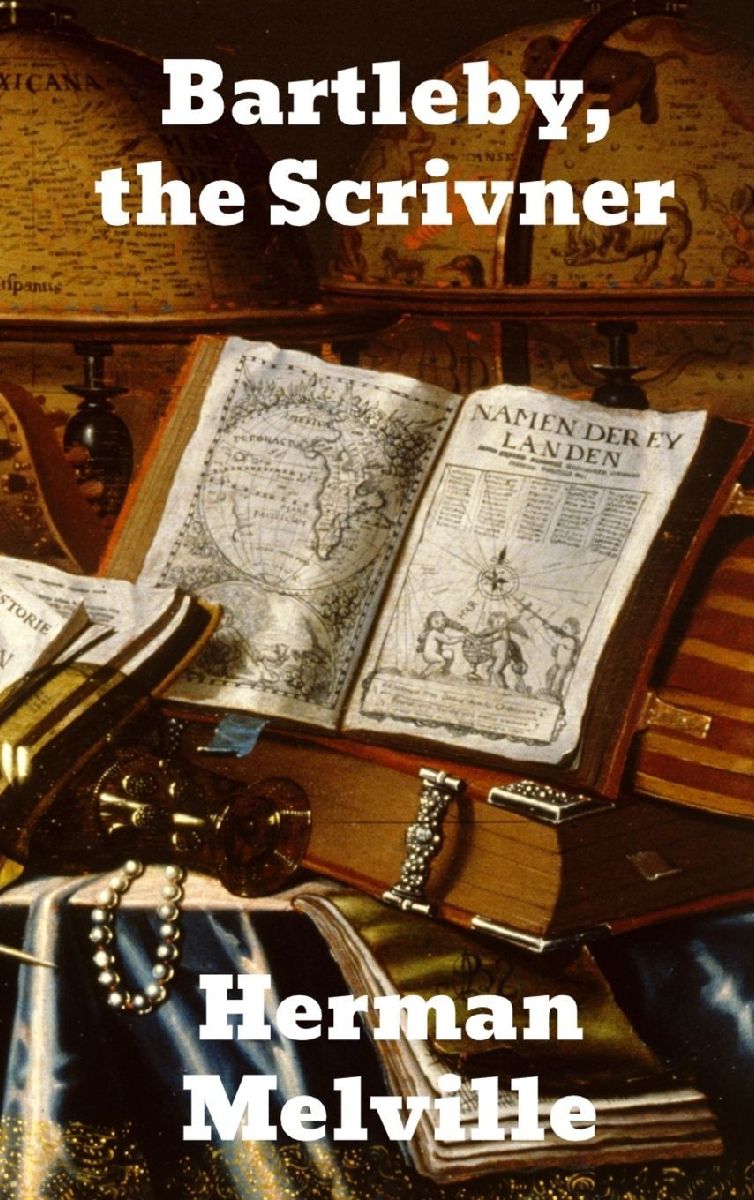
"Bartleby, the Scrivener: A Story of Wall Street" is a short story by the American writer Herman Melville, first serialized anonymously in two parts in the November and December 1853 issues of Putnam's Magazine, and reprinted with minor textual alterations in his The Piazza Tales in 1856. A Wall Street lawyer hires a new clerk who, after an initial bout of hard work, refuses to make copy and any other task required of him, with the words "I would prefer not to".
Ganze Beschreibung lesenWeniger anzeigen
Numerous essays have been published on what, according to scholar Robert Milder, "is unquestionably the masterpiece of the short fiction" in the Melville canon. Melville's major source for the story was an advertisement for a new book, The Lawyer's Story, printed in both the Tribune and the Times for 18 February 1853. The book was published anonymously later that year but in fact was written by popular novelist James A. Maitland.
This advertisement included the complete first chapter, which had the following opening sentence: "In the summer of 1843, having an extraordinary quantity of deeds to copy, I engaged, temporarily, an extra copying clerk, who interested me considerably, in consequence of his modest, quiet, gentlemanly demeanor, and his intense application to his duties".
Melville biographer Hershel Parker points out that nothing else in the chapter besides this "remarkably evocative sentence" was "notable".[3] Critic Andrew Knighton notes the debt of the story to an obscure work from 1846, Robert Grant White's Law and Laziness: or, Students at Law of Leisure. This source contains one scene and many characters — including an idle scrivener — that appear to have influenced Melville's narrative.[4] Melville may have written the story as an emotional response to the bad reviews garnered by Pierre, his preceding novel.
Christopher Sten suggests that Melville found inspiration in Ralph Waldo Emerson's essays, particularly "The Transcendentalist" which shows parallels to "Bartleby". Bartleby is a scrivener—a kind of clerk or a copyist—"who obstinately refuses to go on doing the sort of writing demanded of him". During the spring of 1851, Melville felt similarly about his work on Moby Dick.
Thus, Bartleby may represent Melville's frustration with his own situation as a writer, and the story itself is "about a writer who forsakes conventional modes because of an irresistible preoccupation with the most baffling philosophical questions".[7] Bartleby may also be seen to represent Melville's relation to his commercial, democratic society.[8 Melville made an allusion to the John C. Colt case in this short story.
The narrator restrains his anger toward Bartleby, his unrelentingly difficult employee, by reflecting upon "the tragedy of the unfortunate Adams and the still more unfortunate Colt and how poor Colt, being dreadfully incensed by Adams […] was unawares hurled into his fatal act".
Details
- Erscheinungstermin
- November 1853
- Kategorie
- Fremdsprachige Bücher
- Einband
- Gebunden
- Seiten
- 50
- Sprache
- Englisch
- Verlag
- Binker North
- Format
- 23,5 × 15,7 cm
- Dicke
- 0,8 cm
- Gewicht
- 190 g
- EAN / ISBN-13
- 9781774413227
Über Herman Melville
Herman Melville was an American Renaissance novelist, poet, and short story writer who lived from August 1, 1819, to September 28, 1891.
Mehr über Herman MelvilleWeniger anzeigen
His most well-known pieces are Typee (1846), a romanticized narrative of his experiences in Polynesia; Moby-Dick (1851); and Billy Budd, Sailor, a novella that was released after his death. Although Melville was no longer well-known to the general public at the time of his death, a Melville renaissance began in 1919, the year of his birth. In the end, Moby-Dick was regarded as one of the best American novels. The third child of a wealthy merchant who died in 1832, leaving the family in terrible financial shape, Melville was born in New York City. He sailed as a common sailor in 1839, first as a whaler Acushnet and subsequently as a merchant ship. However, he abandoned ship in the Marquesas Islands. His first work, Typee, and its follow-up, Omoo (1847), were travelogues inspired by his interactions with the island peoples. He was able to marry Elizabeth Shaw, the daughter of Boston lawyer Lemuel Shaw, because to their prosperity. His debut novel not drawn from personal experience, Mardi (1849), was not well received.
Versand und Rückgabe
Standardversand: 1 bis 3 Werktage, 3,99 €, kostenlos ab 35 €
Liefergebiet: Deutschland
Rücksendung: 14 Tage Widerrufsrecht. Bei einem Widerruf tragen Sie die Kosten der Rücksendung. Bei einer Falschlieferung oder einem Fehler von uns erstatten wir Ihnen das Rückporto. Den Widerruf erklären Sie über den Knopf „Vertrag widerrufen“ im Fuß der Seite.
Hersteller und ProduktsicherheitBinker North
Binker North
Europaallee 1
36244 Bad Hersfeld
Deutschland
gpsr@libri.de
Verantwortliche Person in der EU
Libri GmbHEuropaallee 1
36244 Bad Hersfeld
Deutschland
gpsr@libri.de
Mehr von Herman Melville


Ähnliche Titel



Bewertungen
Zu diesem Titel gibt es noch keine Bewertung. Bewerten kann, wer ihn bei uns gekauft hat.
So prüfen wir Bewertungen
Eine Bewertung kann bei uns nur abgeben, wer den Titel über sein Kundenkonto bei uns gekauft hat. Jede Bewertung ist fest mit der zugehörigen Bestellung verknüpft; anders kommt sie technisch gar nicht zustande. Deshalb trägt jede angezeigte Bewertung den Hinweis „Verifizierter Kauf". Wir zeigen positive wie negative Bewertungen und löschen nur bei Rechtsverstößen. Für Bewertungen gibt es keine Gegenleistung.
19,40 €Voraussichtlich 7. bis 9. Dez.