
Buch-OWLOnline-Buchhandel

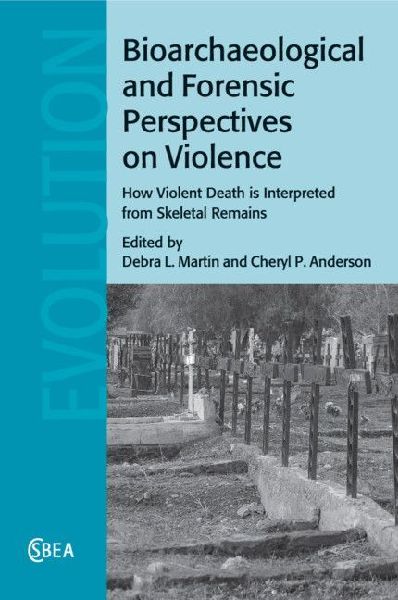
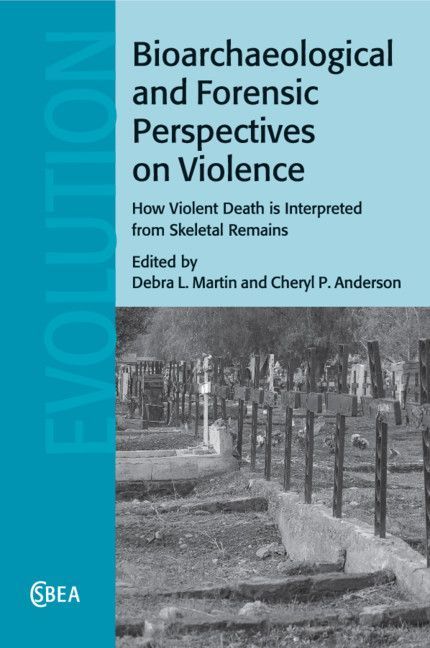
Bioarchaeological and Forensic Perspectives on Violence

von Debra L. Martin (Hrsg.)

Herausgegeben von: Debra L. Martin, Herausgegeben von: Cheryl P. Anderson

Einband
Kartoniert
Seiten
342
Sprache
Englisch
Erschienen
Juni 2020
Verlag
Cambridge University Press

Buchbeschreibung

Every year, there are over 1.6 million violent deaths worldwide, making violence one of the leading public health issues of our time.

And with the 20th century just behind us, it's hard to forget that 191 million people lost their lives directly or indirectly through conflict. This collection of engaging case studies on violence and violent deaths reveals how violence is reconstructed from skeletal and contextual information.

Ganze Beschreibung lesenWeniger anzeigen

By sharing the complex methodologies for gleaning scientific data from human remains and the context they are found in, and complementary perspectives for examining violence from both past and contemporary societies, bioarchaeology and forensic anthropology prove to be fundamentally inseparable.

This book provides a model for training forensic anthropologists and bioarchaeologists, not just in the fundamentals of excavation and skeletal analysis, but in all subfields of anthropology, to broaden their theoretical and practical approach to dealing with everyday violence.

Inhaltsverzeichnis

  • List of contributors
  • Part I. Introduction: 1. Introduction: interpreting violence in the ancient and modern world when skeletonized bodies are all you have Debra L. Martin and Cheryl P. Anderson
  • Part II. Overview and Innovative Methodologies: 2. Killed in action? A biometrical analysis of femora of supposed battle victims from the Middle Bronze Age site of Weltzin 20, Germany Stefan Flohr, Ute Brinker, Elena Spanagel, Annemarie Schramm, Jörg Orschiedt and Uwe Kierdorf
  • 3. The taphonomy of maritime warfare: a forensic reinterpretation of sharp force trauma from the 1676 wreck of the Royal Swedish Warship Kronan Anna Kjellström and Michelle D. Hamilton
  • 4. The determination of homicide vs. suicide in gunshot wounds Vincent H. Stefan
  • 5. The first cut is the deepest: looking for patterns in cases of human dismemberment Andrew C. Seidel and Laura C. Fulginiti
  • 6. Victims of violence? A methodological case study from precolonial Northern Mexico Cheryl P. Anderson
  • Part III. Ritual and Performative Violence: 7. Signatures of captivity and subordination on skeletonized human remains: a bioarchaeological case study from the ancient Southwest Ryan P. Harrod and Debra L. Martin
Ganzes Inhaltsverzeichnis anzeigen (19 Einträge)Weniger anzeigen
  • 8. Classic Maya warfare and skeletal trophies: victims and aggressors Rebecca Storey
  • 9. Face me like a man! (or, like a woman): antemortem nasal fractures in pre-Columbian San Pedro de Atacama Christina Torres-Rouff and Laura M. King
  • 10. Why some bodies matter: defacement and narrative in historical forensics cases William N. Duncan and Christopher M. Stojanowski
  • Part IV. Violence and Identity: 11. Violence in life, violence in death, resiliency through repatriation: bioarchaeological analysis and heritage value of Yaqui skeletal remains from Sonora, Mexico Heidi J. Bauer-Clapp and Ventura R. Pérez
  • 12. Interpreting skeletal trauma and violence at Grasshopper Pueblo (AD 1275-1400) Kathryn M. Baustian
  • 13. The contribution of forensic anthropology to national identity in Chile: a case study from the Patio 29 mass grave Elizabeth M. DeVisser, Krista E. Latham and Marisol Intriago Leiva
  • 14. Cranial trauma and cranial modification in post-imperial Andahuaylas, Peru Danielle Kurin
  • 15. Allies today, enemies tomorrow: a comparative analysis of perimortem injuries along the biomechanical continuum Melissa Scott Murphy, Brian Spatola and Rick Weathermon
  • 16. Interpreting gunshot trauma as context clue: a case study from historic North Las Vegas, Nevada John J. Crandall, Ryan P. Harrod, Cheryl P. Anderson and Kathryn M. Baustian
  • Part V. Concluding Thoughts: 17. Living on the sidelines of death: anthropologists and violence Alison Galloway
  • Index.

Details

Erscheinungstermin
Juni 2020
Kategorie
Fremdsprachige Bücher
Einband
Kartoniert
Seiten
342
Sprache
Englisch
Verlag
Cambridge University Press
Format
22,9 × 15,2 cm
Dicke
1,8 cm
Gewicht
496 g
EAN / ISBN-13
9781107623088
Maßstabsgetreu: Deckel und Buchrücken neben einer Hand (18 cm).
Versand und Rückgabe

Standardversand: 1 bis 3 Werktage, 3,99 €, kostenlos ab 35 €

Liefergebiet: Deutschland

Rücksendung: 14 Tage Widerrufsrecht. Bei einem Widerruf tragen Sie die Kosten der Rücksendung. Bei einer Falschlieferung oder einem Fehler von uns erstatten wir Ihnen das Rückporto. Den Widerruf erklären Sie über den Knopf „Vertrag widerrufen“ im Fuß der Seite.

Hersteller und ProduktsicherheitCambridge University Press
Cambridge University Press

Verantwortliche Person in der EU

Libri GmbH
Europaallee 1
36244 Bad Hersfeld
Deutschland
gpsr@libri.de

Mehr von Debra L. Martin

Ähnliche Titel

Bewertungen

Zu diesem Titel gibt es noch keine Bewertung. Bewerten kann, wer ihn bei uns gekauft hat.
So prüfen wir Bewertungen
Eine Bewertung kann bei uns nur abgeben, wer den Titel über sein Kundenkonto bei uns gekauft hat. Jede Bewertung ist fest mit der zugehörigen Bestellung verknüpft; anders kommt sie technisch gar nicht zustande. Deshalb trägt jede angezeigte Bewertung den Hinweis „Verifizierter Kauf". Wir zeigen positive wie negative Bewertungen und löschen nur bei Rechtsverstößen. Für Bewertungen gibt es keine Gegenleistung.
56,10 €Voraussichtlich 2. bis 4. Dez.

Inhalte ab 18

Cover von Titeln für Erwachsene, etwa erotische Romane, Manga oder Comics, bleiben unscharf, bis Sie bestätigen. Die Bestätigung gilt für alle Seiten und Tabs, bis Sie den Browser schließen.

Zurück zum Katalog