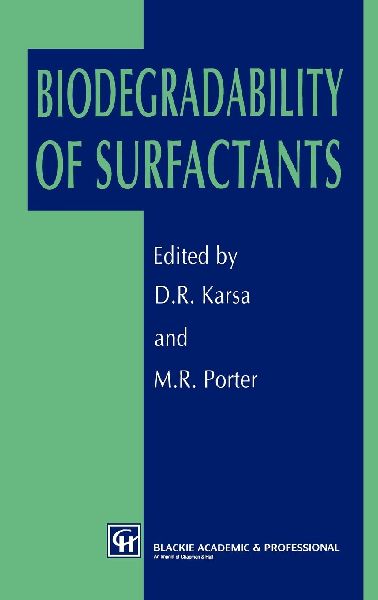
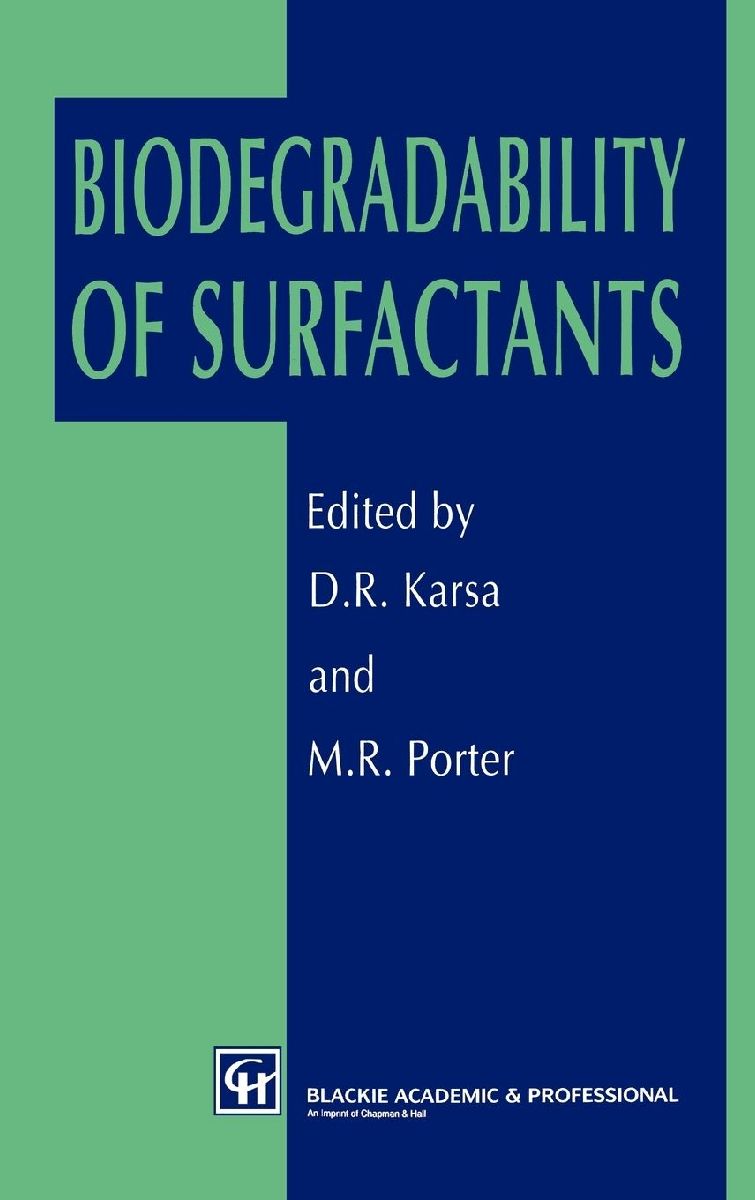
Biodegradability of Surfactants
Herausgegeben von: M. R. Porter, Herausgegeben von: D. R. Karsa
- Einband
- Gebunden
- Seiten
- 276
- Sprache
- Englisch
- Erschienen
- Dezember 1994
- Verlag
- Springer Netherlands
Buchbeschreibung
The awareness and development of 'biodegradable' surfactants pre-dates current pressures by the environmental movement by nearly three decades, wherein a responsible industry mutually agreed to replace 'hard', non-biodegradable com ponents of household detergents by 'soft', biodegradable alternatives, without course to legislation.
Ganze Beschreibung lesenWeniger anzeigen
The only requirement at that time was for surfactants used in detergents to exhibit a 'primary biodegradability' in excess of 80%; this referring to the disap pearance or removal from solution of the intact surface active material as de tected by specified analytical techniques. This proved useful, as observed environmental impacts of surfactants, e.g. visible foam on rivers, are associated with the intact molecule.
Test methods for 'primary biodegradability' were eventually enshrined in EU legislation for nonionic surfactants (Directive 821242/EEC, amended 73/404IEEC) and for anionic surfactants (Directive 8212431EEC, amended 73/405IEEC). No approved test methods and resultant legislation have been developed for cationic and amphoteric surfactants to date.
The environmental classification of chemical substances, which of course includes surfactants, and associated risk assessment utilises a second criterion 'ready biodegradability'. This may be assessed by a number of methods which monitor oxygen uptake (BOD), carbon dioxide production or removal of dis solved organic carbon (DOC).
Some surfactants which comply with the above Detergents Directive are borderline when it comes to 'ready biodegradability'.
Inhaltsverzeichnis
- 1 Introduction to surfactant biodegradation
- 1.1 Introduction
- 1.2 Biodegradability and the replacement of soap in detergent products
- 1.3 Biodegradation, biodegradability testing and interpretation of results
- 1.4 Sewage treatment processes and their significance for surfactants
- 1.5 Biodegradability test methods for surfactants
- 1.6 The replacement of tetrapropylene benzene sulphonate (TPBS)
- 1.7 Surfactant biodegradability and legislation
Ganzes Inhaltsverzeichnis anzeigen (61 Einträge)Weniger anzeigen
- 1.8 Surfactant analysis
- 1.9 Conclusions and thoughts for the future
- References
- 2 What is biodegradation?
- 2.1 Setting the scene: Microbial nutrition and the carbon cycle
- 2.2 Surfactants as potential microbial nutrients
- 2.3 Surfactant biodegradation in the environment
- 2.4 Laboratory models of surfactant biodegradation
- References
- 3 Biodegradability testing
- 3.1 Introduction
- 3.2 Nature of biodegradation and influencing factors
- 3.3 OECD and EEC tests for primary biodegradability of surfactants
- 3.4 List and synopses of existing methods for ultimate biodegradability
- 3.5 Analytical methods
- References
- 4 Testing strategy and legal requirements
- 4.1 Selection of tests: strategy of testing
- 4.2 Validation and interpretation of results
- 4.3 Legal requirements
- References
- 5 Biodegradability of anionic surfactants
- 5.1 General characteristics of anionic surfactants
- 5.2 Application of anionic surfactants and their environmental relevance
- 5.3 Particular structure and application features of anionic surfactants
- 5.4 Biodegradation of anionic surfactants
- References
- 6 Biodegradability of cationic surfactants
- 6.1 Introduction
- 6.2 Biodegradability of cationic surfactants in OECD Screening tests
- 6.3 Behaviour of quaternary ammonium salts in waste water treatment plants
- 6.4 Biodegradation routes of quaternary ammonium salts
- References
- 7 Biodegradability of non-ionic surfactants
- 7.1 Introduction
- 7.2 Structure of polyglycol surfactants
- 7.3 General biodegradability
- 7.4 Mechanisms of biodegradation
- 7.5 Biodegradation of polyglycols
- Acknowledgements
- References
- 8 Biodegradability of amphoteric surfactants
- 8.1 Introduction
- 8.2 Structural elements and biodegradation in general
- 8.3 Alkyl betaines
- 8.4 Alkylamido betaines
- 8.5 Sulphobetaines and hydroxysulphobetaines
- 8.6 Alkylamphoacetates
- 8.7 Polycarboxyglycinates
- 8.8 Alkylamphopropionates
- 8.9 Imidazolinium betaines
- Acknowledgements
- References
Details
- Erscheinungstermin
- Dezember 1994
- Kategorie
- Fremdsprachige Bücher
- Einband
- Gebunden
- Seiten
- 276
- Sprache
- Englisch
- Verlag
- Springer Netherlands
- Format
- 24,1 × 16,0 cm
- Dicke
- 2,0 cm
- Gewicht
- 530 g
- EAN / ISBN-13
- 9780751402063
Versand und Rückgabe
Standardversand: 1 bis 3 Werktage, 3,99 €, kostenlos ab 35 €
Liefergebiet: Deutschland
Rücksendung: 14 Tage Widerrufsrecht. Bei einem Widerruf tragen Sie die Kosten der Rücksendung. Bei einer Falschlieferung oder einem Fehler von uns erstatten wir Ihnen das Rückporto. Den Widerruf erklären Sie über den Knopf „Vertrag widerrufen“ im Fuß der Seite.
Hersteller und ProduktsicherheitSpringer Nature Customer Service Center GmbH
Springer Nature Customer Service Center GmbH
Europaplatz 3
69115 Heidelberg
Deutschland
ProductSafety@springernature.com
Mehr von M. R. Porter
Ähnliche Titel

Crystallization Modalities in Polymer Melt Processing
Hermann Janeschitz-Kriegl
Gebunden, Englisch, 2 Ausgaben
ab 106,99 €

Free-Radical Retrograde-Precipitation Polymerization (FRRPP)
Gerard Caneba
Gebunden, Englisch, 2 Ausgaben
ab 160,49 €
Bewertungen
Zu diesem Titel gibt es noch keine Bewertung. Bewerten kann, wer ihn bei uns gekauft hat.
So prüfen wir Bewertungen
Eine Bewertung kann bei uns nur abgeben, wer den Titel über sein Kundenkonto bei uns gekauft hat. Jede Bewertung ist fest mit der zugehörigen Bestellung verknüpft; anders kommt sie technisch gar nicht zustande. Deshalb trägt jede angezeigte Bewertung den Hinweis „Verifizierter Kauf". Wir zeigen positive wie negative Bewertungen und löschen nur bei Rechtsverstößen. Für Bewertungen gibt es keine Gegenleistung.
213,99 €Voraussichtlich 4. bis 8. Dez.