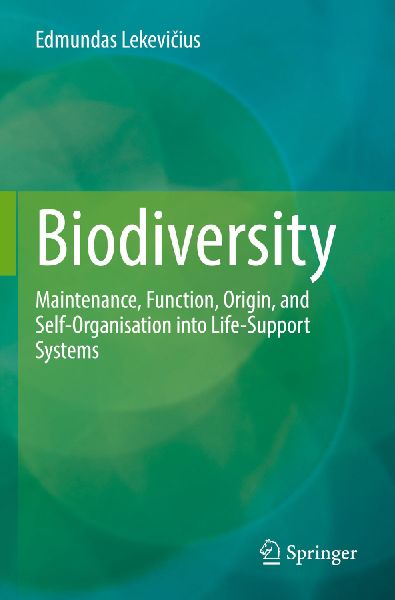
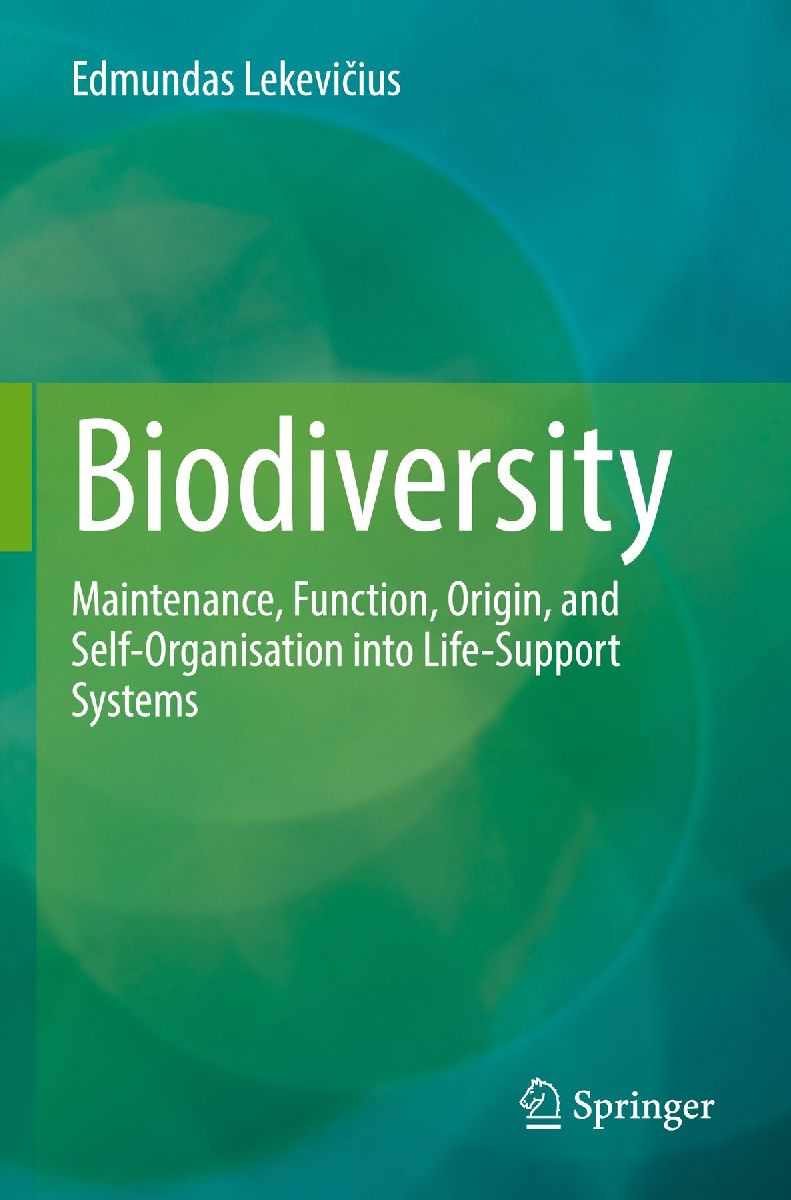
Biodiversity
Maintenance, Function, Origin, and Self-Organisation into Life-Support Systems
- Einband
- Kartoniert
- Seiten
- 256
- Sprache
- Englisch
- Erschienen
- September 2023
- Verlag
- Palgrave Macmillan
Buchbeschreibung
Species are not functionally independent.
From a long-term perspective, only ecosystem with a fully integrated nutrient cycle is alive. The lack of trophic autonomy should be considered one of the key factors that ensure and maintain biodiversity. The variability of abiotic conditions, both in space and in time, also creates a huge diversity of niches and subniches for genotypes and species.
Ganze Beschreibung lesenWeniger anzeigen
In addition, life maintains its essential variables (biomass and productivity) as stable as possible due to the diversity of structures (genes, macromolecules, metabolic pathways, genotypes, species, etc.): the structures that reach optima are multiplied and thus activated, while the functioning of those which lost their optima is suppressed.
The facts and concepts presented in this monograph thus support the conclusions that (a) genotype and species diversity is supported by trophic specialisation(b) biodiversity helps to stabilise the functions (essential variables) ofindividuals, populations, and ecological communities(c) in evolution, the emergence of biodiversity is determined by heritable variation and the advantage of specialised (more effective) structures over non-specialised ones(d) biodiversity is characterised by its ability to increase itself and to organise itself into relatively consistent structures, which we call production pyramids and nutrient cycles. This book therefore provides an answer to the question "why the diversity of life is of such and such a nature".
Inhaltsverzeichnis
- Part I IN SEARCH FOR A FUNCTIONAL EXPLANATION
- 1 Introduction: contemporary biology struggles to explain the great diversity of genotypes and species
- 2 Methodological excursion: an apology for theoretical synthesis, simplicity, deductive method and conceptual modelling
- 3 Species do not just 'struggle
- 4 Species diversity as trophic specialisation
- 5 Producer diversity as reflection of variation in the abiotic environment
- 6 Do consumers maintain diversity of their food sources
- 7 Species diversity ensures higher total biomass and helps to stabilise it
Ganzes Inhaltsverzeichnis anzeigen (25 Einträge)Weniger anzeigen
- 8 Conspecifics do not just 'struggle' either
- 9 Genotype diversity as even more delicate specialisation
- 10 Environmental fluctuations and the daily role of selection
- 11 Summing-up: Biodiversity and plasticity of life (General Adaptation Theory)
- 12 So, is nature a battlefield or a cooperative arena?
- Part II IN SEARCH FOR A SYNTHETIC EXPLANATION
- 13 Why an evolutionary biologist should start with ecological succession
- 14 Primary succession and self-organisation of biodiversity
- 15 Colonisation of the Hawaiian Islands, or how evolution complements succession
- 16 Self-assembly of ecosystems in the Paleozoic: Overview of the latest sources
- 17 Self-assembly of ecosystems in the Paleozoic: Interpretation and summary
- 18 The origin of life, and self-assembly of modern nutrient cycles
- 19 Appearance of modern ecological pyramids. Summing-up
- 20 Supercompetitors. Homo sapiens as a consumer of biodiversity
- 21 Has Darwin's theory really become obsole
- AFTERWORD
- INDEX
Details
- Erscheinungstermin
- September 2023
- Kategorie
- Fremdsprachige Bücher
- Einband
- Kartoniert
- Seiten
- 256
- Sprache
- Englisch
- Verlag
- Palgrave Macmillan
- Format
- 23,5 × 15,5 cm
- Dicke
- 1,5 cm
- Gewicht
- 394 g
- EAN / ISBN-13
- 9783031115844
Über Edmundas Lekevi¿ius
Edmundas Lekevi¿ius is a theoretical biologist. He graduated from Alytus Secondary School No. 1, studied biology at Vilnius University, and continued his studies at the Institute of General Genetics in Moscow.
Mehr über Edmundas Lekevi¿iusWeniger anzeigen
After returning to Lithuania, he worked at the Institutes of Botany and Ecology, where he conducted genetic, ecological and evolutionary research. He taught general ecology and related disciplines at Vilnius University. His research focuses on ecology and theoretical biology.
Versand und Rückgabe
Standardversand: 1 bis 3 Werktage, 3,99 €, kostenlos ab 35 €
Liefergebiet: Deutschland
Rücksendung: 14 Tage Widerrufsrecht. Bei einem Widerruf tragen Sie die Kosten der Rücksendung. Bei einer Falschlieferung oder einem Fehler von uns erstatten wir Ihnen das Rückporto. Den Widerruf erklären Sie über den Knopf „Vertrag widerrufen“ im Fuß der Seite.
Hersteller und ProduktsicherheitSpringer Nature Customer Service Center GmbH
Springer Nature Customer Service Center GmbH
Europaplatz 3
69115 Heidelberg
Deutschland
ProductSafety@springernature.com
Ähnliche Titel

Examination Questions and Answers in Basic Anatomy and Physiology
Martin Caon
Kartoniert, Englisch, 2 Ausgaben
ab 106,99 €

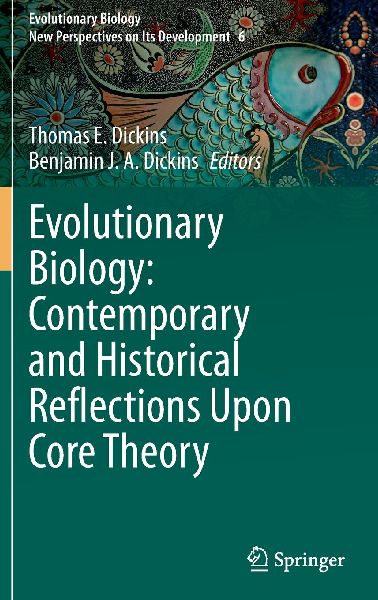
Evolutionary Biology: Contemporary and Historical Reflections Upon Core Theory
Thomas E. Dickins (Hrsg.)
Gebunden, Englisch, 2 Ausgaben
ab 213,99 €
Bewertungen
Zu diesem Titel gibt es noch keine Bewertung. Bewerten kann, wer ihn bei uns gekauft hat.
So prüfen wir Bewertungen
Eine Bewertung kann bei uns nur abgeben, wer den Titel über sein Kundenkonto bei uns gekauft hat. Jede Bewertung ist fest mit der zugehörigen Bestellung verknüpft; anders kommt sie technisch gar nicht zustande. Deshalb trägt jede angezeigte Bewertung den Hinweis „Verifizierter Kauf". Wir zeigen positive wie negative Bewertungen und löschen nur bei Rechtsverstößen. Für Bewertungen gibt es keine Gegenleistung.
117,69 €Voraussichtlich 1. bis 3. Dez.