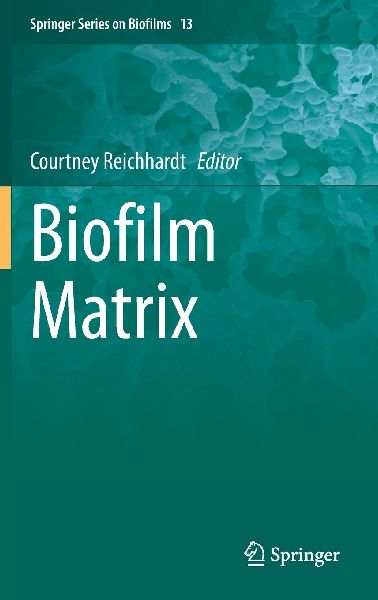
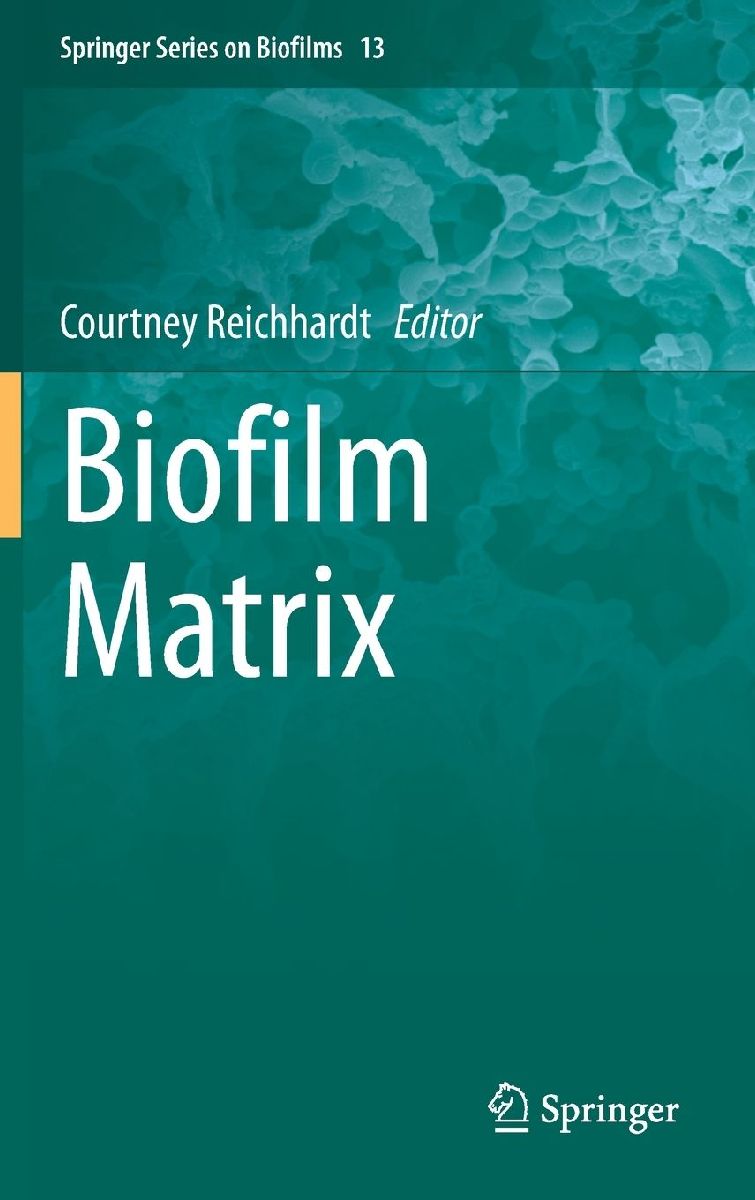
Biofilm Matrix
von Courtney Reichhardt (Hrsg.)
Herausgegeben von: Courtney Reichhardt
Aus der Reihe Springer Series on Biofilms
- Einband
- Gebunden
- Seiten
- 400
- Sprache
- Englisch
- Erschienen
- November 2024
- Verlag
- Springer
Buchbeschreibung
This book provides a comprehensive review of biofilm matrices.
The main topics include an introduction to biofilm matrices and the range of biofilm matrix components (i.e., biofilm matrixome) as well as an overview of what is known about matrix structure, functionality, and regulation.
Ganze Beschreibung lesenWeniger anzeigen
Additional topics include recent progress in investigating the biofilm matrixome as well as challenges and outstanding questions and descriptions of the influence of matrix interactions on biofilm architecture and pathogen-host interactions. This book covers an important aspect of biofilm biology-microbial biofilm matrices.
Microbes form multicellular aggregates called biofilms, in which microbial cells are encased in an extracellular matrix. This enables microbes to withstand harsh environmental conditions including antibiotic treatment. Biofilms are ubiquitous in the environment and can be both beneficial and harmful. For example, they can be used to clean up wastewater, but they also cause serious and chronic infections.
It is estimated that over 80% of infections in the United States are biofilm-associated. Some examples of biofilm-involved infections include infections of implanted medical devices or artificial joints and also chronic infections of burns and wounds, including diabetic ulcers. When biofilms show up during infections or human health problems, they act very differently than planktonic bacteria.
For example, biofilms can be ~1000-fold more tolerant of antibiotics than their planktonic counterparts. The biofilm matrix is thought to be a key part of why these bacterial infections are so difficult to treat. Biofilm matrix composition varies between bacterial strains and under different growth conditions.
In general, the biofilm matrix is rich in biopolymers and can contain exopolysaccharides, proteins, extracellular DNA (or eDNA), and lipids. The biofilm matrix promotes attachment and structurally reinforces bacterial aggregates, preventing clearance by mechanical forces. The matrix can even block antibiotics from accessing the bacteria or prevent the host immune system from seeing the bacteria.
The target audience of this book is both established biofilm researchers and those who are newly learning about biofilms and biofilm matrices.
Inhaltsverzeichnis
- Chapter 1: The Biofilm Blueprint: Exopolysaccharide Form and Function in Bacterial Biofilms
- Chapter 2: Nucleic acids in the biofilm matrix
- Chapter 3: The Matrix Proteome: Protein Actors in the Extracellular Bacterial Biofilm
- Chapter 4: Functional amyloids as key biofilm matrix components
- Chapter 5: Structures of fibrillar adhesins that mediate bacteria-host interactions and biofilm formation
- Chapter 6: The role of matrix components in multispecies coexistence in biofilms
- Chapter 7: Cellulose and cellulose secretion in bacterial biofilms
- Chapter 8: Viscoelasticity of the biofilm matrix
Ganzes Inhaltsverzeichnis anzeigen (12 Einträge)Weniger anzeigen
- Chapter 9: Unraveling the biofilm matrix for targeted treatment strategies
- Chapter 10: Unraveling the complexity: Biofilms and their interaction with myeloid immune cell
- Chapter 11: Biofilm Dispersion and the Matrix
- Chapter 12: Experimental approaches for studying the biofilm matrix
Details
- Erscheinungstermin
- November 2024
- Kategorie
- Fremdsprachige Bücher
- Einband
- Gebunden
- Seiten
- 400
- Sprache
- Englisch
- Verlag
- Springer
- Reihe
- Springer Series on Biofilms
- Format
- 24,1 × 16,0 cm
- Dicke
- 2,7 cm
- Gewicht
- 712 g
- EAN / ISBN-13
- 9783031704758
Über Courtney Reichhardt (Hrsg.)
Dr. Courtney Reichhardt is currently an Assistant Professor in the Department of Chemistry at Washington University in St. Louis.
Mehr über Courtney Reichhardt (Hrsg.)Weniger anzeigen
Her research program leverages her unique multidisciplinary training to answer important questions about the fundamental biophysical principles of biofilm assembly.
Dr. Reichhardt graduated from Montana State University with a BS in Chemistry in 2010. She then attended Stanford University where she joined Lynette Cegelski's laboratory in the Department of Chemistry. There she pioneered the development of a novel approach that integrates solid-state NMR and electron microscopy analyses to quantitate the composition of biofilms. Her graduate research was supported by the Althouse Family Stanford Graduate Fellowship, and she earned her PhD in Chemistry in 2016.To expand her skill set, Dr. Reichhardt opted to do her postdoctoral training in the Department of Microbiology at the University of Washington with Matthew Parsek.
There she studied the protective intermolecular interactions in the biofilm matrix of the pathogen Pseudomonas aeruginosa that allow for persistence in environments like those that it encounters during chronic cystic fibrosis lung infections. Her postdoctoral research was supported by several fellowships, and she was awarded two postdoc-to-faculty transition fellowships: a K99/R00 "Pathway to Independence" Award from the NIH (NIGMS) and the Cystic Fibrosis Foundation's Postdoc-to-Faculty Award.
Versand und Rückgabe
Standardversand: 1 bis 3 Werktage, 3,99 €, kostenlos ab 35 €
Liefergebiet: Deutschland
Rücksendung: 14 Tage Widerrufsrecht. Bei einem Widerruf tragen Sie die Kosten der Rücksendung. Bei einer Falschlieferung oder einem Fehler von uns erstatten wir Ihnen das Rückporto. Den Widerruf erklären Sie über den Knopf „Vertrag widerrufen“ im Fuß der Seite.
Hersteller und ProduktsicherheitSpringer Nature Customer Service Center GmbH
Springer Nature Customer Service Center GmbH
Europaplatz 3
69115 Heidelberg
Deutschland
ProductSafety@springernature.com
Mehr aus der Reihe Springer Series on Biofilms

Oral Biofilms in Health and Disease
Hyun (Michel) Koo (Hrsg.)
Gebunden, Englisch, 2 Ausgaben
ab 320,99 €
Ähnliche Titel
Propionic Acid Degradation by Syntrophic Bacteria During Anaerobic Biowaste Digestion
Monika Felchner-Zwirello
Kartoniert, Englisch
40,00 €
Bewertungen
Zu diesem Titel gibt es noch keine Bewertung. Bewerten kann, wer ihn bei uns gekauft hat.
So prüfen wir Bewertungen
Eine Bewertung kann bei uns nur abgeben, wer den Titel über sein Kundenkonto bei uns gekauft hat. Jede Bewertung ist fest mit der zugehörigen Bestellung verknüpft; anders kommt sie technisch gar nicht zustande. Deshalb trägt jede angezeigte Bewertung den Hinweis „Verifizierter Kauf". Wir zeigen positive wie negative Bewertungen und löschen nur bei Rechtsverstößen. Für Bewertungen gibt es keine Gegenleistung.
235,39 €Voraussichtlich 7. bis 9. Dez.