Buch-OWLOnline-Buchhandel

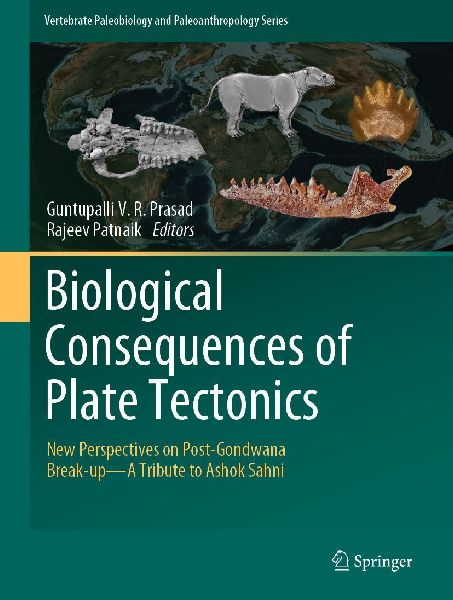
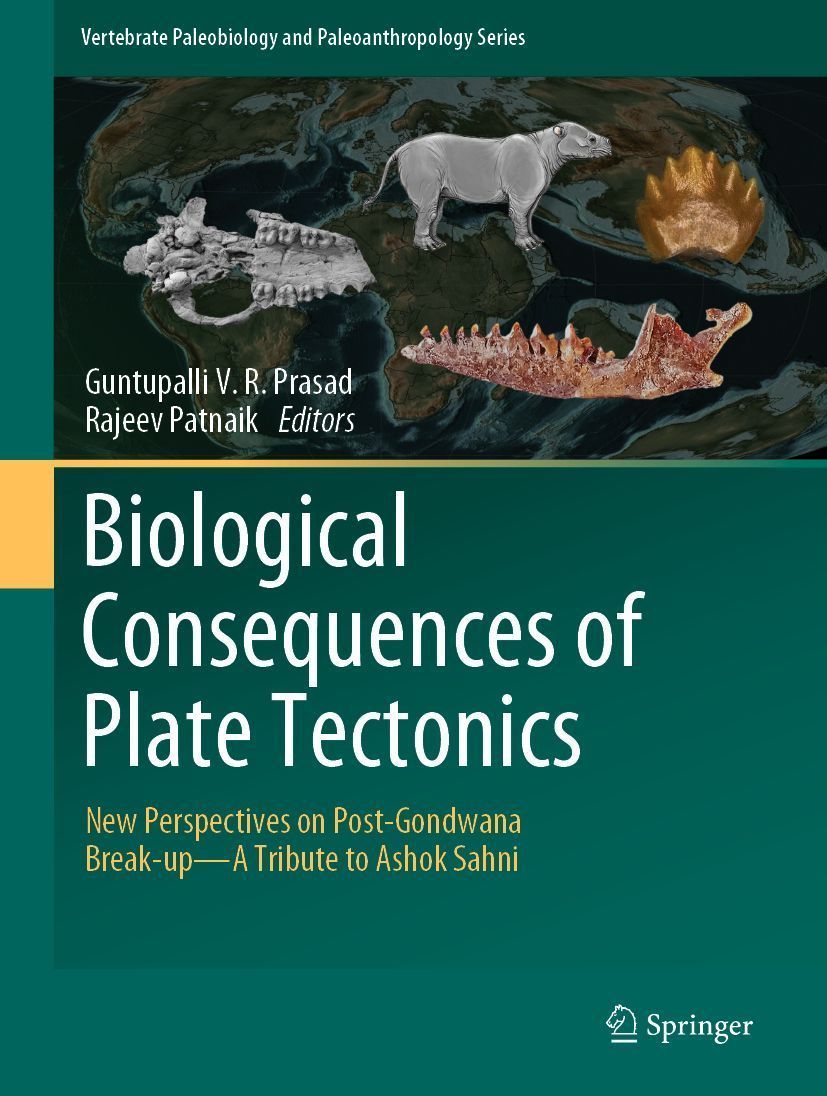
Biological Consequences of Plate Tectonics

New Perspectives on Post-Gondwana Break-up-A Tribute to Ashok Sahni

von Guntupalli V. R. Prasad (Hrsg.)

Herausgegeben von: Guntupalli V. R. Prasad, Herausgegeben von: Rajeev Patnaik

Aus der Reihe Vertebrate Paleobiology and Paleoanthropology

Einband
Gebunden
Seiten
480
Sprache
Englisch
Erschienen
November 2020
Verlag
Springer

Buchbeschreibung

This book recognizes and celebrates the contributions of Professor Ashok Sahni to the field of paleontology.

Prof. Sahni established a School of Vertebrate Palaeontology at Panjab University, Chandigarh, India, where he trained many of today's vertebrate paleontologists of India.

Ganze Beschreibung lesenWeniger anzeigen

The book covers topics on evolutionary patterns, macroevolutionary events, origination and radiation events, changes in physical environments & climate and their implications for biodiversity dynamics, intercontinental affinities and biogeographic connections in a plate tectonic framework.

The book begins by exploring India in the age of the dinosaurs, discussing new fossil remains from the Jurassic Era, then moves through the Cretaceous and Eocene to provide a picture on faunal and floral changes in Gondwanaland in the context of plate tectonics. Furthermore, the book explores the evolutionary patterns and biotic dispersals that resulted from the northward drift of Indian plate during the Cretaceous and its collision with Asia in the Eocene.

The respective chapters reveal the role of plate tectonics and climate in shaping the geographical distribution of plants and animals in Gondwana, specifically in India, as well as the post-India/Asia collision implications for biodiversity changes and biogeography in the region's continental environments. Given its scope, the book will appeal to vertebrate paleontologists, evolutionary biologists, and paleobiogeographers.

Inhaltsverzeichnis

  • 1 The Age of Dinosaurs in India
  • 2 New fossil evidence for the presence of ornithischian and saurischian remains in the Jurassic of India
  • 3 A minuscule tribosphenic mammal from an Early Cretaceous palaeopolar location of Australia
  • 4 The largest toothed monotreme (new genus new species) from the early Cretaceous of Lightning Ridge, NSW, Australia
  • 5 Molluscan fauna from the Upper Cretaceous Deccan intertrappean beds of central India: palaeobiogeographic significance
  • 6 Chelonian Pelomedusoides remains from the Late Cretaceous of southwestern India: Systematics and palaeobiogeographical implications
  • 7 The global affinities of Cretaceous and Paleogene Indian faunas: complex biogeography of a subcontinental raft
  • 8 Anuran lissamphibians and squamate reptiles from Upper Cretaceous (Maastrichtian) Deccan intertrappean sites from central India, with a review of a lissamphibians and squamates diversity in the northward drifting Indian plate
Ganzes Inhaltsverzeichnis anzeigen (19 Einträge)Weniger anzeigen
  • 9 Plant-derived biomarker signatures during the northward flight of India
  • 10 Isolated Africa: Review and a palaeobiological scenario
  • 11 Biogeography of Eocene mammals, continental and marine, in relation to the tectonic history of Indo-Pakistan
  • 12 New specimens of Frugivastodon (Mammalia: Apatotheria) from the early Eocene of India confirm its apatemyid status and elucidate dispersal of Apatemyidae
  • 13 Indohyus, endemic radiation of raoellid artiodactyls after continental collision in the Eocene of India and Pakistan
  • 14 Do the size variation(s) within non-volant mammals and the known evolutionary relationship(s) of the large-sized perissodactyls from the Cambay Shale (western India) point to a short-lived corridor for secular migration(s) between India and Eurasia prior to ~54.5 Ma?
  • 15 Parallel evolution of giant Anseriformes (Aves) in the Cenzoic of Laurasia, South America and Australia
  • 16 Depositional biofacies of the Middle Eocene Subathu Formation of the Himalayan foreland basinin the context of India-Asia collision tectonics
  • 17 Role of plate tectonics and climate in the geographical distribution of Indian late Cretaceous-early Palaeogene angiosperm flora
  • 18 Post-collisional climate of India and implications for Neogene-Quaternary mammalian dispersals
  • 19 Murine diversification in the Indian cradle: Coalescence of the Erimanthos-Apodus-Mus groups before 11 Ma

Details

Erscheinungstermin
November 2020
Kategorie
Fremdsprachige Bücher
Einband
Gebunden
Seiten
480
Sprache
Englisch
Verlag
Springer
Reihe
Vertebrate Paleobiology and Paleoanthropology
Format
28,5 × 21,5 cm
Dicke
3,2 cm
Gewicht
1.331 g
EAN / ISBN-13
9783030497521
Maßstabsgetreu: Deckel und Buchrücken neben einer Hand (18 cm).
Versand und Rückgabe

Standardversand: 1 bis 3 Werktage, 3,99 €, kostenlos ab 35 €

Liefergebiet: Deutschland

Rücksendung: 14 Tage Widerrufsrecht. Bei einem Widerruf tragen Sie die Kosten der Rücksendung. Bei einer Falschlieferung oder einem Fehler von uns erstatten wir Ihnen das Rückporto. Den Widerruf erklären Sie über den Knopf „Vertrag widerrufen“ im Fuß der Seite.

Hersteller und ProduktsicherheitSpringer Nature Customer Service Center GmbH
Springer Nature Customer Service Center GmbH
Europaplatz 3
69115 Heidelberg
Deutschland
ProductSafety@springernature.com

Mehr aus der Reihe Vertebrate Paleobiology and Paleoanthropology

Ähnliche Titel

Bewertungen

Zu diesem Titel gibt es noch keine Bewertung. Bewerten kann, wer ihn bei uns gekauft hat.
So prüfen wir Bewertungen
Eine Bewertung kann bei uns nur abgeben, wer den Titel über sein Kundenkonto bei uns gekauft hat. Jede Bewertung ist fest mit der zugehörigen Bestellung verknüpft; anders kommt sie technisch gar nicht zustande. Deshalb trägt jede angezeigte Bewertung den Hinweis „Verifizierter Kauf". Wir zeigen positive wie negative Bewertungen und löschen nur bei Rechtsverstößen. Für Bewertungen gibt es keine Gegenleistung.
128,39 €Voraussichtlich 4. bis 8. Dez.

Inhalte ab 18

Cover von Titeln für Erwachsene, etwa erotische Romane, Manga oder Comics, bleiben unscharf, bis Sie bestätigen. Die Bestätigung gilt für alle Seiten und Tabs, bis Sie den Browser schließen.

Zurück zum Katalog