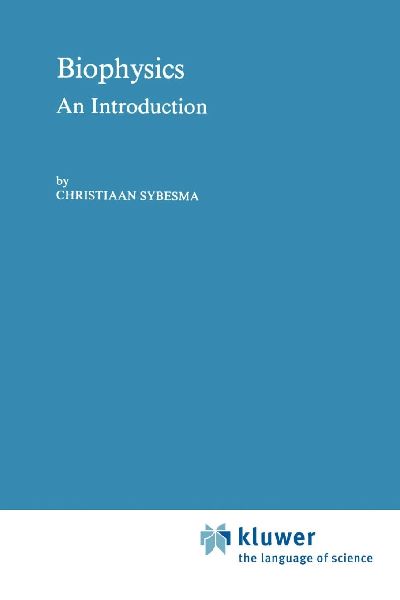
Biophysics
An Introduction
von C. Sybesma
- Einband
- Kartoniert
- Seiten
- 332
- Sprache
- Englisch
- Erschienen
- Juli 1989
- Verlag
- Springer
Buchbeschreibung
Today, courses on biophysics are taught in almost all universities in the world, often in separate biophysics departments or divisions.
This reflects the enormous growth of the field, even though the problem of its formal definition remains unsettled. In spite of this lack of definition, biophysics, which can be considered as an amalgamation of the biological and the physical sciences, is recognized as a major scientific activity that has led to spectacular developments in biology.
Ganze Beschreibung lesenWeniger anzeigen
It has increased our knowledge of biological systems to such an extent that even industrial and commercial interests are now beginning to put their stamps on biological research. A major part of these developments took place during the last two decades.
Therefore, an introductory textbook on biophysics that was published a dozen years ago (c. Sybesma, An Introduction to Biophysics, Academic Press, 1977) no longer could fulfil " … the need for a comprehensive but elementary textbook … -" (R. Cammack, Nature 272 (1978), 96). However, because of the increased proliferation of biophysics into higher education, the need for introductory course texts on biophysics is stronger than ever. This fact, together with valuable comments of many readers, have encouraged me to revise the original book.
Inhaltsverzeichnis
- 1. Introduction
- 1.1 What is biophysics
- 1.2 The fundamental principles of biology
- 2. Biological structures
- 2.1 The structures of life
- 2.2 The morphology of cells
- 2.3 The biological macromolecules
- 2.4 Membranes
Ganzes Inhaltsverzeichnis anzeigen (80 Einträge)Weniger anzeigen
- 2.5 Cell evolution
- 3. Physical principles and methods in biology
- 3.1 The electronic structure of atoms
- 3.2 The structure of molecules and molecular complexes
- 3.3 Absorption and emission spectroscopy
- 3.4 Infrared and Raman spectroscopy
- 3.5 Magnetic resonances
- 3.6 Size and shape of biological macromolecules
- 3.7 X-ray crystal structure analysis
- 4. Structure and function of proteins and nucleic acids
- 4.1 The structure of proteins
- 4.2 Enzymes
- 4.3 Recognition proteins
- 4.4 The genetic systyem
- 4.5 Regulation and control
- 4.6 Recombinant DNA
- 5. Biological energy conversion
- 5.1 The biological energy flow
- 5.2 Adenosine triphosphate in coupled reactions; pyridine nucleotides
- 5.3 Fermentation and glycolysis
- 5.4 The citric acid cycle
- 5.5 Respiration
- 6. Photosynthesis
- 6.1 Photosynthetic structures
- 6.2 Transfer and trapping of excitation energy
- 6.3 Photosynthetic electron transport in higher plants and algae
- 6.4 Photosynthetic electron transport in prokaryotes
- 6.5 Reaction centers
- 6.6 Carbon fixation
- 7. Biological transport processes
- 7.1 Passive and active transport
- 7.2 Osmotic equilibrium
- 7.3 Ionic equilibrium
- 7.4 Flow across membranes
- 7.5 Transport mechanisms
- 8. Membrane-bound energy transduction
- 8.1 The high-energy intermediate
- 8.2 The chemiosmotic model
- 8.3 Proton translocation
- 8.4 pH gradient and membrane potential
- 8.5 The proton-translocating ATPase
- 9. Biophysics of nerves
- 9.1 Nerves
- 9.2 The action potential
- 9.3 Synapses
- 9.4 Information processing in neuronal systems
- 10. Biophysics of contractility
- 10.1 Intracellular motion
- 10.2 Cellular motion
- 10.3 Muscular contraction
- 10.4 The energetics of contraction
- 11. Biophysics of sensory systems
- 11.1 The transmission of information
- 11.2 The visual receptor
- 11.3 The otic receptors
- 11.4 The chemical, somatic, and visceral receptors
- 12. Theoretical biology
- 12.1 Physical concepts and biology
- 12.2 Nonequilibrium thermodynamics
- 12.3 Modeling
- 12.4 Cybernetics
- 12.5 Generalizations in biology
- Appendix I. Some elements of quantum mechanics
- AI.1 The principle of quantization and the uncertainty principle
- Appendix II. Elements of equilibrium thermodynamics
- AII.l Definitions
- AII.2 First and second laws of thermodynamics
- AII.3 Entropy
- AII.4 Thermodynamic potentials
- AII.5 The chemical and the electrochemical potentials
- AII.6 The standard free energy of a chemical reaction
- AII.7 Oxidation-reduction potentials
Details
- Erscheinungstermin
- Juli 1989
- Kategorie
- Fremdsprachige Bücher
- Einband
- Kartoniert
- Seiten
- 332
- Sprache
- Englisch
- Verlag
- Springer
- Format
- 24,0 × 16,0 cm
- Dicke
- 1,9 cm
- Gewicht
- 532 g
- EAN / ISBN-13
- 9780792300304
Versand und Rückgabe
Standardversand: 1 bis 3 Werktage, 3,99 €, kostenlos ab 35 €
Liefergebiet: Deutschland
Rücksendung: 14 Tage Widerrufsrecht. Bei einem Widerruf tragen Sie die Kosten der Rücksendung. Bei einer Falschlieferung oder einem Fehler von uns erstatten wir Ihnen das Rückporto. Den Widerruf erklären Sie über den Knopf „Vertrag widerrufen“ im Fuß der Seite.
Hersteller und ProduktsicherheitSpringer Nature Customer Service Center GmbH
Springer Nature Customer Service Center GmbH
Europaplatz 3
69115 Heidelberg
Deutschland
ProductSafety@springernature.com
Mehr von C. Sybesma
Ähnliche Titel

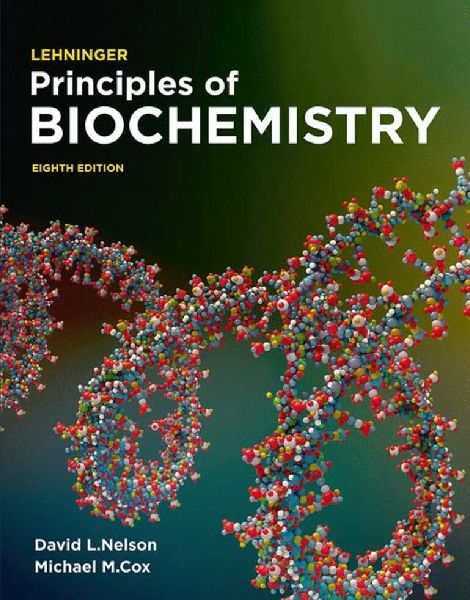
Lehninger Principles of Biochemistry (International Edition)
David L. Nelson
Kartoniert, Englisch
106,50 €

Bewertungen
Zu diesem Titel gibt es noch keine Bewertung. Bewerten kann, wer ihn bei uns gekauft hat.
So prüfen wir Bewertungen
Eine Bewertung kann bei uns nur abgeben, wer den Titel über sein Kundenkonto bei uns gekauft hat. Jede Bewertung ist fest mit der zugehörigen Bestellung verknüpft; anders kommt sie technisch gar nicht zustande. Deshalb trägt jede angezeigte Bewertung den Hinweis „Verifizierter Kauf". Wir zeigen positive wie negative Bewertungen und löschen nur bei Rechtsverstößen. Für Bewertungen gibt es keine Gegenleistung.
235,39 €Voraussichtlich 1. bis 3. Dez.