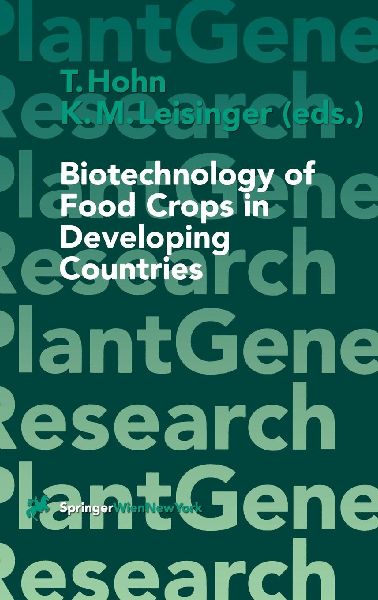
Biotechnology of Food Crops in Developing Countries
Herausgegeben von: K. M. Leisinger, Herausgegeben von: T. Hohn
Aus der Reihe Plant Gene Research
- Einband
- Gebunden
- Seiten
- 248
- Sprache
- Englisch
- Erschienen
- November 1999
- Verlag
- Springer Vienna
Buchbeschreibung
Recent advances in gene technology, plant transformation, and the growing knowledge of DNA sequences of plants as well as of their most important parasites and symbionts offer many interesting prospects for the breeding of new crop varieties. This was not only recognized by the major seed companies, but also by the governments of developing countries and by worldwide foundations supporting their agriculture.
Ganze Beschreibung lesenWeniger anzeigen
The know-how gained by the seed companies on crops important for the agricultural industry in developed countries could easily be provided for free to the international and national organizations dedicated to development of crops important in the third world. Results obtained worldwide become easily available to everybody through the scientific literature.
Likewise, agricultural research in, e.g., the USA or Europe profits from the natural plant gene pool available in the third world. All this definitely provides for the possibility of fast change, new prosperity and security of food supply in the whole world, if properly applied. The fast development also asks for ethical and sociopolitical considerations, whereby not doing the right can be as much a mistake as doing the wrong.
Inhaltsverzeichnis
- The Contribution of Genetic Engineering to the Fight against Hunger in Developing Countries
- I. Introduction
- II. The Political Economy of Hunger
- III. The Risks of Genetic Engineering in the Fight against Hunger
- IV. The Benefits of Genetic Engineering in the Fight against Hunger
- V. Building Blocks for Food Security
- VI. Conclusion
- VIL References
Ganzes Inhaltsverzeichnis anzeigen (68 Einträge)Weniger anzeigen
- Networking Biotechnology Solutions with Developing Countries: the Mission and Strategy of the International Service for the Acquisition of Agri-Biotech Applications
- I. Background: the Challenge
- II. Creation of ISAAA: the Institutional Response
- III. The Program
- IV Biosafety Regulatory Development: a Special Case
- V. The Strategy
- VI. The Organization
- VII And Who Benefits?
- VIII. References
- Socioethical and Sociopolitical Reflections on the Application of Gene Technology in Developing Countries
- Gene Technology for Increased Rice Production in Developing Countries
- I. Introduction
- II. Increasing Rice Production
- III. The Quality of the Rice Grain
- IV. Conclusions
- V. References
- Biotechnology for Maize and Wheat Improvement in Developing Countries: a Need, a Reality, or a Dream?
- I. Introduction
- II. Maize as an Important Target for Genomics
- III. Wheat and Its Relatives as Important Targets for Genomics
- IV. Approaches to Studying the Molecular Diversity of Maize and Wheat
- V. Molecular Genetics of Maize
- VI. Molecular Markers in Wheat
- VII. Possibilities for Marker-Assisted Selection
- VIII. Genetic-Engineering Achievements in Maize
- IX. Genetic Engineering in Wheat
- X. Conclusion
- XI. References
- Gene Transfer in Sugarcane
- I. Introduction
- II. Genetic Transformation
- III. Agricultural Traits
- IV. Industrial Traits
- V. Somaclonal Variation and Integration of Transgenic Plantsinto the Sugarcane Breeding Program
- VI. Risk Assessments
- VII. Conclusions
- VIII. References
- Gene Technology for Potato in Developing Countries
- I. Introduction
- II. Potato Production Constraints in Less-Developed countries
- III. Biotechnology Challenges and Opportunities
- IV. Possible Limitations
- V. Conclusions
- VI. References
- Genetic Biotechnologies and Cassava-Based Development
- I. Introduction: Cassava's Links to Development Objectives
- II. The Cassava Biotechnology Network
- III. Cassava Biotechnology Research Priorities Derived from Expressed Needs of Farmers
- IV. Cassava Biotechnology Research
- V. Cassava Biotechnology Tools in Support of Farmer-Participatory Research
- VI. Implications of Cassava Biotechnology Research for the Second Green Revolution
- VII. Conclusion
- VIII. References
- Underresearched Tropical Food Crops: Cowpea, Banana and Plantain, and Yams
- I. Introduction
- II. Cowpea
- III. Banana and Plantain
- IV. Yams
- V. Conclusion
- VI. References
Details
- Erscheinungstermin
- November 1999
- Kategorie
- Fremdsprachige Bücher
- Einband
- Gebunden
- Seiten
- 248
- Sprache
- Englisch
- Verlag
- Springer Vienna
- Reihe
- Plant Gene Research
- Format
- 24,1 × 16,0 cm
- Dicke
- 1,9 cm
- Gewicht
- 489 g
- EAN / ISBN-13
- 9783211832400
Versand und Rückgabe
Standardversand: 1 bis 3 Werktage, 3,99 €, kostenlos ab 35 €
Liefergebiet: Deutschland
Rücksendung: 14 Tage Widerrufsrecht. Bei einem Widerruf tragen Sie die Kosten der Rücksendung. Bei einer Falschlieferung oder einem Fehler von uns erstatten wir Ihnen das Rückporto. Den Widerruf erklären Sie über den Knopf „Vertrag widerrufen“ im Fuß der Seite.
Hersteller und ProduktsicherheitSpringer Nature Customer Service Center GmbH
Springer Nature Customer Service Center GmbH
Europaplatz 3
69115 Heidelberg
Deutschland
ProductSafety@springernature.com
Mehr aus der Reihe Plant Gene Research


Signal Transduction in Plant Growth and Development
Desh P. S. Verma (Hrsg.)
Kartoniert, Englisch
106,99 €
Ähnliche Titel



Ordered Porous Nanostructures and Applications
Ralf B. Wehrspohn (Hrsg.)
Gebunden, Englisch, 2 Ausgaben
ab 106,99 €

Bewertungen
Zu diesem Titel gibt es noch keine Bewertung. Bewerten kann, wer ihn bei uns gekauft hat.
So prüfen wir Bewertungen
Eine Bewertung kann bei uns nur abgeben, wer den Titel über sein Kundenkonto bei uns gekauft hat. Jede Bewertung ist fest mit der zugehörigen Bestellung verknüpft; anders kommt sie technisch gar nicht zustande. Deshalb trägt jede angezeigte Bewertung den Hinweis „Verifizierter Kauf". Wir zeigen positive wie negative Bewertungen und löschen nur bei Rechtsverstößen. Für Bewertungen gibt es keine Gegenleistung.
53,49 €Voraussichtlich 4. bis 8. Dez.