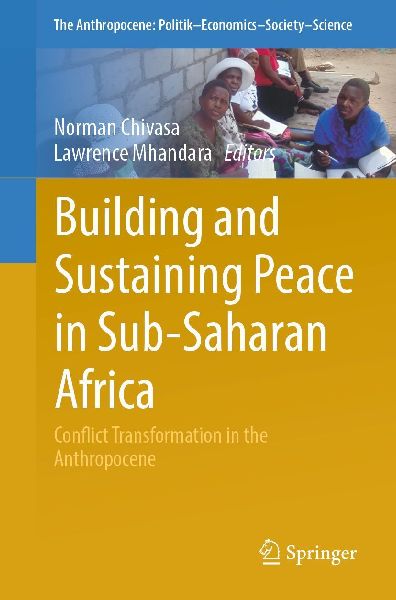
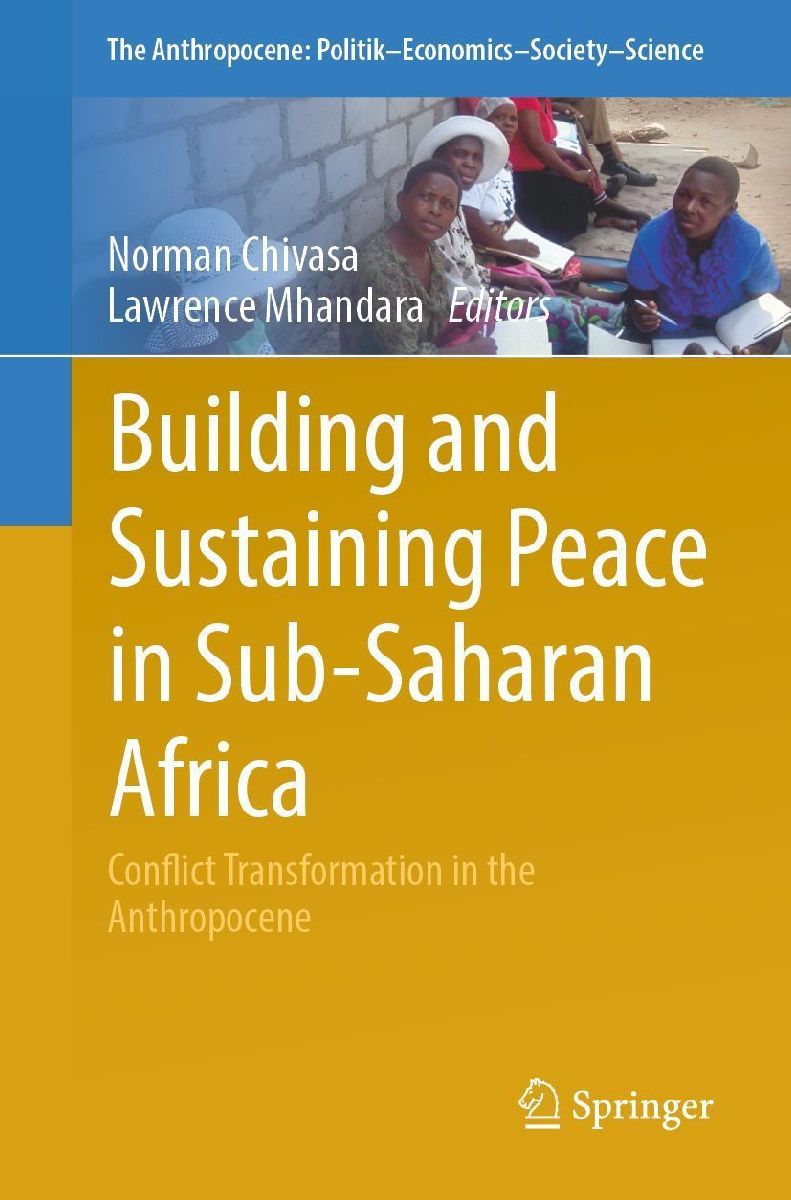
Building and Sustaining Peace in Sub-Saharan Africa
Conflict Transformation in the Anthropocene
Herausgegeben von: Norman Chivasa, Herausgegeben von: Lawrence Mhandara
Aus der Reihe The Anthropocene: Politik-Economics-Society-Science
- Einband
- Kartoniert
- Seiten
- 356
- Sprache
- Englisch
- Erschienen
- August 2026
- Verlag
- Springer
Buchbeschreibung
The book examines and reflects on how conflict transformation in Sub-Saharan Africa can be done in the Anthropocene.
The Anthropocene is a geological epoch marked by human activities becoming the dominant influence on the environment, rather than natural forces. This shift signifies a new reality where humans, through their behaviors and decisions, have transformed ecosystems, altered atmospheric composition, and disrupted climatic systems.
Ganze Beschreibung lesenWeniger anzeigen
Historically, forces such as volcanic eruptions, ocean currents, and solar cycles dictated Earth’s systems. In the Anthropocene, human activities which include but not limited to the establishment of infrastructures for peace, peacekeeping, and community peace initiatives—have become equally, if not more, significant.
Five major research themes emerge from its 19 Chapters are: 1). The problematic in African communities 2). Resilient social institutions in African communities 3). Infrastructures that sustain peace in Africa 4). Socio-political responses to climate change-induced conflict & violence in Africa 5). The future of peace in Africa
The book acknowledges that top-down approaches to peace in African soil have failed, for example, truth and peace commissions in Siera Leone, South Africa, and peace agreements in Democratic Republic of Congo, Mozambique, Lesotho, Zimbabwe, and their unintended effects and so on.
This book is a Call for new theoretical perspectives that move Sub-Saharan Africa forward in the area of peacebuilding using African innovation and endogenous institutions to sustain.
Inhaltsverzeichnis
- Chapter 1. Introduction to Conflict Transformation in the Anthropocentric
- Chapter 2. African Nonviolent Resistance in Colonial Zimbabwe: Tracing the Roots of Conflict Transformation, circa 1963-1980
- Chapter 3. Cyber-Enabled Drug Trafficking and the Erosion of National Security in Zimbabwe
- Chapter 4. Human Smuggling from Zimbabwe to South Africa: An Analysis of the Push Factors, Actors and Modus Operandi through the Beitbridge Border
- Chapter 5. Is Mozambique's Growing Young Population the Root Cause of Electoral Violence or a Catalyst for Change?
- Chapter 6. Harnessing Community-Based Peacebuilding to Mitigate Afrophobic Violence Involving Young Black Africans in Durban, South Africa
- Chapter 7. An Exploration of the Possibility of Applying an Adapted Resilient Community Approach to Better Address GBV Among GBV Survivors in Harare District
- Chapter 8. The Shona Peace Tradition: Its Potential to Build and Sustain Peace in Post-Colonial Zimbabwe
Ganzes Inhaltsverzeichnis anzeigen (18 Einträge)Weniger anzeigen
- Chapter 9. Re-thinking Religious Peacebuilding in Zimbabwe: A Case Study of the Zion Christian Church (ZCC)
- Chapter 10. Christian Spirituality as a Resource for Peace: Evidence from Johane Masowe and Zion Christian Church (ZCC) churches in Zimbabwe
- Chapter 11. Resolving Leadership Succession Disputes in African Initiated Churches in Zimbabwe
- Chapter 12. Social cohesion: The Aftermath of Nyadzonya Massacre Memories in Zimbabwe’s Second Republic
- Chapter 13. The Bottom-Up Peacebuilding as a Strategy to Resolve the Conflict Between Lebamnon Investment (Pvt) Ltd and Magunje Local Community in Mashonaland West Province, Zimbabwe
- Chapter 14. The Role of Grassroots Women in Building Durable Peace in Cabo Delgado, Mozambique
- Chapter 15. Youth, the Crisis of Participation and Youth Agency in Post-Colonial Zimbabwe
- Chapter 16. Mitigating Cycles of Violence Through Peace Gardening in Bikita District of Masvingo Province; Zimbabwe.-= Chapter 17. Enhancing Grassroots Peacebuilding and Resilience Through Food Security in Eastern Democratic Republic of Congo
- Chapter 18. Exploring the peacebuilding potential of Climate-Smart Agriculture (CSA) in Goromonzi district, Zimbabwe
- Chapter 19. Conclusion
Details
- Erscheinungstermin
- August 2026
- Kategorie
- Fremdsprachige Bücher
- Einband
- Kartoniert
- Seiten
- 356
- Sprache
- Englisch
- Verlag
- Springer
- Reihe
- The Anthropocene: Politik-Economics-Society-Science
- Format
- 23,5 × 15,5 cm
- Dicke
- 2,0 cm
- Gewicht
- 540 g
- EAN / ISBN-13
- 9783032223197
Über Norman Chivasa (Hrsg.)
Norman Chivasa is a Research Associate at the International Centre of Non-violence, Durban University of Technology & Lecturer in the Department of Peace, Security & Society at the University of Zimbabwe.
Mehr über Norman Chivasa (Hrsg.)Weniger anzeigen
He holds a DPhil and Masters in Conflict Resolution & Peace Studies from the University of KwaZulu-Natal. He has co-edited a volume published by Springer: Climate change and socio-political violence in Sub-Saharan Africa in the Anthropocene: Perspectives from peace ecology and sustainable development. He has published 25 peer reviewed journal articles and 8 book chapters in climate change, conflict resolution, self-help initiatives, peacebuilding, ubuntu leadership and statelessness.
Lawrence Mhandara is a senior lecturer of Political Science in the Department of Governance and Public Management, University of Zimbabwe. Lawrence holds the BSc. degree in Politics and Administration, Bachelor of Substantive Laws and an MSc degree in International Relations. He also holds a DPhil in Public Administration from the Durban University of Technology, Durban, South Africa. Lawrence has co-edited four books and authored over 25 book chapters, 13 journal articles in peer-reviewed journals, and an occasional paper.
Versand und Rückgabe
Standardversand: 1 bis 3 Werktage, 3,99 €, kostenlos ab 35 €
Liefergebiet: Deutschland
Rücksendung: 14 Tage Widerrufsrecht. Bei einem Widerruf tragen Sie die Kosten der Rücksendung. Bei einer Falschlieferung oder einem Fehler von uns erstatten wir Ihnen das Rückporto. Den Widerruf erklären Sie über den Knopf „Vertrag widerrufen“ im Fuß der Seite.
Hersteller und ProduktsicherheitSpringer Nature Customer Service Center GmbH
Springer Nature Customer Service Center GmbH
Europaplatz 3
69115 Heidelberg
Deutschland
ProductSafety@springernature.com
Mehr von Norman Chivasa

The Nature, causes and consequences of conflicts involving pastors
Norman Chivasa
Kartoniert, Englisch
196,00 €
Mehr aus der Reihe The Anthropocene: Politik-Economics-Society-Science
Integral Ecology in the Anthropocene: Africa and Beyond
Richard Marcantonio (Hrsg.)
Kartoniert, Englisch
128,39 €

Towards Rethinking Politics, Policy and Polity in the Anthropocene
Hans Günter Brauch (Hrsg.)
Kartoniert, Englisch
139,09 €
Ähnliche Titel


Bewertungen
Zu diesem Titel gibt es noch keine Bewertung. Bewerten kann, wer ihn bei uns gekauft hat.
So prüfen wir Bewertungen
Eine Bewertung kann bei uns nur abgeben, wer den Titel über sein Kundenkonto bei uns gekauft hat. Jede Bewertung ist fest mit der zugehörigen Bestellung verknüpft; anders kommt sie technisch gar nicht zustande. Deshalb trägt jede angezeigte Bewertung den Hinweis „Verifizierter Kauf". Wir zeigen positive wie negative Bewertungen und löschen nur bei Rechtsverstößen. Für Bewertungen gibt es keine Gegenleistung.
139,09 €Voraussichtlich 2. bis 4. Dez.