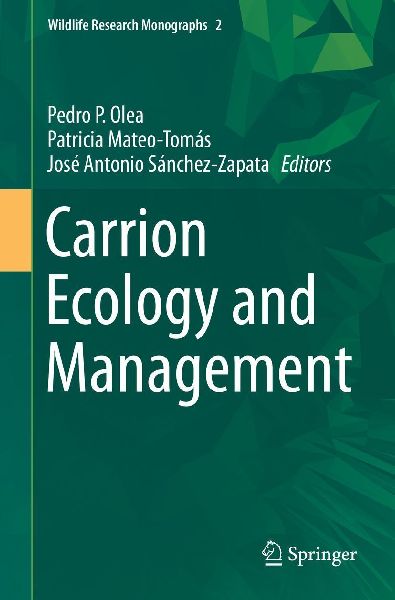
Carrion Ecology and Management
Herausgegeben von: Pedro P. Olea, Herausgegeben von: Patricia Mateo-Tomás, Herausgegeben von: José Antonio Sánchez-Zapata
Aus der Reihe Wildlife Research Monographs
- Einband
- Gebunden
- Seiten
- 296
- Sprache
- Englisch
- Erschienen
- August 2019
- Verlag
- Springer
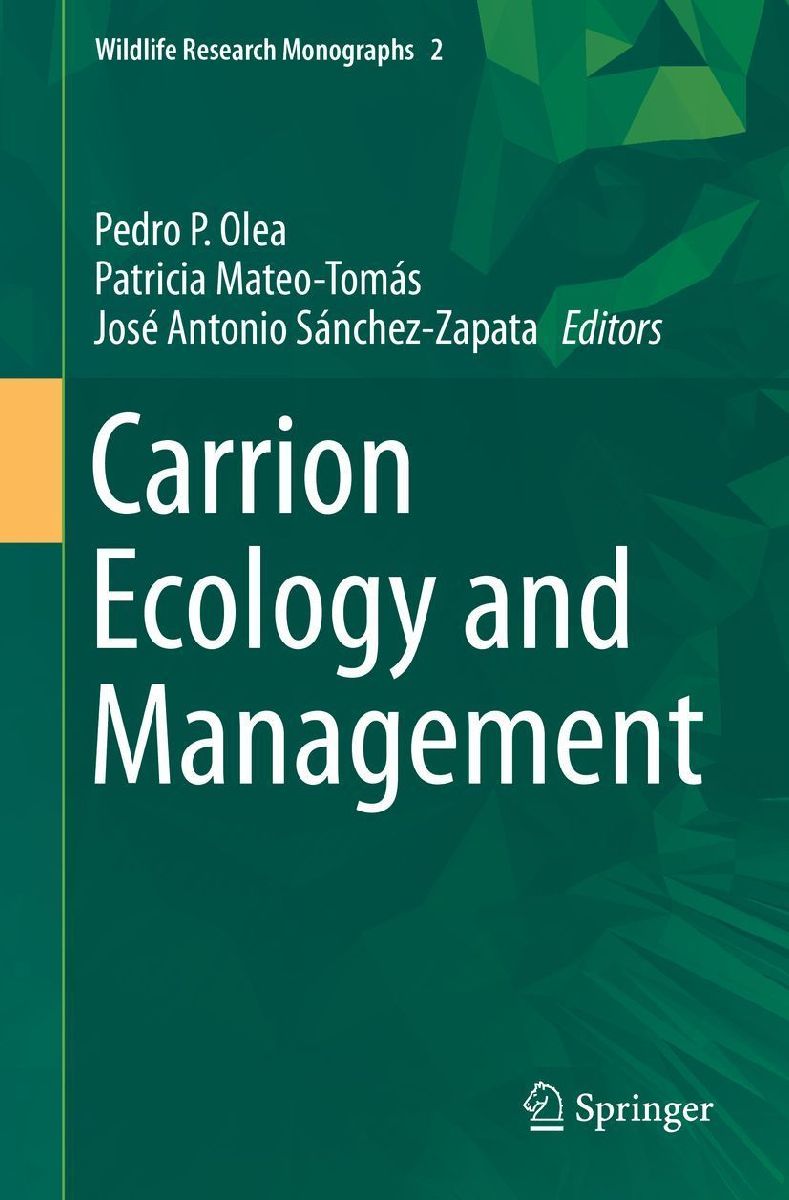
Buchbeschreibung
Carrion, or dead animal matter, is an inherent component of aquatic and terrestrial ecosystems worldwide, and is exploited by a wide diversity of organisms from different trophic levels, including microbes, arthropods and vertebrates. Further, carrion consumption by scavengers, i.e. scavenging, supports key ecosystem functions and services such as recycling nutrients and energy, disposing of carcasses and regulating disease spread.
Ganze Beschreibung lesenWeniger anzeigen
Yet, unlike dead plant matter, dead animal decomposition has received little attention in the fields of ecology, wildlife conservation and environmental management, and as a result the management of carrion for maintaining biodiversity and functional ecosystems has been limited.
This book addresses the main ecological patterns and processes relating to the generation and consumption of carrion both in terrestrial and aquatic ecosystems. It also discusses a number of conservation concerns and associated management issues, particularly regarding the increasing role of human-mediated carrion in ecosystems.
Lastly, the book outlines future research lines in carrion ecology and management, and identifies the major challenges for scavengers and scavenging processes in the Anthropocene.
Inhaltsverzeichnis
- Chapter 1 Introduction to the Topic of Carrion Ecology and Management. -Part 1 Carrion ecology:Description of the Main Ecological Patterns and Processes Occurring around a Carrion
- Chapter 2 Carrion Availability in Space and Time
- Chapter 3 Invertebrate scavenging communities.-Chapter 4 Vertebrate Scavenging Communities.-Chapter 5 Carrion Decomposition
- Chapter 6 Ecological Functions of Vertebrate Scavenging
- Part 2 Human and Carrion: The Impact of Humans on Carrion Ecology and Management
- Chapter 7 Scavenging and Disease Dynamics
- Chapter 8 Human-Mediated Carrion: Effects on Ecological Processes
- Chapter 9 What Makes Carrion Unsafe for Scavengers? Considerations for Appropriate Regulatory Policies and Sound Management Practices
Ganzes Inhaltsverzeichnis anzeigen (11 Einträge)Weniger anzeigen
- Part 3 Methodological Approaches: Description of some Methods Used to Study Carrion Ecology.-Chapter 10 Methods for Monitoring Carrion Decomposition in Aquatic Environs
- Chapter 11 Studying Movement of Avian Scavengersto Understand Carrion Ecology
- Chapter 12 Synthesis
Details
- Erscheinungstermin
- August 2019
- Kategorie
- Fremdsprachige Bücher
- Einband
- Gebunden
- Seiten
- 296
- Sprache
- Englisch
- Verlag
- Springer
- Reihe
- Wildlife Research Monographs
- Format
- 24,1 × 16,0 cm
- Dicke
- 2,1 cm
- Gewicht
- 613 g
- EAN / ISBN-13
- 9783030164997
Über Pedro P. Olea (Hrsg.)
Pedro P. Olea is a Professor and researcher at the Centro de Investigación en Biodiversidad y Cambio Global (CIBC-UAM), Departamento de Ecología, Facultad de Ciencias, Universidad Autónoma de Madrid, Spain.
Mehr über Pedro P. Olea (Hrsg.)Weniger anzeigen
His research focuses on understanding how global human activities, such as hunting, and livestock and crop farming, affect patterns and processes in species, communities and ecosystems at different spatial scales, and how to apply this knowledge in their management and conservation. His research findings have been published in the major ecology and conservation journals. Patricia Mateo-Tomás is a postdoctoral researcher at the Centre of Functional Ecology (CFE) at the University of Coimbra, Portugal and the Oviedo University, Spain. Her work focuses on the ecology and conservation of scavengers, especially vultures but also other facultative vertebrate scavengers, and their relationships with human activities, such as hunting and livestock rearing (including transhumance) that have developed in natural ecosystems. She is particularly committed to bridging the gap between scientific knowledge and wildlife management and conservation through close collaboration with private and public stakeholders.
José A. Sánchez Zapata is a Professor of Ecology at the Department of Applied Biology, Universidad Miguel Hernández, Orihuela, Spain. His research initially focused on the ecology and conservation of raptors, but during the last decade he has broadened the topics to include the role of scavenger guilds in ecosystem functioning and services under a socio-ecological framework. He has pursued research in Africa, America, Asia, Australia and Europe and has published papers in international ecology and conservation journals.
Versand und Rückgabe
Standardversand: 1 bis 3 Werktage, 3,99 €, kostenlos ab 35 €
Liefergebiet: Deutschland
Rücksendung: 14 Tage Widerrufsrecht. Bei einem Widerruf tragen Sie die Kosten der Rücksendung. Bei einer Falschlieferung oder einem Fehler von uns erstatten wir Ihnen das Rückporto. Den Widerruf erklären Sie über den Knopf „Vertrag widerrufen“ im Fuß der Seite.
Hersteller und ProduktsicherheitSpringer Nature Customer Service Center GmbH
Springer Nature Customer Service Center GmbH
Europaplatz 3
69115 Heidelberg
Deutschland
ProductSafety@springernature.com
Mehr aus der Reihe Wildlife Research Monographs
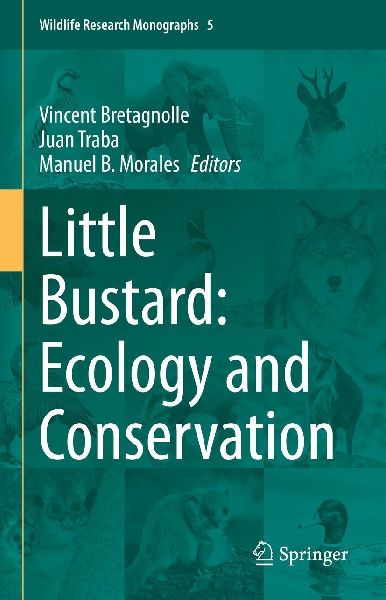
Little Bustard: Ecology and Conservation
Vincent Bretagnolle (Hrsg.)
Gebunden, Englisch, 2 Ausgaben
ab 160,49 €
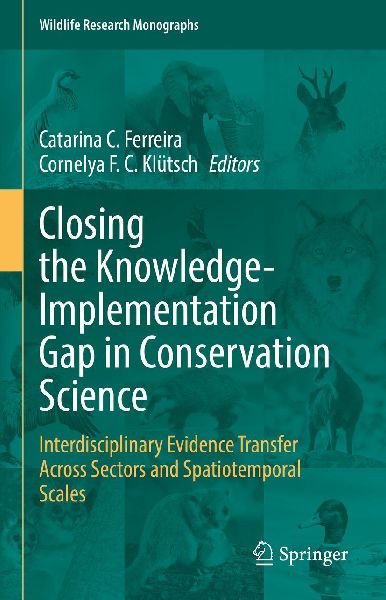
Closing the Knowledge-Implementation Gap in Conservation Science
Catarina C. Ferreira (Hrsg.)
Gebunden, Englisch, 2 Ausgaben
ab 181,89 €
Ähnliche Titel
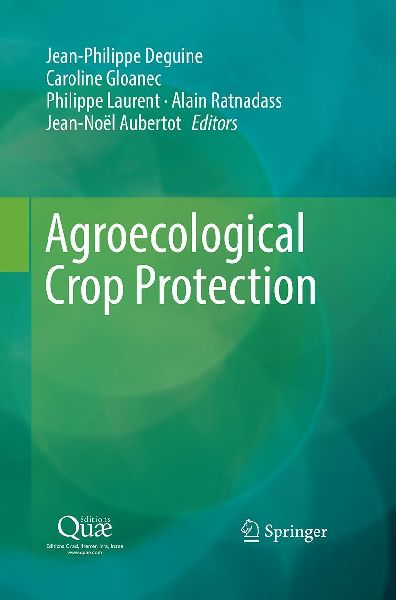
Agroecological Crop Protection
Jean-Philippe Deguine (Hrsg.)
Gebunden, Englisch, 2 Ausgaben
ab 171,19 €
Biosaline Agriculture as a Climate Change Adaptation for Food Security
Redouane Choukr-Allah (Hrsg.)
Gebunden, Englisch, 2 Ausgaben
ab 192,59 €
Bewertungen
Zu diesem Titel gibt es noch keine Bewertung. Bewerten kann, wer ihn bei uns gekauft hat.
So prüfen wir Bewertungen
Eine Bewertung kann bei uns nur abgeben, wer den Titel über sein Kundenkonto bei uns gekauft hat. Jede Bewertung ist fest mit der zugehörigen Bestellung verknüpft; anders kommt sie technisch gar nicht zustande. Deshalb trägt jede angezeigte Bewertung den Hinweis „Verifizierter Kauf". Wir zeigen positive wie negative Bewertungen und löschen nur bei Rechtsverstößen. Für Bewertungen gibt es keine Gegenleistung.
171,19 €Voraussichtlich 4. bis 8. Dez.