Buch-OWLOnline-Buchhandel

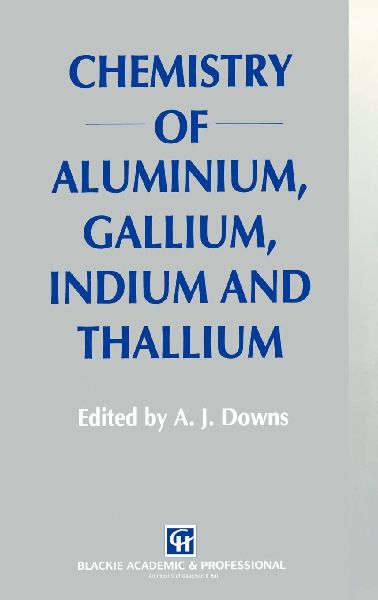
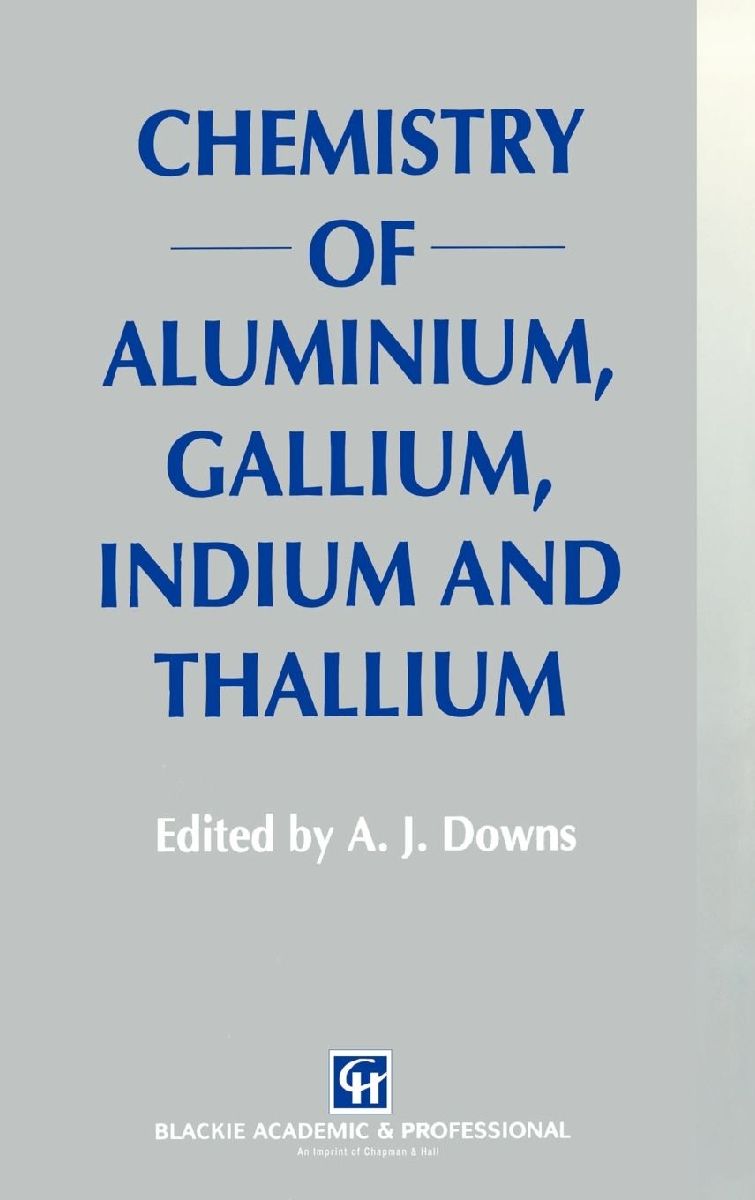
Chemistry of Aluminium, Gallium, Indium and Thallium

von A. J. Downs (Hrsg.)

Herausgegeben von: A. J. Downs

Einband
Gebunden
Seiten
544
Sprache
Englisch
Erschienen
Mai 1993
Verlag
Springer Netherlands

Buchbeschreibung

Boron has all the best tunes.

That may well be the first impression of the Group 13 elements. The chemical literature fosters the impression not only in the primary journals, but also in a steady outflowofbooks focussing more or less closely on boron and its compounds. The same preoccupation with boron is apparent in the coverage received by the Group 13 elements in the comprehensive and regularly updated volume of the Gmelin Handbook.

Ganze Beschreibung lesenWeniger anzeigen

Yet such an imbalance cannot be explained by any inherent lack of variety, interest or consequence in the 'heavier elements. Aluminium is the most abundant metal in the earth's crust; in the industrialised world the metal is second only to iron in its usage, and its compounds can justifiably be said to touch our lives daily - to the potential detriment of those and other lives, some would argue.

From being chemical curios, gallium and indium have now gained considerably prominence as sources of compound semiconductors like gallium arsenide and indium antimonide. Nor is there any want of incident in the chemistriesofthe heavier Group 13 elements. In their redox, coordination and structural properties, there is to be found music indeed, notable not always for its harmony but invariably for its richness and variety.

Thisbook seeks to redress the balance with a definitive, wide-ranging and up-to-date review of the chemistry of the Group 13 metals aluminium, gallium, indium and thallium.

Inhaltsverzeichnis

  • 1 Chemistry of the Group 13 metals: some themes and variations
  • 1.1 Introduction: some characteristics of the Group 13 elements
  • 1.2 History and occurrence
  • 1.3 Physical properties of metal atoms
  • 1.4 Chemical properties of the elements and their compounds
  • 1.5 Organisation of subsequent chapters
  • References
  • 2 The elements
Ganzes Inhaltsverzeichnis anzeigen (74 Einträge)Weniger anzeigen
  • 2.1 Characteristics and physical properties
  • 2.2 Extraction and refining of aluminium
  • 2.3 Production of gallium, indium and thallium
  • 2.4 Alloying of aluminium
  • 2.5 Uses of the elements
  • References
  • 3 Inorganic derivatives of the elements
  • 3.1 Introduction
  • 3.2 Derivatives of the trivalent state
  • 3.3 Derivatives of the lower valence states
  • 3.4 Intermetallic derivatives
  • References
  • 4 Properties and uses of oxides and hydroxides
  • 4.1 Aluminium oxides and hydroxides
  • 4.2 Nomenclature
  • 4.3 Physical properties and methods of synthesis
  • 4.4 Activated alumina
  • 4.5 Oxides and hydroxides of gallium, indium and thallium
  • References
  • 5 III-V Compounds
  • 5.1 Introduction
  • 5.2 Properties of the compounds
  • 5.3 Binary compound synthesis
  • 5.4 Influences on electrical properties
  • 5.5 Intermetallic alloys
  • 5.6 Epitaxial layer growth
  • 5.7 Chemical reactivity
  • 5.8 Conclusion
  • References
  • 6 Organometallic compounds: synthesis and properties
  • 6.1 Introduction and basic literature
  • 6.2 Synthesis of organo derivatives
  • 6.3 Metal vapour reactions
  • 6.4 Physical properties and structures
  • 6.5 Complexes with neutral bases and their reactivity
  • 6.6 Organo derivatives of the elements in lower oxidation states
  • 6.7 Mixed metal derivatives
  • Bibliography and reviews
  • References
  • 7 Organic transformations mediated by Group 13 metal compounds
  • 7.1 Organoaluminium compounds
  • 7.2 Organogallium and -indium compounds
  • 7.3 Organo thallium compounds
  • References
  • 8 The coordination and solution chemistry of aluminium, gallium, indium and thallium
  • 8.1 Introduction
  • 8.2 Hydride complexes
  • 8.3.1 Introduction
  • 8.4 Complexes with Group 16 donors
  • 8.5 Group 15 derivatives
  • 8.6 Aquo complexes and solution species
  • 8.7 Lower oxidation states
  • References
  • 9 The elements in the environment
  • 9.1 Introduction
  • 9.2 Geochemistry
  • 9.3 Environmental aspects
  • 9.4 Biological aspects
  • 9.5 Toxicology
  • References
  • 10 Analytical methods
  • 10.1 Aluminium
  • 10.2 Gallium
  • 10.3 Indium
  • 10.4 Thallium
  • References

Details

Erscheinungstermin
Mai 1993
Kategorie
Fremdsprachige Bücher
Einband
Gebunden
Seiten
544
Sprache
Englisch
Verlag
Springer Netherlands
Format
24,1 × 16,0 cm
Dicke
3,4 cm
Gewicht
923 g
EAN / ISBN-13
9780751401035
Maßstabsgetreu: Deckel und Buchrücken neben einer Hand (18 cm).
Versand und Rückgabe

Standardversand: 1 bis 3 Werktage, 3,99 €, kostenlos ab 35 €

Liefergebiet: Deutschland

Rücksendung: 14 Tage Widerrufsrecht. Bei einem Widerruf tragen Sie die Kosten der Rücksendung. Bei einer Falschlieferung oder einem Fehler von uns erstatten wir Ihnen das Rückporto. Den Widerruf erklären Sie über den Knopf „Vertrag widerrufen“ im Fuß der Seite.

Hersteller und ProduktsicherheitSpringer Nature Customer Service Center GmbH
Springer Nature Customer Service Center GmbH
Europaplatz 3
69115 Heidelberg
Deutschland
ProductSafety@springernature.com

Ähnliche Titel

Bewertungen

Zu diesem Titel gibt es noch keine Bewertung. Bewerten kann, wer ihn bei uns gekauft hat.
So prüfen wir Bewertungen
Eine Bewertung kann bei uns nur abgeben, wer den Titel über sein Kundenkonto bei uns gekauft hat. Jede Bewertung ist fest mit der zugehörigen Bestellung verknüpft; anders kommt sie technisch gar nicht zustande. Deshalb trägt jede angezeigte Bewertung den Hinweis „Verifizierter Kauf". Wir zeigen positive wie negative Bewertungen und löschen nur bei Rechtsverstößen. Für Bewertungen gibt es keine Gegenleistung.
374,49 €Voraussichtlich 7. bis 9. Dez.

Inhalte ab 18

Cover von Titeln für Erwachsene, etwa erotische Romane, Manga oder Comics, bleiben unscharf, bis Sie bestätigen. Die Bestätigung gilt für alle Seiten und Tabs, bis Sie den Browser schließen.

Zurück zum Katalog