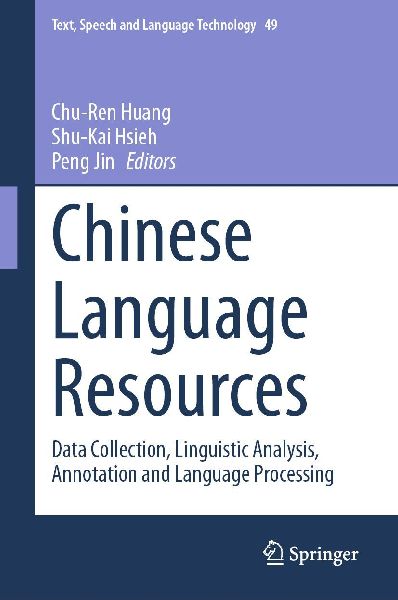
Chinese Language Resources
Data Collection, Linguistic Analysis, Annotation and Language Processing
Herausgegeben von: Chu-Ren Huang, Herausgegeben von: Shu-Kai Hsieh, Herausgegeben von: Peng Jin
Aus der Reihe Text, Speech and Language Technology
- Einband
- Gebunden
- Seiten
- 684
- Sprache
- Englisch
- Erschienen
- Dezember 2023
- Verlag
- Springer
Buchbeschreibung
Based on the accumulation of research experience and knowledge over the past 30 years, this volume lays out the research issues posed by the construction of various types of Chinese language resources, how they were resolved, and the implication of the solutions for future Chinese language processing research.
Ganze Beschreibung lesenWeniger anzeigen
This volume covers 30 years of development in Chinese language processing, focusing on the impact of conscientious decisions by some leading research groups. It focuses on constructing language resources, which led to thriving research and development of expertise in Chinese language technology today.
Contributions from more than 40 leading scholars from various countries explore how Chinese language resources are used in current pioneering NLP research, the future challenges and their implications for computational and theoretical linguistics.
Inhaltsverzeichnis
- Part I: Overview
- Chapter 1. Chinese Language Resources Through One-third of a Century
- Chapter 2. Chinese Comprehensive Language Knowledge Base
- Chapter 3. Introduction to CKIP's Language Resources and Their Applications
- Part II: Language Resources: Annotation and Processing
- Chapter 4. Practical and Robust Chinese Word Segmentation and PoS Tagging
- Chapter 5. Describing the Grammatical Knowledge of Chinese Words for Natural Language Processing
- Chapter 6. Deep
Ganzes Inhaltsverzeichnis anzeigen (42 Einträge)Weniger anzeigen
- LEX
- Chapter 7. The Chinese Generalized Function Word Usage Knowledge Base and Its Applications
- Chapter 8. A Generic Study of Linguistic Information Based on the Chinese Idiom Knowledge Base and Its Expansion
- Chapter 9. Lexical Knowledge Representation and Semantic Composition of E-How
- Net
- Chapter 10. Sense Tagging Unknown Chinese Words with Word Embedding
- Chapter 11. PKU
- Sense
- Cor: A Large-scale Word Sense Annotated Chinese Corpus
- Chapter 12. Semantic Annotation and Mandarin Verb
- Net
- Chapter 13. The Construction of a Chinese Semantic Dependency Graph Bank
- Chapter 14. A Chinese Dialogue Corpus Annotated with Dialogue Act
- Chapter 15. Automatic Construction of Parallel Dialogue Corpora with Rich Information
- Chapter 16. A Chinese Event-based Emotion Corpus: Emotion Cause Detection
- Part III: Language Resources and Linguistic Analysis
- Chapter 17. Using Forced Alignment for Phonetics Research
- Chapter 18. The Extraction of Linguistic Knowledge and Construction of Linguistic Resources
- Chapter 19. Toward an Empirical Theory of Sense: A Corpus-based Study of Mandarin Conceptual Lexicalization
- Chapter 20. Chinese Locative Expressions: Prepositions and Localizers
- Chapter 21. Verb Polysemy and Compounding Productivity in Chinese: A Quantitative Study
- Chapter 22. Audience Awareness and Lexical Frequency Patterns in Political Speeches
- Chapter 23. Linking Comprehension and Production: Frequency Distribution of Chinese Relative Clauses in the Sinica Treebank
- Chapter 24. Perception Correlated Information Allocation and Pattern Convergence for Discourse Prosody
- Part IV: Language Processing: Models and Applications
- Chapter 25. Speech Recognition and Text-to-Speech Synthesis
- Chapter 26. A Semi-supervised Learning Approach to Chinese Noun Phrase Identification
- Chapter 27. A Study on the Semantic Interpretation of Chinese Noun Compounds
- Chapter 28. Reducing Approximation and Estimation Errors with Heterogeneous Annotations
- Chapter 29. A Quadratic Assignment Decipherment and Graduated Assignment Solution for Ontology Matching
- Chapter 30. Automated Answer Type Recognition for Primary School Students' Question Sentences
- Chapter 31. Information Diffusion Prediction Based on Social Representation Learning with Group Influence
- Part V: Chinese Language Resources
- Chapter 32. Chinese Language Resources: A Comprehensive Compendium
Details
- Erscheinungstermin
- Dezember 2023
- Kategorie
- Fremdsprachige Bücher
- Einband
- Gebunden
- Seiten
- 684
- Sprache
- Englisch
- Verlag
- Springer
- Reihe
- Text, Speech and Language Technology
- Format
- 24,1 × 16,0 cm
- Dicke
- 4,2 cm
- Gewicht
- 1.128 g
- EAN / ISBN-13
- 9783031389122
Über Chu-Ren Huang (Hrsg.)
Chu-Ren Huang is a chair professor in the Department of Chinese and Bilingual Studies at The Hong Kong Polytechnic University.
Mehr über Chu-Ren Huang (Hrsg.)Weniger anzeigen
Focusing on Chinese, computational, and corpus linguistics, he is fascinated by what language can tell us about human cognition and our collective reactions to natural and social environments. He approaches these questions with a deep and comprehensive study of the Chinese language. His recent books on Chinese include A Reference Grammar of Chinese (Cambridge), the Routledge Handbook on Chinese Applied Linguistics, and the Cambridge Handbook of Chinese Linguistics, His recent papers appeared in Behavior Research Methods; Computational Linguistics; Cognitive Linguistics; Corpus Linguistics and Linguistic Theories; Humanities and Social Sciences Communications, Knowledge-Based Systems; Language, Cognition and Neuroscience; Language Resources and Evaluation; Lingua; Natural Language Engineering; PLoS One; etc. Dr. Shu-Kai Hsieh is Associate Professor of Linguistics at National Taiwan University, Taiwan. He received his PhD in Computational Linguistics from the University of Tübingen, Germany. He is the supervisor of NTU Lab of Ontologies, Language Processing and e-Humanities, and the founder of Taiwan Olympiad in Linguistics (TOL) and serves as the team leader and head coach of the Taiwanese national teams for International Olympiad in Linguistics.
Peng Jin is a full professor at Leshan Normal University. He co-founded the Sichuan Provincial Key Laboratory of Philosophy and Social Science for Language Intelligence in Special Education in 2022. He also founded the Key Laboratory of Internet Natural Language Processing of Sichuan Provincial Education Department in 2014. He has published tens of top journal and conference papers on natural language processing and has been granted two NSFC projects. He received his PhD degree from Peking University in July 2009, working on word sense disambiguation for his thesis. As a visiting scholar and student, he worked and studied at the University of Sussex, UK, in 2007 and 2014, respectively.
Versand und Rückgabe
Standardversand: 1 bis 3 Werktage, 3,99 €, kostenlos ab 35 €
Liefergebiet: Deutschland
Rücksendung: 14 Tage Widerrufsrecht. Bei einem Widerruf tragen Sie die Kosten der Rücksendung. Bei einer Falschlieferung oder einem Fehler von uns erstatten wir Ihnen das Rückporto. Den Widerruf erklären Sie über den Knopf „Vertrag widerrufen“ im Fuß der Seite.
Hersteller und ProduktsicherheitSpringer Nature Customer Service Center GmbH
Springer Nature Customer Service Center GmbH
Europaplatz 3
69115 Heidelberg
Deutschland
ProductSafety@springernature.com
Mehr von Chu-Ren Huang
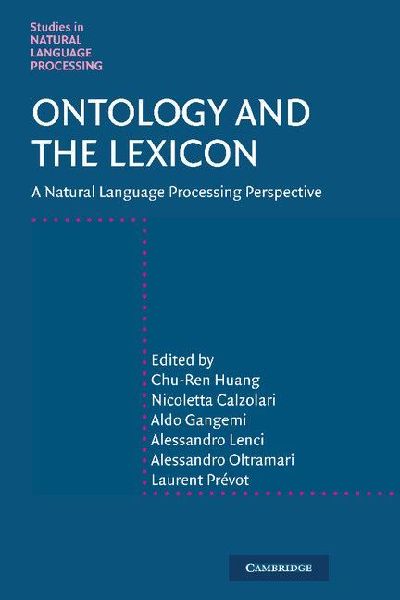
The Cambridge Handbook of Chinese Linguistics
Chu-Ren Huang (Hrsg.)
Kartoniert, Englisch, 2 Ausgaben
ab 59,50 €
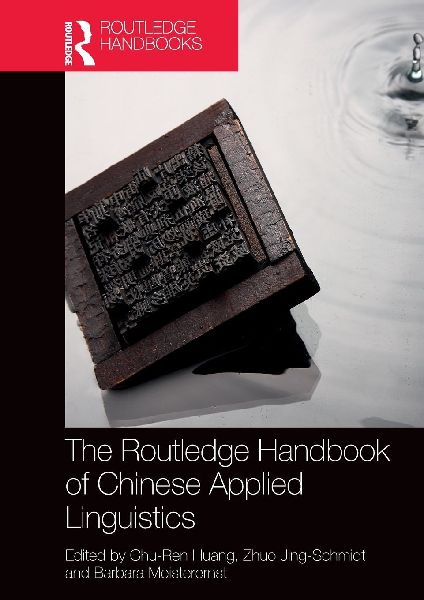
The Routledge Handbook of Chinese Applied Linguistics
Chu-Ren Huang (Hrsg.)
Kartoniert, Englisch
84,40 €
Mehr aus der Reihe Text, Speech and Language Technology
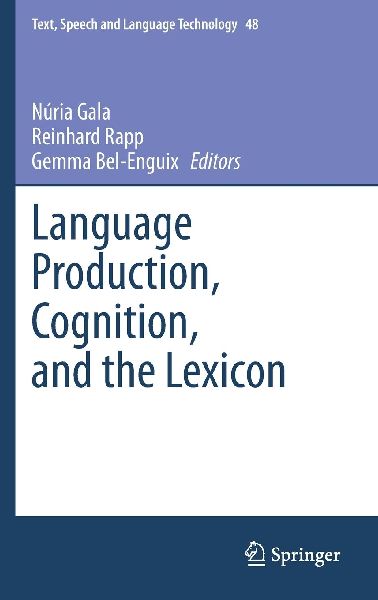
Language Production, Cognition, and the Lexicon
Núria Gala (Hrsg.)
Gebunden, Englisch, 2 Ausgaben
ab 106,99 €

Advances in Generative Lexicon Theory
James Pustejovsky (Hrsg.)
Gebunden, Englisch, 2 Ausgaben
ab 160,49 €
Bewertungen
Zu diesem Titel gibt es noch keine Bewertung. Bewerten kann, wer ihn bei uns gekauft hat.
So prüfen wir Bewertungen
Eine Bewertung kann bei uns nur abgeben, wer den Titel über sein Kundenkonto bei uns gekauft hat. Jede Bewertung ist fest mit der zugehörigen Bestellung verknüpft; anders kommt sie technisch gar nicht zustande. Deshalb trägt jede angezeigte Bewertung den Hinweis „Verifizierter Kauf". Wir zeigen positive wie negative Bewertungen und löschen nur bei Rechtsverstößen. Für Bewertungen gibt es keine Gegenleistung.
149,79 €Voraussichtlich 3. bis 7. Dez.