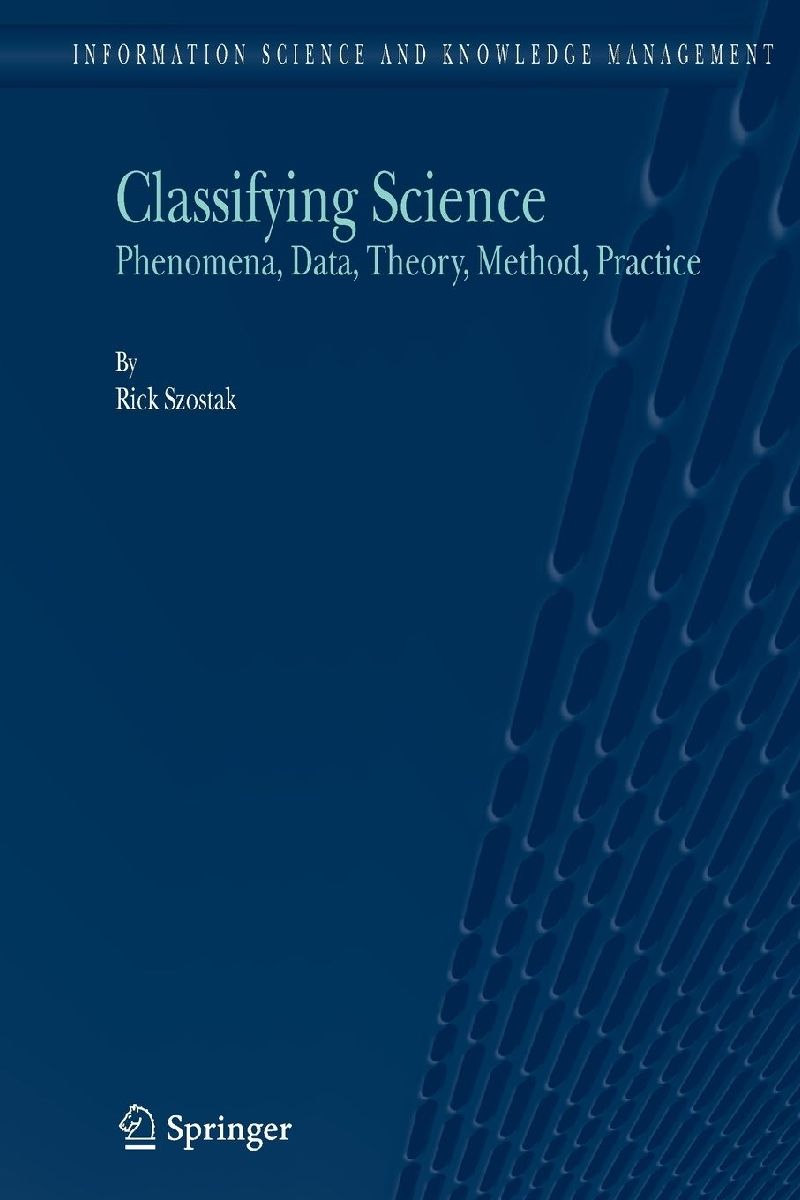
Classifying Science
Phenomena, Data, Theory, Method, Practice
von Rick Szostak
Aus der Reihe Information Science and Knowledge Management
- Einband
- Kartoniert
- Seiten
- 304
- Sprache
- Englisch
- Erschienen
- Dezember 2010
- Verlag
- Springer
Buchbeschreibung
Classification is the essential first step in science.
The study of science, as well as the practice of science, will thus benefit from a detailed classification of different types of science. In this book, science - defined broadly to include the social sciences and humanities - is first unpacked into its constituent elements: the phenomena studied, the data used, the theories employed, the methods applied, and the practices of scientists.
Ganze Beschreibung lesenWeniger anzeigen
These five elements are then classified in turn. Notably, the classifications of both theory types and methods allow the key strengths and weaknesses of different theories and methods to be readily discerned and compared. Connections across classifications are explored: should certain theories or phenomena be investigated only with certain methods? What is the proper function and form of scientific paradigms?
Are certain common errors and biases in scientific practice associated with particular phenomena, data, theories, or methods? The classifications point to several ways of improving both specialized and interdisciplinary research and teaching, and especially of enhancing communication across communities of scholars.
The classifications also support a superior system of document classification that would allow searches by theory and method used as well as causal links investigated.
Inhaltsverzeichnis
- List of Tables vii Preface ix
- Chapter 1: Classifying Science 1 1.1. A Simple Classificatory Guideline 3 1.2. The First 'Cut' (and Plan of Work) 5 1.3. Some Preliminaries9
- Chapter 2: Classifying Phenomena and Data 23 2.1. Classifying Phenomena 23 2.2. Classifying Data45
- Chapter 3: Classifying Theory 51 3.1. Typology of Theory 55 3.2. What Is a Theory? 74 3.3. Evaluating Theories 78 3.4. Types of Theory and the Five Types of Causation 80 3.5. Classifying Individual Theories 82 3.6. Advantages of a Typology of Theory95
- Chapter 4: Classifying Method 99 4.1. Classifying Methods 101 4.2. Typology of Strengths and Weaknesses of Methods 103 4.3. Qualitative Versus Quantitative Analysis Revisited 109 4.4. Evaluating Methods 113 4.5. Classifying Particular Methods Within The Typology 116 4.6. Advantages of a Typology of Methods144
- Chapter 5: Classifying Practice 155 5.1. Errors and Biases in Science 158 5.2. Typology of (Critiques of) Scientific Practice 161 5.3. Utilizing This Classification 192 5.4. The Five Types of Ethical Analysis194
- Chapter 6: Drawing Connections Across These Classifications 199 6.1. Theory and Method 199 6.2. Theory (Method) and Phenomena (Data) 203 6.3. Better Paradigms 208 6.4. Critiques of Scientific Practice: Are They Correlated with Other Classifications?213
- Chapter 7: Classifying Scientific Documents 217 7.1. Faceted or Enumerative? 219 7.2. Classifying By Phenomena Studied 221 7.3. Classifying By Theory Used 225 7.4. Classifying By Method Used 227 7.5 Links Among Subjects 228 7.6. Type of Work, Language, and More 229 7.7. Critiques of Scientific Practice 230 7.8. Classifying Philosophy 231 7.9. Evaluating the System232
- Chapter 8: Concluding Remarks 239 8.1. The Classifications 239 8.2. Advantages of These Various Classifications 241 8.3. Drawing Connections Across Classifications 245 8.4. Golden Mean Arguments 247 8.5. Why Should Science Be Believed? 249 8.6. How Can Science Be Improved? 250 8.7. How Should Science Be Taught? 259 References 269 Index279
Details
- Erscheinungstermin
- Dezember 2010
- Kategorie
- Fremdsprachige Bücher
- Einband
- Kartoniert
- Seiten
- 304
- Sprache
- Englisch
- Verlag
- Springer
- Reihe
- Information Science and Knowledge Management
- Format
- 23,5 × 15,5 cm
- Dicke
- 1,7 cm
- Gewicht
- 464 g
- EAN / ISBN-13
- 9789048167906
Versand und Rückgabe
Standardversand: 1 bis 3 Werktage, 3,99 €, kostenlos ab 35 €
Liefergebiet: Deutschland
Rücksendung: 14 Tage Widerrufsrecht. Bei einem Widerruf tragen Sie die Kosten der Rücksendung. Bei einer Falschlieferung oder einem Fehler von uns erstatten wir Ihnen das Rückporto. Den Widerruf erklären Sie über den Knopf „Vertrag widerrufen“ im Fuß der Seite.
Hersteller und ProduktsicherheitSpringer Nature Customer Service Center GmbH
Springer Nature Customer Service Center GmbH
Europaplatz 3
69115 Heidelberg
Deutschland
ProductSafety@springernature.com
Mehr von Rick Szostak



Mehr aus der Reihe Information Science and Knowledge Management




Bewertungen
Zu diesem Titel gibt es noch keine Bewertung. Bewerten kann, wer ihn bei uns gekauft hat.
So prüfen wir Bewertungen
Eine Bewertung kann bei uns nur abgeben, wer den Titel über sein Kundenkonto bei uns gekauft hat. Jede Bewertung ist fest mit der zugehörigen Bestellung verknüpft; anders kommt sie technisch gar nicht zustande. Deshalb trägt jede angezeigte Bewertung den Hinweis „Verifizierter Kauf". Wir zeigen positive wie negative Bewertungen und löschen nur bei Rechtsverstößen. Für Bewertungen gibt es keine Gegenleistung.
213,99 €Voraussichtlich 30. Nov. bis 2. Dez.