Competition and Coexistence
Herausgegeben von: Ulrich Sommer, Herausgegeben von: Boris Worm
Aus der Reihe Ecological Studies
- Einband
- Kartoniert
- Seiten
- 240
- Sprache
- Englisch
- Erschienen
- Oktober 2012
- Verlag
- Springer
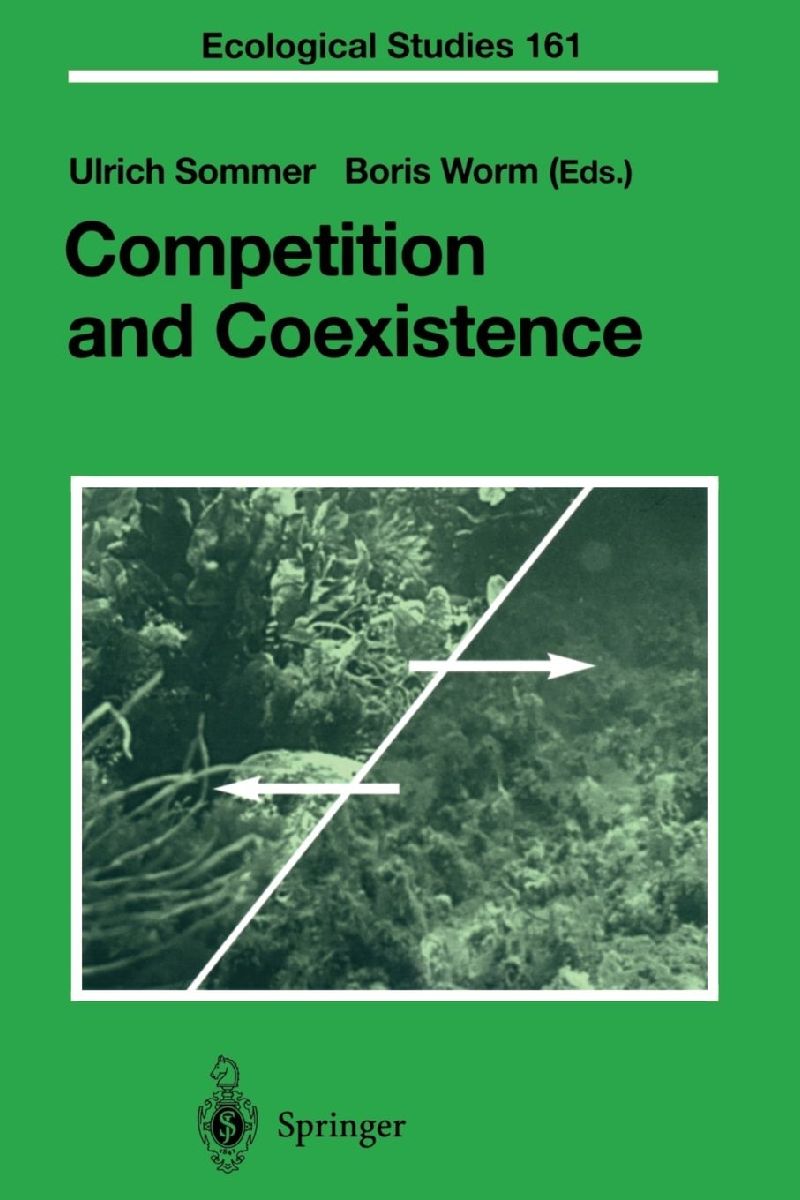
Buchbeschreibung
The question "Why are there so many species?" has puzzled ecologist for a long time.
Initially, an academic question, it has gained practical interest by the recent awareness of global biodiversity loss. Species diversity in local ecosystems has always been discussed in relation to the problem of competi tive exclusion and the apparent contradiction between the competitive exclu sion principle and the overwhelming richness of species found in nature.
Ganze Beschreibung lesenWeniger anzeigen
Competition as a mechanism structuring ecological communities has never been uncontroversial. Not only its importance but even its existence have been debated. On the one extreme, some ecologists have taken competi tion for granted and have used it as an explanation by default if the distribu tion of a species was more restricted than could be explained by physiology and dispersal history.
For decades, competition has been a core mechanism behind popular concepts like ecological niche, succession, limiting similarity, and character displacement, among others. For some, competition has almost become synonymous with the Darwinian "struggle for existence", although simple plausibility should tell us that organisms have to struggle against much more than competitors, e.g. predators, parasites, pathogens, and envi ronmental harshness.
Inhaltsverzeichnis
- 1 Introduction
- 1.1 The Intellectual Debate Until 1990
- 1.2 Progress During the Last Decade
- 1.3 Consequences for the Structure of the Book
- References
- 2 Competition in Well-Mixed Habitats: From Competitive Exclusion to Competitive Chaos
- 2.1 Introduction
- 2.2 Competition for a Single Abiotic Resource
Ganzes Inhaltsverzeichnis anzeigen (62 Einträge)Weniger anzeigen
- 2.3 Resource Storage
- 2.4 Competition for a Single Biotic Resource
- 2.5 Competition for Two Resources
- 2.6 Competition for Three Resources
- 2.7 Discussion
- References
- 3 Spatial Models of Competition
- 3.1 Introduction
- 3.2 Implicitly Spatial Models
- 3.3 Explicitly Spatial Models
- 3.4 Comparing and Connecting Methods
- 3.5 Underlying Spatial Heterogeneity
- 3.6 Competition and Coexistence
- 3.7 Future Directions
- References
- 4 Competition and Coexistence in Plankton Communities
- 4.1 Introduction
- 4.2 Competition Experiments in Laboratory Microcosms
- 4.3 Experiments in Field Mesocosms
- 4.4 Tests of the Intermediate Disturbance Hypothesis by Field Data
- 4.5 Herbivory and Diversity
- 4.6 The Role of Abundance and of Seasonality
- 4.7 Conclusions
- References
- 5 Competition and Coexistence in Mobile Animals
- 5.1 Introduction
- 5.2 Competition Among Mobile Animals
- 5.3 Heterogeneity, Trade-Offs, and Competition
- 5.4 Scale and Heterogeneity
- 5.5 New Challenges
- References
- 6 Competition, Coexistence and Diversity on Rocky Shores
- 6.1 Introduction
- 6.2 Disruption of Competitive Exclusion: The Non-Equilibrium View
- 6.3 Coexistence Through Trade-Offs: The Equilibrium View
- 6.4 Synthesis: Integrating the Effects of Competition, Consumption and Disturbance
- 6.5 Conclusion
- References
- 7 Competition and Coexistence in Terrestrial Plants
- 7.1 Introduction
- 7.2 Competition
- 7.3 Coexistence
- 7.4 Conclusion
- References
- 8 Synthesis: Back to Santa Rosalia, or No Wonder There Are So Many Species
- 8.1 Trade-Offs
- 8.2 Disturbance, Predation and Competition
- 8.3 The Spatial Dimension
- 8.4 Self-Generated Heterogeneity
- 8.5 Exclusive Resources
- 8.6 Slow Exclusion
- 8.7 Equilibrium vs. Non-Equilibrium Concepts
- 8.8 Future Challenges
- References
Details
- Erscheinungstermin
- Oktober 2012
- Kategorie
- Fremdsprachige Bücher
- Einband
- Kartoniert
- Seiten
- 240
- Sprache
- Englisch
- Verlag
- Springer
- Reihe
- Ecological Studies
- Format
- 23,5 × 15,5 cm
- Dicke
- 1,4 cm
- Gewicht
- 371 g
- EAN / ISBN-13
- 9783642628009
Versand und Rückgabe
Standardversand: 1 bis 3 Werktage, 3,99 €, kostenlos ab 35 €
Liefergebiet: Deutschland
Rücksendung: 14 Tage Widerrufsrecht. Bei einem Widerruf tragen Sie die Kosten der Rücksendung. Bei einer Falschlieferung oder einem Fehler von uns erstatten wir Ihnen das Rückporto. Den Widerruf erklären Sie über den Knopf „Vertrag widerrufen“ im Fuß der Seite.
Hersteller und ProduktsicherheitSpringer Nature Customer Service Center GmbH
Springer Nature Customer Service Center GmbH
Europaplatz 3
69115 Heidelberg
Deutschland
ProductSafety@springernature.com
Mehr von Ulrich Sommer




Mehr aus der Reihe Ecological Studies
Effects of Plant Diversity on Plant-Herbivore Interactions
Xoaquín Moreira (Hrsg.)
Gebunden, Englisch
213,99 €

Fire in the South American Ecosystems
Alessandra Fidelis (Hrsg.)
Gebunden, Englisch, 2 Ausgaben
ab 192,59 €

The Kihansi Spray Toad (Nectophrynoides asperginis): Crisis Biology in the 21st Century
William D. Newmark
Gebunden, Englisch, 2 Ausgaben
ab 160,49 €

Ähnliche Titel



Bewertungen
Zu diesem Titel gibt es noch keine Bewertung. Bewerten kann, wer ihn bei uns gekauft hat.
So prüfen wir Bewertungen
Eine Bewertung kann bei uns nur abgeben, wer den Titel über sein Kundenkonto bei uns gekauft hat. Jede Bewertung ist fest mit der zugehörigen Bestellung verknüpft; anders kommt sie technisch gar nicht zustande. Deshalb trägt jede angezeigte Bewertung den Hinweis „Verifizierter Kauf". Wir zeigen positive wie negative Bewertungen und löschen nur bei Rechtsverstößen. Für Bewertungen gibt es keine Gegenleistung.
106,99 €Voraussichtlich 1. bis 3. Dez.