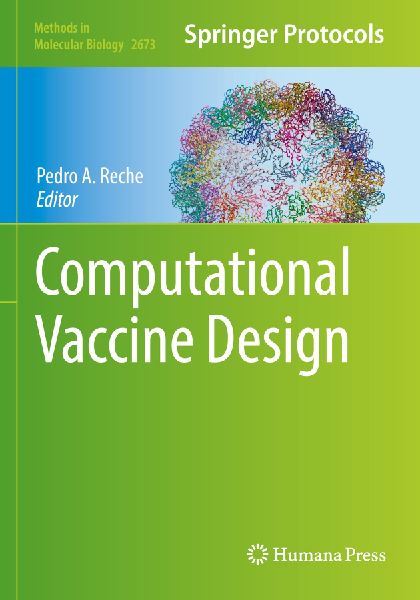
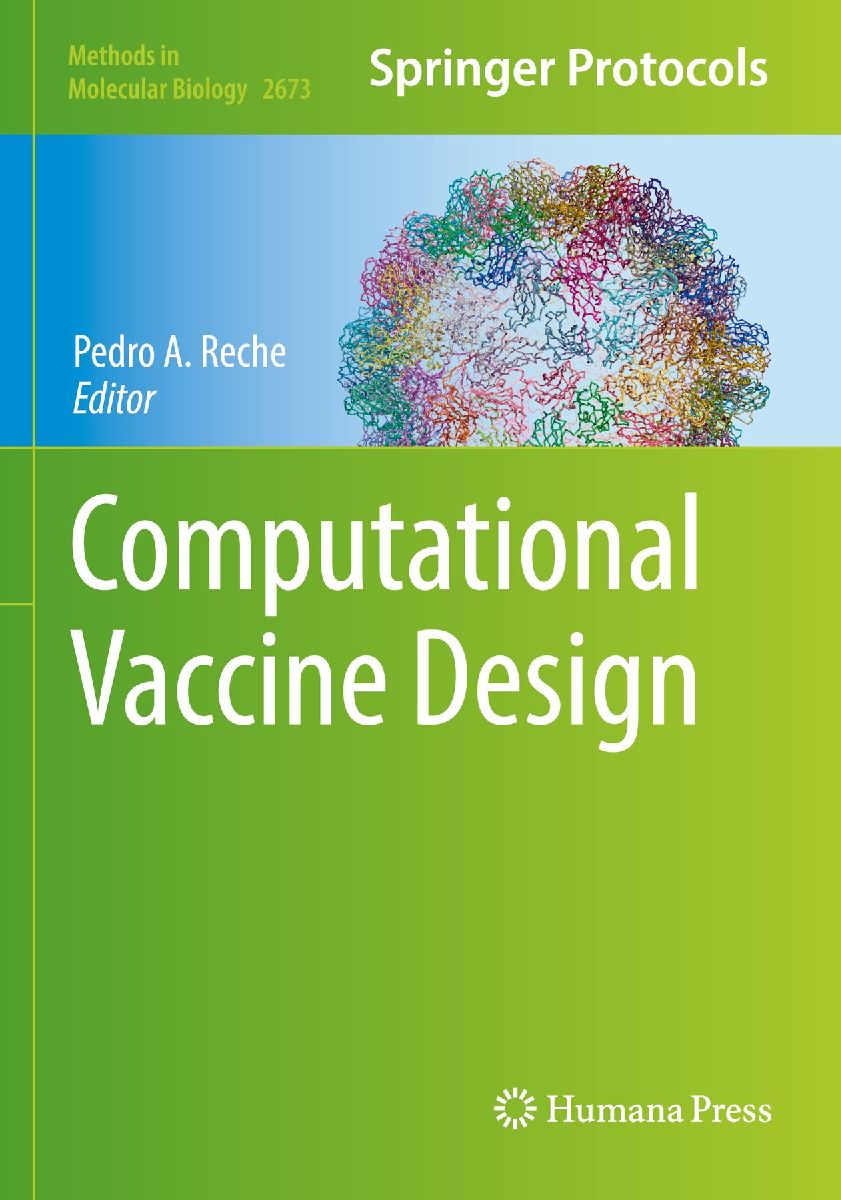
Computational Vaccine Design
Herausgegeben von: Pedro A. Reche
Aus der Reihe Methods in Molecular Biology
- Einband
- Kartoniert
- Seiten
- 536
- Sprache
- Englisch
- Erschienen
- Juni 2024
- Verlag
- Springer
Buchbeschreibung
This volume explores computational vaccine design and the technologies that support it.
Chapters have been divided into four parts detailing immunonics and system immunology, databases, prediction of antigenicity and immunogenicity, and computational vaccinology.
Ganze Beschreibung lesenWeniger anzeigen
Written in the format of the highly successful Methods in Molecular Biology series, each chapter includes an introduction to the topic, lists necessary materials and reagents, includes tips on troubleshooting and known pitfalls, and step-by-step, readily reproducible protocols.
Authoritative and cutting-edge, Computational Vaccine Design: Methods and Protocols aims to reflect on the rigorous and imaginative use of computational technologies to help catalyze future efforts and to improve global public health through the development of a broad range of novel vaccines.
Inhaltsverzeichnis
- Vaccine Design: an introduction
- Epitope binning of monoclonal and polyclonal antibodies by biolayer interferometry
- Clustering and annotation of T-cell receptor repertoires
- Protocol for Classification Single Cell PBMC Types from Pathological Samples using Supervised Machine Learning
- Unbiased, high-throughput identification of T cell epitopes by ELISPOT
- CD4+ T cell epitope identification from complex parasite antigen mixtures
- Computational grafting of epitopes
- Manufacture of Mesoporous Silicon Microparticles (MSMPs) as adjuvants for vaccine delivery
Ganzes Inhaltsverzeichnis anzeigen (35 Einträge)Weniger anzeigen
- IEDB and CEDAR: Two Sibling Databases to Serve the Global Scientific Community
- Updates on databases of allergens and allergen-epitopes
- TSNAD and TSNAdb: The useful toolkit and database for clinical application of tumor-specific neoantigens
- EPIPOX: A Resource facilitating epitope-vaccine design against human Pathogenic Orthopoxviruses
- Prediction of linear B cell epitopes in proteins
- Design of linear B-cell epitopes and evaluation of their antigenicity, allergenicity, and toxicity: an immunoinformatics approach
- Net
- Cleave: an open-source algorithm for predicting C-terminal antigen processing for MHC-I and MHC-II
- Prediction of TAP transport of peptides with variable length using TAPREG
- Docking-based Prediction of Peptide Binding to MHC Proteins
- The PANDORA software for anchor-restrained peptide:MHC modelling
- Prediction of Peptide and TCR CDR3 Loops in Formation of Class I MHC-Peptide-TCR Complexes using Molecular Models with Solvation
- Prediction of Bacterial Immunogenicity by Machine Learning Methods
- Vaxi-DL: an artificial Intelligence enabled platform for vaccine development
- A web-based method for the identification of IL6 based immunotoxicity in vaccine candidates
- In silico tool for identification, designing and searching of IL13 inducing peptides in antigens
- A lean
- Reverse Vaccinology pipeline with publicly available bioinformatic tools
- Immunoinformatics protocol to design multi-epitope subunit vaccines
- In-silico Structure-based Vaccine Design
- Reverse vaccinology for influenza A virus: from genome sequencing to vaccine design
- Immunoinformatics vaccine design for Zika virus
- Immunoinformatics approaches in designing vaccines against COVID-19
- A Sample Guideline for Reverse Vaccinology Approach for the Development of Subunit Vaccine using Varicella Zoster as a Model Disease
- Computational Vaccine Design for Poxviridae Family Viruses
- Computational prediction of Trypanosoma cruzi epitopes towards the generation of an epitope-based vaccine against Chagas disease
- Computational vaccine design for common allergens
Details
- Erscheinungstermin
- Juni 2024
- Kategorie
- Fremdsprachige Bücher
- Einband
- Kartoniert
- Seiten
- 536
- Sprache
- Englisch
- Verlag
- Springer
- Reihe
- Methods in Molecular Biology
- Format
- 25,4 × 17,8 cm
- Dicke
- 2,9 cm
- Gewicht
- 996 g
- EAN / ISBN-13
- 9781071632413
Versand und Rückgabe
Standardversand: 1 bis 3 Werktage, 3,99 €, kostenlos ab 35 €
Liefergebiet: Deutschland
Rücksendung: 14 Tage Widerrufsrecht. Bei einem Widerruf tragen Sie die Kosten der Rücksendung. Bei einer Falschlieferung oder einem Fehler von uns erstatten wir Ihnen das Rückporto. Den Widerruf erklären Sie über den Knopf „Vertrag widerrufen“ im Fuß der Seite.
Hersteller und ProduktsicherheitSpringer Nature Customer Service Center GmbH
Springer Nature Customer Service Center GmbH
Europaplatz 3
69115 Heidelberg
Deutschland
ProductSafety@springernature.com
Mehr aus der Reihe Methods in Molecular Biology




Bewertungen
Zu diesem Titel gibt es noch keine Bewertung. Bewerten kann, wer ihn bei uns gekauft hat.
So prüfen wir Bewertungen
Eine Bewertung kann bei uns nur abgeben, wer den Titel über sein Kundenkonto bei uns gekauft hat. Jede Bewertung ist fest mit der zugehörigen Bestellung verknüpft; anders kommt sie technisch gar nicht zustande. Deshalb trägt jede angezeigte Bewertung den Hinweis „Verifizierter Kauf". Wir zeigen positive wie negative Bewertungen und löschen nur bei Rechtsverstößen. Für Bewertungen gibt es keine Gegenleistung.
171,19 €Voraussichtlich 30. Nov. bis 2. Dez.