Buch-OWLOnline-Buchhandel

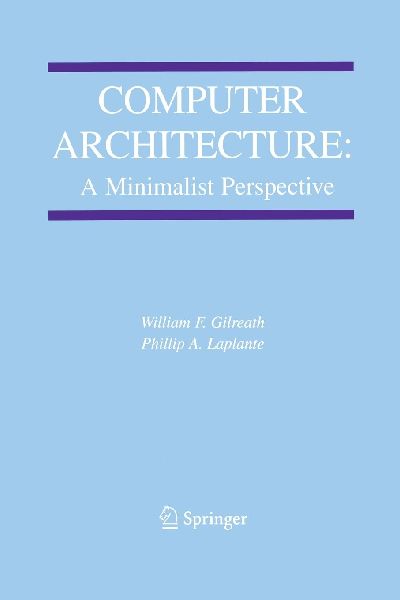
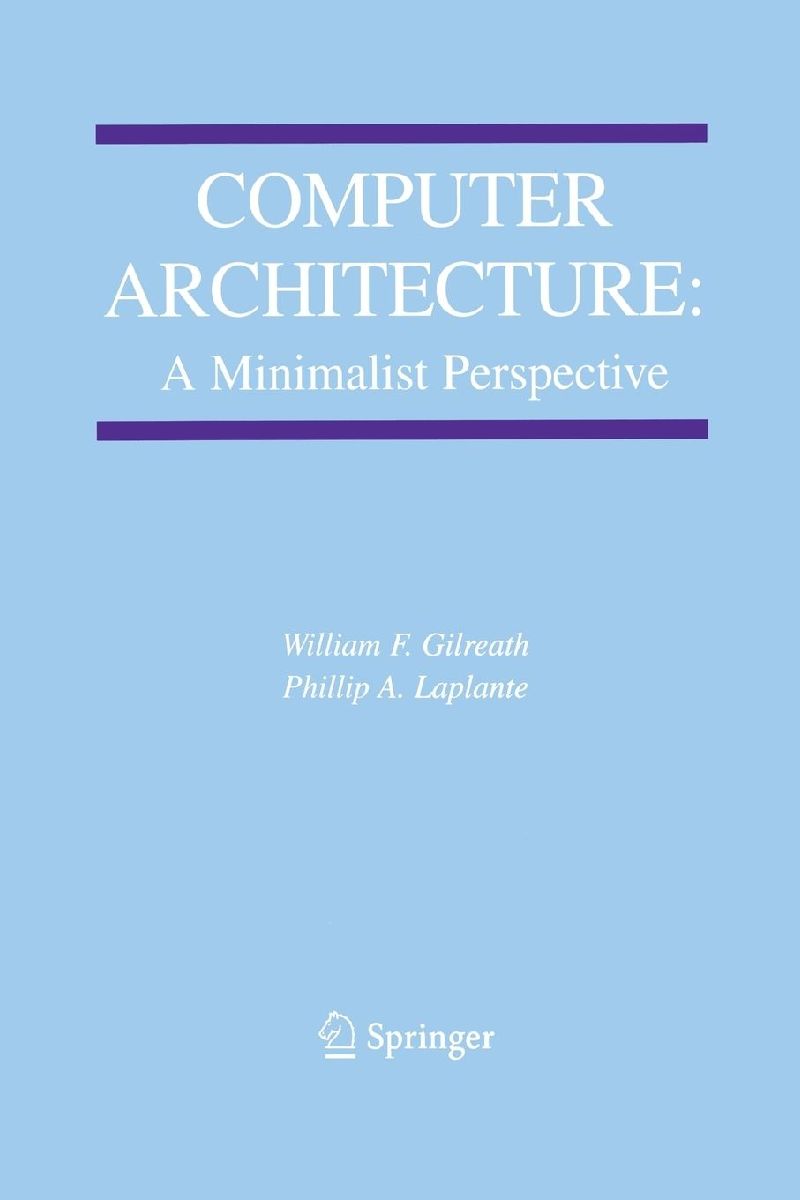
Computer Architecture: A Minimalist Perspective

von William F. Gilreath und Phillip A. Laplante

Aus der Reihe The Springer International Series in Engineering and Computer Science

Einband
Kartoniert
Seiten
240
Sprache
Englisch
Erschienen
November 2012
Verlag
Springer

Buchbeschreibung

This book examines computer architecture, computability theory, and the history of computers from the perspective of minimalist computing - a framework in which the instruction set consists of a single instruction.

This approach is different than that taken in any other computer architecture text, and it is a bold step.

Ganze Beschreibung lesenWeniger anzeigen

The audience for this book is researchers, computer hardware engineers, software engineers, and systems engineers who are looking for a fresh, unique perspective on computer architecture. Upper division undergraduate students and early graduate students studying computer architecture, computer organization, or embedded systems will also find this book useful.

A typical course title might be "Special Topics in Computer Architecture." The organization ofthe book is as follows. First, the reasons for studying such an "esoteric" subject are given. Then, the history and evolution of instruction sets is studied with an emphasis on how modern computing has features ofone instruction computing.

Also, previous computer systems are reviewed to show how their features relate to one instruction computers. Next, the primary forms of one instruction set computing are examined. The theories of computation and of Turing machines are also reviewed to examine the theoretical nature of one instruction computers.

Other processor architectures and instruction sets are then mapped into single instructions to illustrate the features of both types of one instruction computers. In doing so, the features of the processor being mapped are highlighted.

Inhaltsverzeichnis

  • 1. One Instruction Set Computing
  • 1.1 What is One Instruction Set Computing?
  • 1.2 Why Study OISC?
  • 1.3 A Look Ahead
  • 1.4 Exercises
  • 2 Instruction Sets
  • 2.1 Elements of an Instruction
  • 2.2 Operands
Ganzes Inhaltsverzeichnis anzeigen (75 Einträge)Weniger anzeigen
  • 2.3 Instruction Formats
  • 2.4 Core Set of Instructions
  • 2.5 Addressing Modes
  • 2.6 Exercises
  • 3 Types of Computer Architectures
  • 3.1 Overview
  • 3.2 A Simple Taxonomy
  • 3.3 Accumulator
  • 3.4 Register-Memory
  • 3.5 Register-Oriented
  • 3.6 Exercises
  • 4 Evolution of Instruction Sets
  • 4.1 Motivation
  • 4.2 Evolution of Microprocessors
  • 4.3 Timeline
  • 4.4 Exercises
  • 5 CISC, RISC, OISC
  • 5.1 CISC versus RISC
  • 5.2 Is OISC a CISC or RISC?
  • 5.3 Processor Complexity
  • 5.4 Exercises
  • 6 OISC Architectures
  • 6.1 Single Instruction Types
  • 6.2 MOVE
  • 6.3 Comparing OISC Models
  • 6.4 Variants of SBN and MOVE
  • 6.5 OISC Continuum
  • 6.6 Exercises
  • 7 Historical Review of OISC
  • 7.1 Subtract and Branch if Negative (SBN)
  • 7.2 MOVE-based
  • 7.3 Timeline
  • 7.4 Exercises
  • 8 Instruction Set Completeness
  • 8.1 Instruction Set Completeness
  • 8.2 A Practical Approach to Determining Completeness
  • 8.3 Completeness of Two OISCs
  • 8.4 Exercises
  • 9 OISC Mappings
  • 9.1 Mapping OISC to Conventional Architectures
  • 9.2 Synthesizing Instructions
  • 9.3 Code Fragments
  • 9.4 Implementing OISC using OISC
  • 9.5 Exercises
  • 10 Parallel Architectures
  • 10.1 Von Neumann Bottleneck
  • 10.2 Parallel Processing
  • 10.3 Flynn's Taxonomy for Parallelism
  • 10.4 Exercises
  • 11 Applications and Implementations
  • 11.1 "OlSC-like" Phenomena
  • 11.2 Field Programmable Gate Arrays
  • 11.3 Applications
  • 11.4 Image Processing
  • 11.5 Future Work with OISC
  • 11.6 Exercises
  • Appendix A: A Generic Microprocessor and OISC
  • Appendix B: One Instruction Set Computer Implementation
  • B.1 6502 Opcodes Summary
  • B.2 6502Opcodes Mapped to MOVE OISC
  • B.3 6502 Addressing as MOVE-based OISC
  • B.4 6502 Addressing Modes and MOVE-based OISC
  • Appendix C: Dilation Code Implementation
  • Appendix D: Compiler Output for Dilation
  • Appendix E: OISC Equivalent of Dilation
  • References
  • About the Authors

Details

Erscheinungstermin
November 2012
Kategorie
Fremdsprachige Bücher
Einband
Kartoniert
Seiten
240
Sprache
Englisch
Verlag
Springer
Reihe
The Springer International Series in Engineering and Computer Science
Format
23,5 × 15,5 cm
Dicke
1,4 cm
Gewicht
371 g
EAN / ISBN-13
9781461349808
Maßstabsgetreu: Deckel und Buchrücken neben einer Hand (18 cm).
Versand und Rückgabe

Standardversand: 1 bis 3 Werktage, 3,99 €, kostenlos ab 35 €

Liefergebiet: Deutschland

Rücksendung: 14 Tage Widerrufsrecht. Bei einem Widerruf tragen Sie die Kosten der Rücksendung. Bei einer Falschlieferung oder einem Fehler von uns erstatten wir Ihnen das Rückporto. Den Widerruf erklären Sie über den Knopf „Vertrag widerrufen“ im Fuß der Seite.

Hersteller und ProduktsicherheitSpringer Nature Customer Service Center GmbH
Springer Nature Customer Service Center GmbH
Europaplatz 3
69115 Heidelberg
Deutschland
ProductSafety@springernature.com

Mehr aus der Reihe The Springer International Series in Engineering and Computer Science

Ähnliche Titel

Bewertungen

Zu diesem Titel gibt es noch keine Bewertung. Bewerten kann, wer ihn bei uns gekauft hat.
So prüfen wir Bewertungen
Eine Bewertung kann bei uns nur abgeben, wer den Titel über sein Kundenkonto bei uns gekauft hat. Jede Bewertung ist fest mit der zugehörigen Bestellung verknüpft; anders kommt sie technisch gar nicht zustande. Deshalb trägt jede angezeigte Bewertung den Hinweis „Verifizierter Kauf". Wir zeigen positive wie negative Bewertungen und löschen nur bei Rechtsverstößen. Für Bewertungen gibt es keine Gegenleistung.
160,49 €Voraussichtlich 30. Nov. bis 2. Dez.

Inhalte ab 18

Cover von Titeln für Erwachsene, etwa erotische Romane, Manga oder Comics, bleiben unscharf, bis Sie bestätigen. Die Bestätigung gilt für alle Seiten und Tabs, bis Sie den Browser schließen.

Zurück zum Katalog