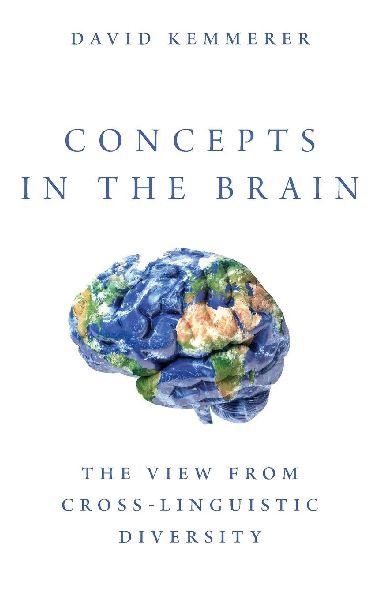
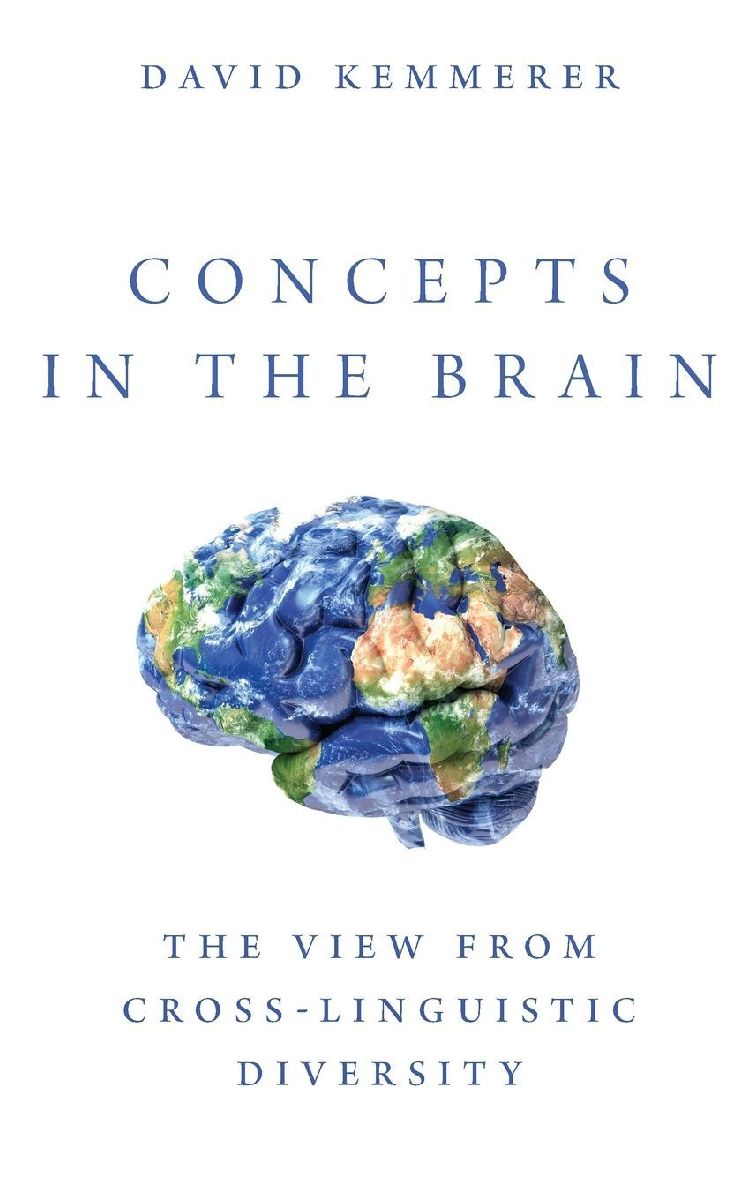
Concepts in the Brain
The View from Cross-Linguistic Diversity
von David Kemmerer
- Einband
- Gebunden
- Seiten
- 368
- Sprache
- Englisch
- Erschienen
- März 2019
- Verlag
- OXFORD UNIV PR
Buchbeschreibung
For most native speakers of English, the meanings of ordinary words like "blue," "cup," "stumble," and "carve" seem quite natural and self-evident.
It turns out, however, that they are far from universal, as shown by recent research in the discipline known as semantic typology. To be sure, the roughly 6,500 languages around the world do have many similarities in the sorts of concepts they encode.
Ganze Beschreibung lesenWeniger anzeigen
But they also vary greatly in numerous ways, such as how they partition particular conceptual domains, how they map those domains onto syntactic categories, which distinctions they force speakers to habitually attend to, and how deeply they weave certain notions into the fabric of their grammar.
Although these insights from semantic typology have had a major impact on the field of psycholinguistics, they have been mostly neglected by the branch of cognitive neuroscience that studies how concepts are represented, organized, and processed in our brains. In Concepts in the Brain, David Kemmerer exposes this oversight and demonstrates its significance.
He argues that as research on the neural substrates of semantic knowledge moves forward, it should, to the extent possible, expand its purview to embrace the broad spectrum of cross-linguistic variation in the lexical and grammatical representation of meaning. Otherwise, it will never be able to achieve a truly comprehensive, pan-human account of the cortical underpinnings of concepts.
Richly illustrated and written in an accessible interdisciplinary style, the book begins by elaborating the different perspectives on concepts that currently exist in the parallel fields of semantic typology and cognitive neuroscience. It then shows how a synthesis of these approaches can lead to a more unified and inclusive understanding of several domains of concrete meaning--specifically, objects, actions, and spatial relations.
Finally, it explores a number of intriguing and controversial issues involving the interplay between language, cognition, and consciousness.
Inhaltsverzeichnis
- Preface
- Part I: Two perspectives on concepts
- 1. The perspective from semantic typology
- Introduction
- The apparent naturalness of one's own language
- Lexical semantics
- Grammatical semantics
- Conclusion
Ganzes Inhaltsverzeichnis anzeigen (53 Einträge)Weniger anzeigen
- 2. The perspective from cognitive neuroscience
- Introduction
- Flexible, multilevel models of the neural substrates of concepts
- Representational similarity spaces in the brain
- What about the neural substrates of grammatical semantics?
- Linguistic communication as brain-to-brain coupling
- Conclusion
- Part II: Conceptual domains
- 3. Objects
- Introduction
- Plants, animals, and artifacts
- Body parts
- Split possession
- Nominal classification systems
- Conclusion
- 4. Actions
- Introduction
- Motion events
- Events of cutting, breaking, and opening
- Events of putting and taking
- Serial verb constructions
- Verbal classification systems
- Conclusion
- 5. Spatial relations
- Introduction
- Typology
- Neurobiology
- Conclusion
- Part III: Broader questions
- 6. How do language-specific concepts relate to cognition?
- Introduction
- Many forms of cognition do not depend on language-specific concepts
- Language-specific concepts nonetheless do influence some forms of cognition
- Shared neural substrates for verbal and nonverbal semantic tasks: Insights and uncertainties
- Conclusion
- 7. Are we ever conscious of concepts?
- Introduction
- Competing views
- Implications for neuroscientific theories of consciousness
- Conclusion
- Final remarks
- References
- Language index
- Author index
- Subject index
Details
- Erscheinungstermin
- März 2019
- Kategorie
- Fremdsprachige Bücher
- Einband
- Gebunden
- Seiten
- 368
- Sprache
- Englisch
- Verlag
- OXFORD UNIV PR
- Format
- 24,0 × 16,1 cm
- Dicke
- 2,4 cm
- Gewicht
- 666 g
- EAN / ISBN-13
- 9780190682620
Über David Kemmerer
David Kemmerer has been a professor at Purdue University since 2000. He explores the complex relationships between semantics, grammar, perception, and action, often bringing together neuroscientific and cross-linguistic perspectives.
Mehr über David KemmererWeniger anzeigen
He has published over 60 articles and chapters as well as a textbook called Cognitive Neuroscience of Language.
Versand und Rückgabe
Standardversand: 1 bis 3 Werktage, 3,99 €, kostenlos ab 35 €
Liefergebiet: Deutschland
Rücksendung: 14 Tage Widerrufsrecht. Bei einem Widerruf tragen Sie die Kosten der Rücksendung. Bei einer Falschlieferung oder einem Fehler von uns erstatten wir Ihnen das Rückporto. Den Widerruf erklären Sie über den Knopf „Vertrag widerrufen“ im Fuß der Seite.
Hersteller und ProduktsicherheitOXFORD UNIV PR
OXFORD UNIV PR
Europaallee 1
36244 Bad Hersfeld
Deutschland
gpsr@libri.de
Verantwortliche Person in der EU
Libri GmbHEuropaallee 1
36244 Bad Hersfeld
Deutschland
gpsr@libri.de
Mehr von David Kemmerer
Ähnliche Titel




Master Critical Thinking, Creative, Logic & Problem Solving Skills (4 Books in 1)
William Henderson
Kartoniert, Englisch
20,60 €
Bewertungen
Zu diesem Titel gibt es noch keine Bewertung. Bewerten kann, wer ihn bei uns gekauft hat.
So prüfen wir Bewertungen
Eine Bewertung kann bei uns nur abgeben, wer den Titel über sein Kundenkonto bei uns gekauft hat. Jede Bewertung ist fest mit der zugehörigen Bestellung verknüpft; anders kommt sie technisch gar nicht zustande. Deshalb trägt jede angezeigte Bewertung den Hinweis „Verifizierter Kauf". Wir zeigen positive wie negative Bewertungen und löschen nur bei Rechtsverstößen. Für Bewertungen gibt es keine Gegenleistung.
141,30 €Voraussichtlich 4. bis 8. Dez.