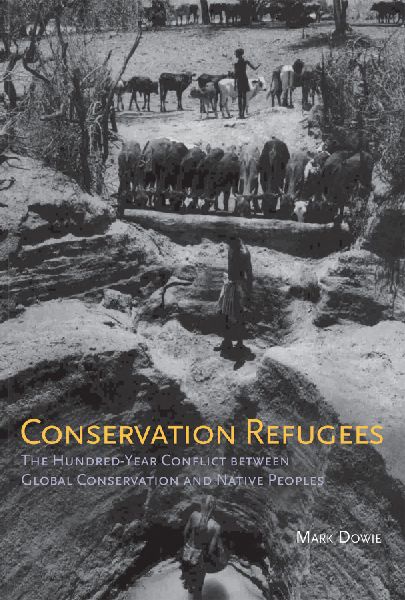
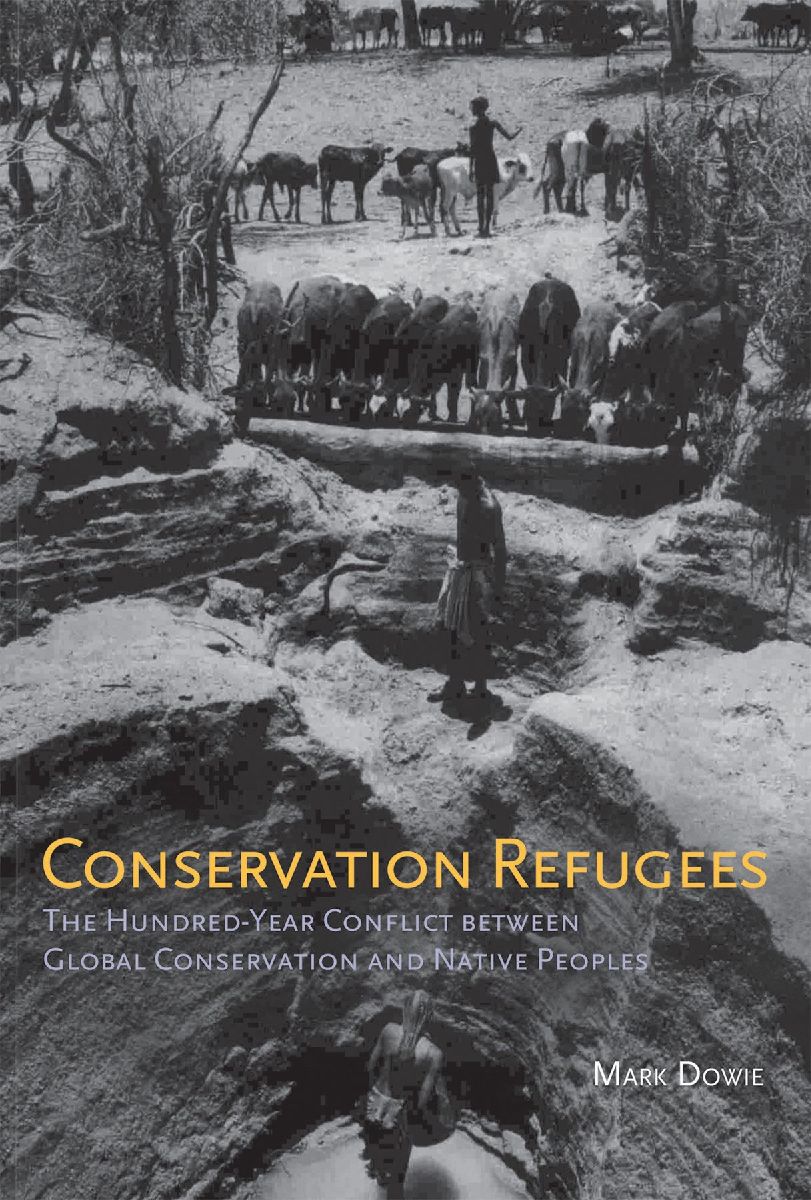
Conservation Refugees
The Hundred-Year Conflict between Global Conservation and Native Peoples
von Mark Dowie
- Einband
- Kartoniert
- Seiten
- 372
- Sprache
- Englisch
- Erschienen
- Februar 2011
- Verlag
- MIT Press
Buchbeschreibung
How native people—from the Miwoks of Yosemite to the Maasai of eastern Africa—have been displaced from their lands in the name of conservation.
Since 1900, more than 108,000 officially protected conservation areas have been established worldwide, largely at the urging of five international conservation organizations. About half of these areas were occupied or regularly used by indigenous peoples.
Ganze Beschreibung lesenWeniger anzeigen
Millions who had been living sustainably on their land for generations were displaced in the interests of conservation.
In Conservation Refugees, Mark Dowie tells this story. This is a “good guy vs. good guy” story, Dowie writes; the indigenous peoples' movement and conservation organizations have a vital common goal—to protect biological diversity—and could work effectively and powerfully together to protect the planet and preserve biological diversity. Yet for more than a hundred years, these two forces have been at odds.
The result: thousands of unmanageable protected areas and native peoples reduced to poaching and trespassing on their ancestral lands or “assimilated” but permanently indentured on the lowest rungs of the money economy. Dowie begins with the story of Yosemite National Park, which by the turn of the twentieth century established a template for bitter encounters between native peoples and conservation.
He then describes the experiences of other groups, ranging from the Ogiek and Maasai of eastern Africa and the Pygmies of Central Africa to the Karen of Thailand and the Adevasis of India.
He also discusses such issues as differing definitions of “nature” and “wilderness,” the influence of the “BINGOs” (Big International NGOs, including the Worldwide Fund for Nature, Conservation International, and The Nature Conservancy), the need for Western scientists to respect and honor traditional lifeways, and the need for native peoples to blend their traditional knowledge with the knowledge of modern ecology.
When conservationists and native peoples acknowledge the interdependence of biodiversity conservation and cultural survival, Dowie writes, they can together create a new and much more effective paradigm for conservation.
Details
- Erscheinungstermin
- Februar 2011
- Kategorie
- Fremdsprachige Bücher
- Einband
- Kartoniert
- Seiten
- 372
- Sprache
- Englisch
- Verlag
- MIT Press
- Format
- 22,9 × 15,2 cm
- Dicke
- 2,2 cm
- Gewicht
- 603 g
- EAN / ISBN-13
- 9780262516006
Versand und Rückgabe
Standardversand: 1 bis 3 Werktage, 3,99 €, kostenlos ab 35 €
Liefergebiet: Deutschland
Rücksendung: 14 Tage Widerrufsrecht. Bei einem Widerruf tragen Sie die Kosten der Rücksendung. Bei einer Falschlieferung oder einem Fehler von uns erstatten wir Ihnen das Rückporto. Den Widerruf erklären Sie über den Knopf „Vertrag widerrufen“ im Fuß der Seite.
Hersteller und ProduktsicherheitMIT Press
MIT Press
Europaallee 1
36244 Bad Hersfeld
Deutschland
gpsr@libri.de
Verantwortliche Person in der EU
Libri GmbHEuropaallee 1
36244 Bad Hersfeld
Deutschland
gpsr@libri.de
Ähnliche Titel


Bewertungen
Zu diesem Titel gibt es noch keine Bewertung. Bewerten kann, wer ihn bei uns gekauft hat.
So prüfen wir Bewertungen
Eine Bewertung kann bei uns nur abgeben, wer den Titel über sein Kundenkonto bei uns gekauft hat. Jede Bewertung ist fest mit der zugehörigen Bestellung verknüpft; anders kommt sie technisch gar nicht zustande. Deshalb trägt jede angezeigte Bewertung den Hinweis „Verifizierter Kauf". Wir zeigen positive wie negative Bewertungen und löschen nur bei Rechtsverstößen. Für Bewertungen gibt es keine Gegenleistung.
32,50 €Voraussichtlich 1. bis 3. Dez.