Buch-OWLOnline-Buchhandel

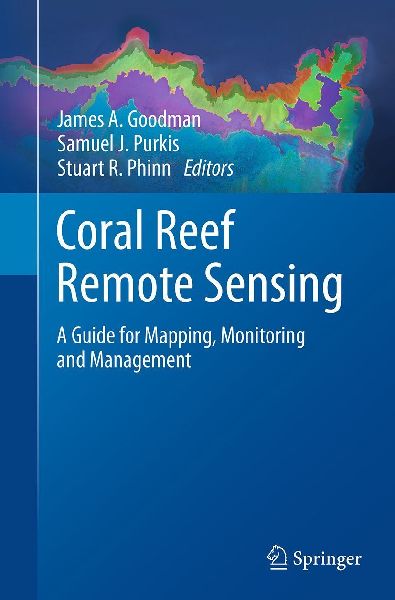
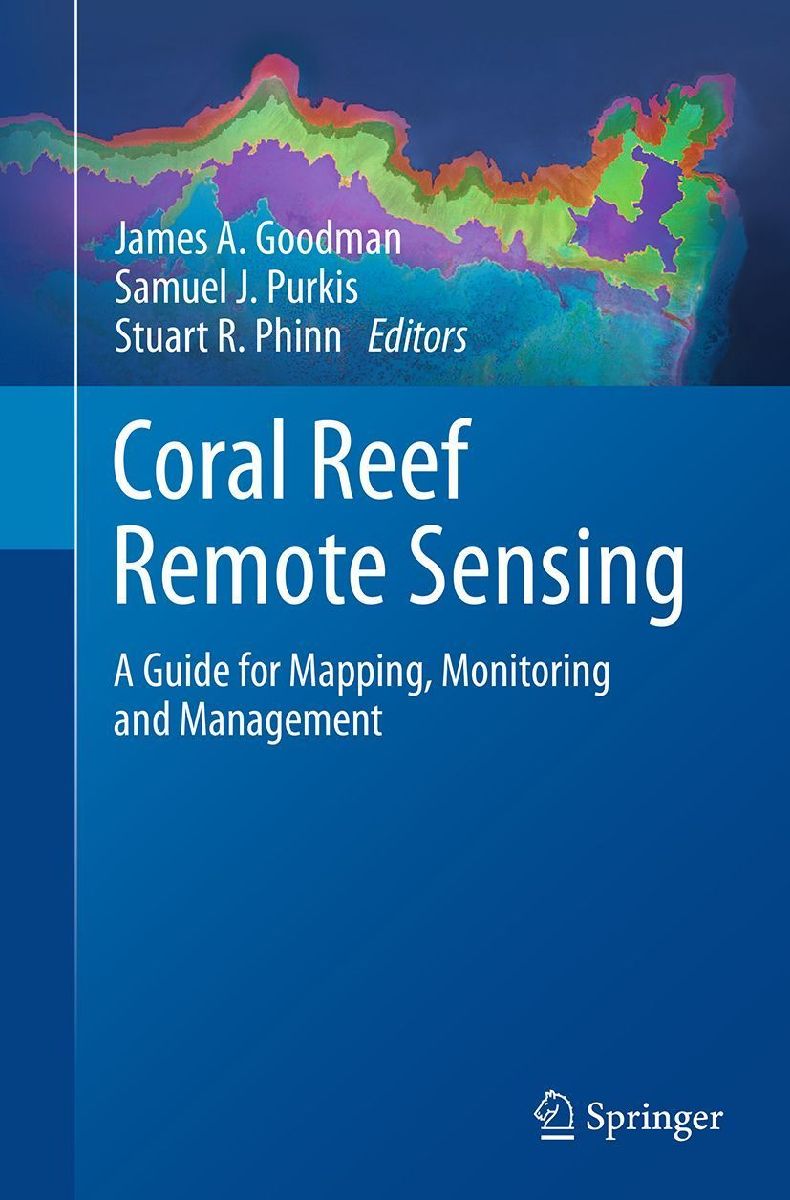
Coral Reef Remote Sensing

A Guide for Mapping, Monitoring and Management

von James A. Goodman (Hrsg.)

Herausgegeben von: James A. Goodman, Herausgegeben von: Samuel J. Purkis, Herausgegeben von: Stuart R. Phinn

Einband
Kartoniert
Seiten
464
Sprache
Englisch
Erschienen
Oktober 2016
Verlag
Springer

Buchbeschreibung

Remote sensing stands as the defining technology in our ability to monitor coral reefs, as well as their biophysical properties and associated processes, at regional to global scales.

With overwhelming evidence that much of Earth's reefs are in decline, our need for large-scale, repeatable assessments of reefs has never been so great.

Ganze Beschreibung lesenWeniger anzeigen

Fortunately, the last two decades have seen a rapid expansion in the ability for remote sensing to map and monitor the coral reef ecosystem, its overlying water column, and surrounding environment.

Remote sensing is now a fundamental tool for the mapping, monitoring and management of coral reef ecosystems. Remote sensing offers repeatable, quantitative assessments of habitat and environmental characteristics over spatially extensive areas. As the multi-disciplinary field of coral reef remote sensing continues to mature, results demonstrate that the techniques and capabilities continue to improve.

New developments allow reef assessments and mapping to be performed with higher accuracy, across greater spatial areas, and with greater temporal frequency. The increased level of information that remote sensing now makes available also allows more complex scientific questions to be addressed. As defined for this book, remote sensing includes the vast array of geospatial data collected from land, water, ship, airborne and satellite platforms.

The book is organized by technology, including: visible and infrared sensing using photographic, multispectral and hyperspectral instruments; active sensing using light detection and ranging (LiDAR); acoustic sensing using ship, autonomous underwater vehicle (AUV) and in-water platforms; and thermal and radar instruments. Emphasis and Audience

This book serves multiple roles. It offers an overview of the current state-of-the-art technologies for reef mapping, provides detailed technical information for coral reef remote sensing specialists, imparts insight on the scientific questions that can be tackled using this technology, and also includes a foundation for those new to reef remote sensing.

The individual sections of the book include introductory overviews of four main types of remotely sensed data used to study coral reefs, followed by specific examples demonstrating practical applications of the different technologies being discussed. Guidelines for selecting the most appropriate sensor for particular applications are provided, including an overview of how to utilize remote sensing data as an effective tool in science and management.

The text is richly illustrated with examples of each sensing technology applied to a range of scientific, monitoring and management questions in reefs around the world. As such, the book is broadly accessible to a general audience, as well as students, managers, remote sensing specialists and anyone else working with coral reef ecosystems.

Inhaltsverzeichnis

  • Section I Visible and Infrared
  • 1 Visible and Infrared Overview 1.1 Introduction 1.2 Physical and Technical Principles1.3 Image Processing1.4 Future Directions
  • Suggested Reading
  • References
  • 2 Photography Applications2.1 Introduction 2.2 Photography of Coral Reefs2.3 Photography Analysis and Classification Techniques 2.4 Example Applications of Photography 2.5 Conclusions and Future Directions
  • Suggested Reading
  • References
  • 3 Multispectral Applications3.1 Introduction3.2 Multispectral Analysis and Classification3.3 Example Applications3.4 Conclusions and Future Directions
Ganzes Inhaltsverzeichnis anzeigen (43 Einträge)Weniger anzeigen
  • Suggested Reading
  • References
  • 4 Hyperspectral Applications4.1 Introduction4.2 Hyperspectral Planning and Preprocessing4.3 Hyperspectral Algorithms4.4 Conclusions Suggested Reading
  • References Section II LiDAR
  • 5 LiDAR Overview5.1 Introduction5.2 Physical Principles5.3 Image Products and Environmental Variables5.4 Processing and Validation Requirements
  • Suggested Reading
  • References
  • 6 LiDAR Applications6.1 Introduction 6.2 Example LiDAR Applications 6.3 Future Directions in LiDAR6.4 Conclusion Suggested Reading References
  • 7 Integrated LiDAR and Hyperspectral7.1 Introduction7.2 LiDAR/Hyperspectral Processing7.3 Applications of LiDAR/Hyperspectral Fusion7.4 Summary and Discussion
  • Suggested Reading
  • References Section III Acoustic
  • 8 Acoustic Methods Overview8.1 Introduction8.2 Physical and Technical Principles8.3 Applications of Acoustics8.4 Conclusion
  • Suggested Reading
  • References
  • 9 Acoustic Applications9.1 Introduction 9.2 Applications 9.3 State of the Science and Future Directions
  • Suggested Reading
  • References
  • 10 Deep Acoustic Applications10.1 Introduction10.2 History of Mapping Cold-Water Coral Habitats10.3 Cold-Water Coral Mapping Example10.4 Conclusions and Recommendations
  • Suggested Reading
  • References Section IV Thermal and Radar
  • 11 Thermal and Radar Overview11.1 Introduction 11.2 Thermal Overview11.3 Radar Overview11.4 Conclusion
  • Suggested Reading
  • References
  • 12 Thermal Applications12.1 Introduction 12.2 Thermal Data Products and Analysis12.3 Example Thermal Applications 12.4 Future Directions
  • Suggested Reading
  • References
  • 13 Radar Applications 13.1 Introduction13.2 HF Ocean Radar13.3 VHF High Resolution Radar13.4 Synthetic Aperture Radar 13.5 Scatterometers13.6 X-band Wave Radars 13.7 Conclusions and Future Directions
  • Suggested Reading
  • References Section V Effective Use of Remote Sensing in Science and Management
  • 14 Validation14.1 Introduction 14.2 Sampling Design and Accuracy Measures14.3 Validation Literature Review 14.4 Conclusions and Recommendations Suggested Reading
  • References
  • 15 Science and Management15.1 Introduction 15.2 Research and Management Needs15.3 Example Applications15.4 Conclusions and Recommendations
  • Suggested Reading
  • References
  • Index

Details

Erscheinungstermin
Oktober 2016
Kategorie
Fremdsprachige Bücher
Einband
Kartoniert
Seiten
464
Sprache
Englisch
Verlag
Springer
Format
23,5 × 15,5 cm
Dicke
2,4 cm
Gewicht
782 g
EAN / ISBN-13
9789401777360
Maßstabsgetreu: Deckel und Buchrücken neben einer Hand (18 cm).
Versand und Rückgabe

Standardversand: 1 bis 3 Werktage, 3,99 €, kostenlos ab 35 €

Liefergebiet: Deutschland

Rücksendung: 14 Tage Widerrufsrecht. Bei einem Widerruf tragen Sie die Kosten der Rücksendung. Bei einer Falschlieferung oder einem Fehler von uns erstatten wir Ihnen das Rückporto. Den Widerruf erklären Sie über den Knopf „Vertrag widerrufen“ im Fuß der Seite.

Hersteller und ProduktsicherheitSpringer Nature Customer Service Center GmbH
Springer Nature Customer Service Center GmbH
Europaplatz 3
69115 Heidelberg
Deutschland
ProductSafety@springernature.com

Ähnliche Titel

Bewertungen

Zu diesem Titel gibt es noch keine Bewertung. Bewerten kann, wer ihn bei uns gekauft hat.

So prüfen wir Bewertungen
Eine Bewertung kann bei uns nur abgeben, wer den Titel über sein Kundenkonto bei uns gekauft hat. Jede Bewertung ist fest mit der zugehörigen Bestellung verknüpft; anders kommt sie technisch gar nicht zustande. Deshalb trägt jede angezeigte Bewertung den Hinweis „Verifizierter Kauf". Wir zeigen positive wie negative Bewertungen und löschen nur bei Rechtsverstößen. Für Bewertungen gibt es keine Gegenleistung.
160,49 €Voraussichtlich 2. bis 4. Dez.

Inhalte ab 18

Cover von Titeln für Erwachsene, etwa erotische Romane, Manga oder Comics, bleiben unscharf, bis Sie bestätigen. Die Bestätigung gilt für alle Seiten und Tabs, bis Sie den Browser schließen.

Zurück zum Katalog