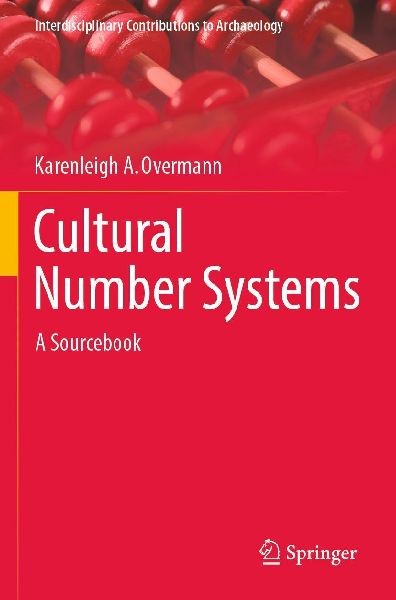
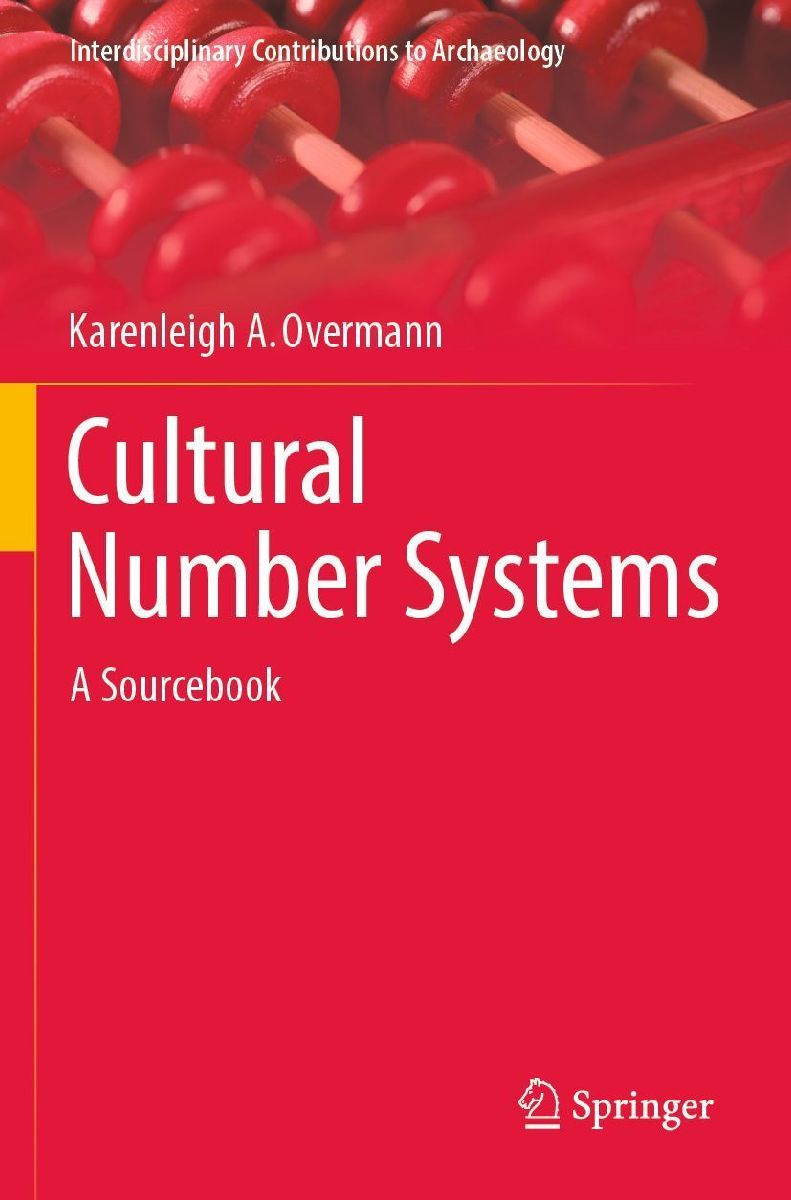
Cultural Number Systems
A Sourcebook
Aus der Reihe Interdisciplinary Contributions to Archaeology
- Einband
- Kartoniert
- Seiten
- 296
- Sprache
- Englisch
- Erschienen
- April 2026
- Verlag
- Springer
Buchbeschreibung
This sourcebook presents an extensive look at cultural number systems in numeracy and writing systems.
Based on a decade of research by the author, the work examines topics such as why Xerxes the First counted his army by having his men march through an enclosure big enough to hold 10,000 of them at a time, why the Hawaiian word for "twenty" means "nine and two," why an ancient Greek mathematician was driven mad by irrational numbers, and how old counting might be and how we might know this.
Ganze Beschreibung lesenWeniger anzeigen
Along the way, the author describes topics such as dactylonomy, the ancient art of expressing and calculating numbers with the fingers; specified counting, the use of different counting sequences to count different types of objects; and the ephemeral abacus, strategies for counting that involve people and goods but not an actual device.
The chapters are organized into six geographical areas (the ancient Near East, Africa, Europe, Asia/India, Oceania, and the Americas).
Inhaltsverzeichnis
- Chapter 1. Introduction
- Part 1. Number systems in the Ancient Near East
- Chapter 2. Sumerian numbers
- Chapter 3. Minority traditions
- Chapter 4. Akkadian numbers
- Chapter 5. Elamite numbers
- Chapter 6. Numbers in the Achaemenid Empire
- Chapter 7. Egyptian numbers
Ganzes Inhaltsverzeichnis anzeigen (44 Einträge)Weniger anzeigen
- Part 2. Number systems in Africa
- Chapter 8. The Ishango bone
- Chapter 9. Yoruba numbers
- Chapter 10. Igbo numbers
- Chapter 11. Ngiti numbers
- Chapter 12. Numbers in Sessuto
- Chapter 13. African finger-counting
- Part 3. Number systems in Europe
- Chapter 14. Prehistoric finger-counting
- Chapter 15. The Taï plaque
- Chapter 16. Non-decimal and unusual decimal counting systems
- Chapter 17. Greek numbers
- Chapter 18. Roman numbers
- Chapter 19. Dactylonomy (digital reckoning)
- Part 4. Number systems in Asia
- Chapter 20. Chinese numbers
- Chapter 21. Chinese calculating methods
- Chapter 22. Numbers in Japan
- Chapter 23. Korean numbers and numeral types
- Chapter 24. Numbers in the Philippines
- Chapter 25. Numbers in India
- Part 5. Number systems in Oceania
- Chapter 26. Numbers in New Guinea: body-counting
- Chapter 27. Numbers in New Guinea: yam counting and other counting methods
- Chapter 28. Numbers in Australia
- Chapter 29. Numbers in Melanesia and Micronesia
- Chapter 30. Numbers in Polynesia
- Chapter 31. Misunderstandings, mistakes, and outright frauds
- Part 6. Number systems in the Americas
- Chapter 32. The Arctic: Inuit numbers
- Chapter 33. Northern California: Pomo numbers
- Chapter 34. Northern California: Number systems based on fours and eights
- Chapter 35. Mesoamerica: Maya numbers
- Chapter 36. Western South America: Inka numbers
- Chapter 37. Amazonian number systems: Desana, Mundurukú, and Pirahã
- Chapter 38. Conclusion
Details
- Erscheinungstermin
- April 2026
- Kategorie
- Fremdsprachige Bücher
- Einband
- Kartoniert
- Seiten
- 296
- Sprache
- Englisch
- Verlag
- Springer
- Reihe
- Interdisciplinary Contributions to Archaeology
- Format
- 23,5 × 15,5 cm
- Dicke
- 1,7 cm
- Gewicht
- 452 g
- EAN / ISBN-13
- 9783031833854
Über Karenleigh A. Overmann
Karenleigh A. Overmann directs the Center for Cognitive Archaeology at the University of Colorado, Colorado Springs. She earned a doctorate in archaeology from the University of Oxford as a Clarendon Scholar.
Mehr über Karenleigh A. OvermannWeniger anzeigen
She completed two years of postdoctoral research at the University of Bergen, Norway as a Marie Curie research fellow. She investigates numeracy and literacy as complex cultural systems that emerge through sustained interactions between brains, behaviors, and material forms, using Material Engagement Theory as her theoretical framework. She is retired from the U.S. Navy, where she performed communications-electronics work as an enlisted Radioman before earning a commission under the Limited Duty Officer program.
Versand und Rückgabe
Standardversand: 1 bis 3 Werktage, 3,99 €, kostenlos ab 35 €
Liefergebiet: Deutschland
Rücksendung: 14 Tage Widerrufsrecht. Bei einem Widerruf tragen Sie die Kosten der Rücksendung. Bei einer Falschlieferung oder einem Fehler von uns erstatten wir Ihnen das Rückporto. Den Widerruf erklären Sie über den Knopf „Vertrag widerrufen“ im Fuß der Seite.
Hersteller und ProduktsicherheitSpringer Nature Customer Service Center GmbH
Springer Nature Customer Service Center GmbH
Europaplatz 3
69115 Heidelberg
Deutschland
ProductSafety@springernature.com
Mehr aus der Reihe Interdisciplinary Contributions to Archaeology

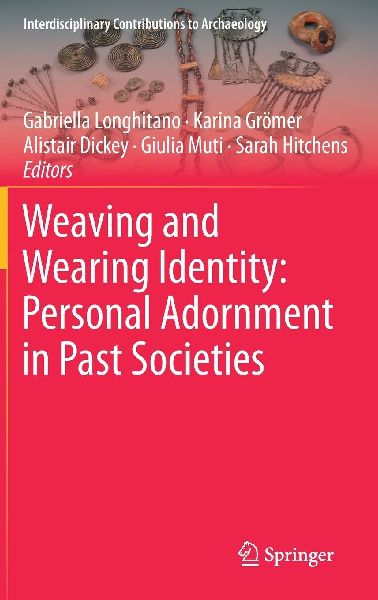
Weaving and Wearing Identity: Personal Adornment in Past Societies
Gabriella Longhitano (Hrsg.)
Gebunden, Englisch
139,09 €
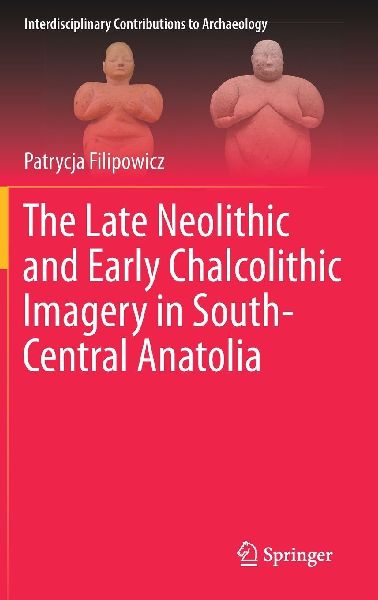
The Late Neolithic and Early Chalcolithic Imagery in South-Central Anatolia
Patrycja Filipowicz
Gebunden, Englisch
117,69 €
Bewertungen
Zu diesem Titel gibt es noch keine Bewertung. Bewerten kann, wer ihn bei uns gekauft hat.
So prüfen wir Bewertungen
Eine Bewertung kann bei uns nur abgeben, wer den Titel über sein Kundenkonto bei uns gekauft hat. Jede Bewertung ist fest mit der zugehörigen Bestellung verknüpft; anders kommt sie technisch gar nicht zustande. Deshalb trägt jede angezeigte Bewertung den Hinweis „Verifizierter Kauf". Wir zeigen positive wie negative Bewertungen und löschen nur bei Rechtsverstößen. Für Bewertungen gibt es keine Gegenleistung.
106,99 €Voraussichtlich 1. bis 3. Dez.