
Buch-OWLOnline-Buchhandel

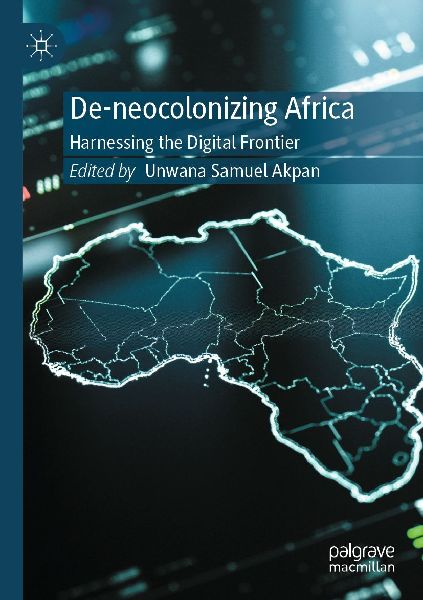
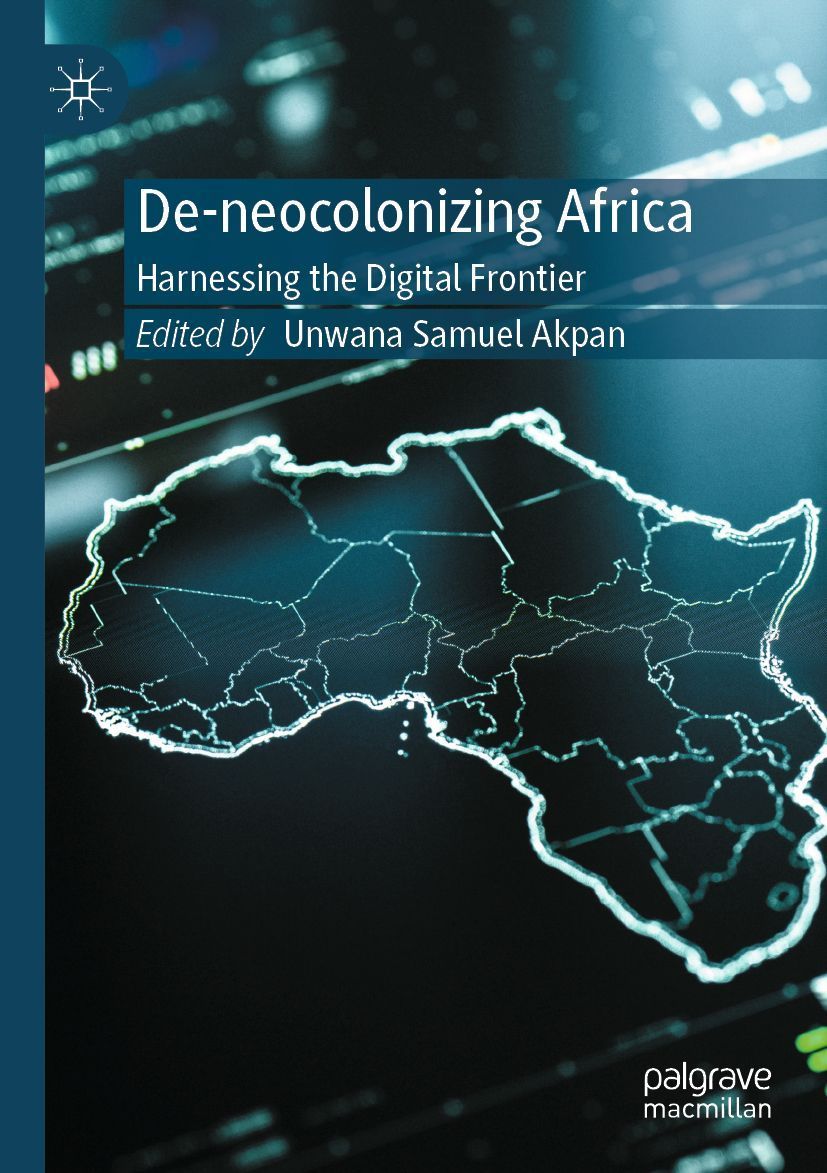
De-neocolonizing Africa

Harnessing the Digital Frontier

von Unwana Samuel Akpan (Hrsg.)

Herausgegeben von: Unwana Samuel Akpan

Einband
Kartoniert
Seiten
512
Sprache
Englisch
Erschienen
Oktober 2025
Verlag
Springer

Buchbeschreibung

This book fills a critical void in African research: a lack of engagement with the question of how digital capabilities can be harnessed to liberate Africa from the subtle grips of neocolonization.

Bringing together seasoned and emerging scholars from diverse regions of Africa, the book dissects the intricate relationship between technology and the persistent echoes of colonial legacies.

Ganze Beschreibung lesenWeniger anzeigen

The authors distinguish between 'decolonization'-the historical struggle for independence-and the ongoing imperative of 'de-neocolonization,' an evolving battle against persistent but more subtle colonial influences, now manifesting in the digital terrain.

With a focus on the profound impact of digital tools, the contributors question how these capabilities can serve as instruments of liberation in a globalized age. Through a comprehensive examination of the intersection between Africa, digital technology, and neocolonization, the book not only breaks new ground but also positions itself as an invaluable resource for students, academics, and professionals globally.

By offering fresh perspectives, nuanced analyses, and innovative solutions, this book emerges as an essential addition to the global intellectual academe, reshaping the discourse on African autonomy, identity, and emancipation from neocolonial chains.

Inhaltsverzeichnis

  • Chapter 1. Comparative Analysis of Kunta Kinte in "Roots" and Okonkwo in "Things Fall Apart" as Symbols of Colonial and Neocolonial Defiants: Legacy of Resistance and Resilience against the White Man's Kraal
  • Chapter 2. Advancing African Communication Scholarship: The African Culture-Oriented Framework for Mentoring
  • Chapter 3. Bending the Spoon with Our Minds: Africa's Apocalyptic Fate with Coloniality
  • Chapter 4. Ideology The Colonialism that Evades Decolonization
  • Chapter 5. De-Neocolonizing and Redesigning African Education for Success in the Digital Age
  • Chapter 6. De-Neocolonizing Africa via Trade and Commerce Route in the Digital Age
  • Chapter 7. De-Neocolonizing Development Concept: Communication Policy-Making and Sustainable Development in Africa
  • Chapter 8. Customer Engagement Marketing: One of the New Advertising Trends
Ganzes Inhaltsverzeichnis anzeigen (26 Einträge)Weniger anzeigen
  • Chapter 9. Digital Transformation and Decolonize Media in Egypt
  • Chapter 10. The Unmasking of Digital Media Juju in Africa
  • Chapter 11. Digitally De-Neocolonizing the Nigerian Journalism Space
  • Chapter 12. Mega Sports Events Coloniality of Power and the FIFA 2010 World Cup in South Africa - An Analysis of the Changes in Representation over the Past Ten Years
  • Chapter 13. Ways Forward for Media Development: Towards a De-Neocolonization Project
  • Chapter 14. Afro-Digital Sustainability and Mass Media in Nigeria
  • Chapter 15. Beyond the Neocolonizer's Appreciation of Climate Change Consumption of Zimbabwean Tabloid Umthunywa
  • Chapter 16. Neocolonial Framing of Developing and Developed Countries' Attitudes Towards COVID-19 in the Guardian and Al-Jazeera Newspapers
  • Chapter 17. The Role of the African Diaspora in Contributing Towards and Investing in Public Services Governance in Africa: An Ethical Perspectives
  • Chapter 18. Decolonial Constructions and Negotiations of Ethnic and Transnational Identities The Case of Young Igbo Adults
  • Chapter 19. Deconstructing Colonial Frameworks in the Black Panther Film Analysis
  • Chapter 20. Depicting Neocolonialism in Screenplay Exploring Social Prescribing vis a vis Dominance in Femi Adebayo's Jagun Jagun
  • Chapter 21. Nigerian Language Media Use and Entertainment Industry as Panacea for Decolonizing Recolonized Space
  • Chapter 22. De-Neocolonizing the South African Music Education Selective Transformation
  • Chapter 23. A Clarion Call to De-Westernize the Music Curricula of the Namibian Tertiary Institutions
  • Chapter 24. Espousal of Home-Grown Production Techniques for Zimbabwean Indigenous Music in the Digitized Age
  • Chapter 25. Ngoma Materiality and Instrumentality Reconfiguring Malawian Indigenous Music Digitization for Global Music Appreciation
  • Chapter 26. Exploring Globalization and Digitization Strategies to Counter Westernization and Neocolonialism in Botswana's Music Industry

Details

Erscheinungstermin
Oktober 2025
Kategorie
Fremdsprachige Bücher
Einband
Kartoniert
Seiten
512
Sprache
Englisch
Verlag
Springer
Format
21,0 × 14,8 cm
Dicke
2,8 cm
Gewicht
655 g
EAN / ISBN-13
9783031663062
Maßstabsgetreu: Deckel und Buchrücken neben einer Hand (18 cm).

Über Unwana Samuel Akpan (Hrsg.)

Dr. Unwana Samuel Akpan is a media scholar-practitioner with over two decades of broadcast experience.

Mehr über Unwana Samuel Akpan (Hrsg.)Weniger anzeigen

He has been a visiting scholar at the Department of Communication, Culture and Media Studies (CCMS), where he completed his postdoctoral studies in the School of Communication and Media Studies, Howard University, Washington DC, USA. He is the editor of the University of Lagos Communication Review and presently a lecturer in the Department of Mass Communication, University of Lagos, Akoka-Lagos, Akoka.

Versand und Rückgabe

Standardversand: 1 bis 3 Werktage, 3,99 €, kostenlos ab 35 €

Liefergebiet: Deutschland

Rücksendung: 14 Tage Widerrufsrecht. Bei einem Widerruf tragen Sie die Kosten der Rücksendung. Bei einer Falschlieferung oder einem Fehler von uns erstatten wir Ihnen das Rückporto. Den Widerruf erklären Sie über den Knopf „Vertrag widerrufen“ im Fuß der Seite.

Hersteller und ProduktsicherheitSpringer Nature Customer Service Center GmbH
Springer Nature Customer Service Center GmbH
Europaplatz 3
69115 Heidelberg
Deutschland
ProductSafety@springernature.com

Mehr von Unwana Samuel Akpan

Ähnliche Titel

Bewertungen

Zu diesem Titel gibt es noch keine Bewertung. Bewerten kann, wer ihn bei uns gekauft hat.

So prüfen wir Bewertungen
Eine Bewertung kann bei uns nur abgeben, wer den Titel über sein Kundenkonto bei uns gekauft hat. Jede Bewertung ist fest mit der zugehörigen Bestellung verknüpft; anders kommt sie technisch gar nicht zustande. Deshalb trägt jede angezeigte Bewertung den Hinweis „Verifizierter Kauf". Wir zeigen positive wie negative Bewertungen und löschen nur bei Rechtsverstößen. Für Bewertungen gibt es keine Gegenleistung.
171,19 €Voraussichtlich 1. bis 3. Dez.

Inhalte ab 18

Cover von Titeln für Erwachsene, etwa erotische Romane, Manga oder Comics, bleiben unscharf, bis Sie bestätigen. Die Bestätigung gilt für alle Seiten und Tabs, bis Sie den Browser schließen.

Zurück zum Katalog