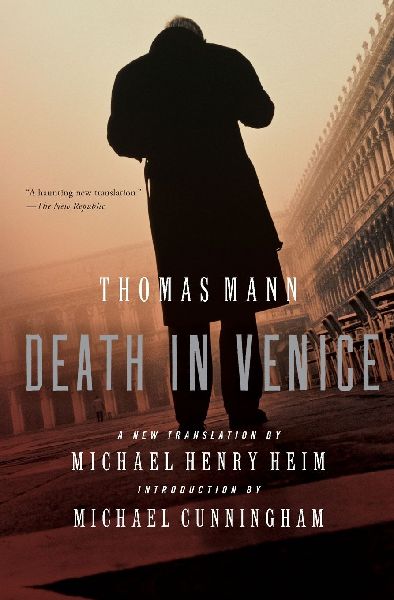
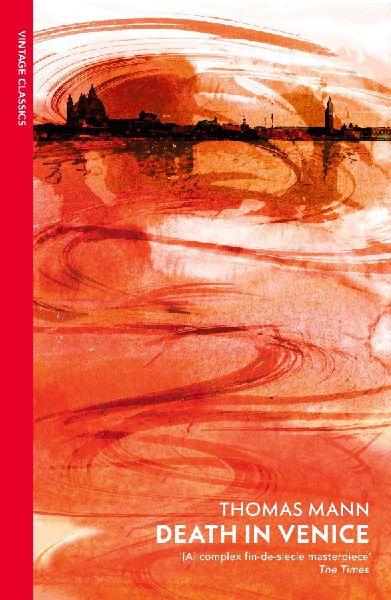
Death in Venice
von Thomas Mann
- Einband
- Kartoniert
- Seiten
- 160
- Sprache
- Englisch
- Erschienen
- Mai 2005
- Verlag
- Harper Perennial
Buchbeschreibung
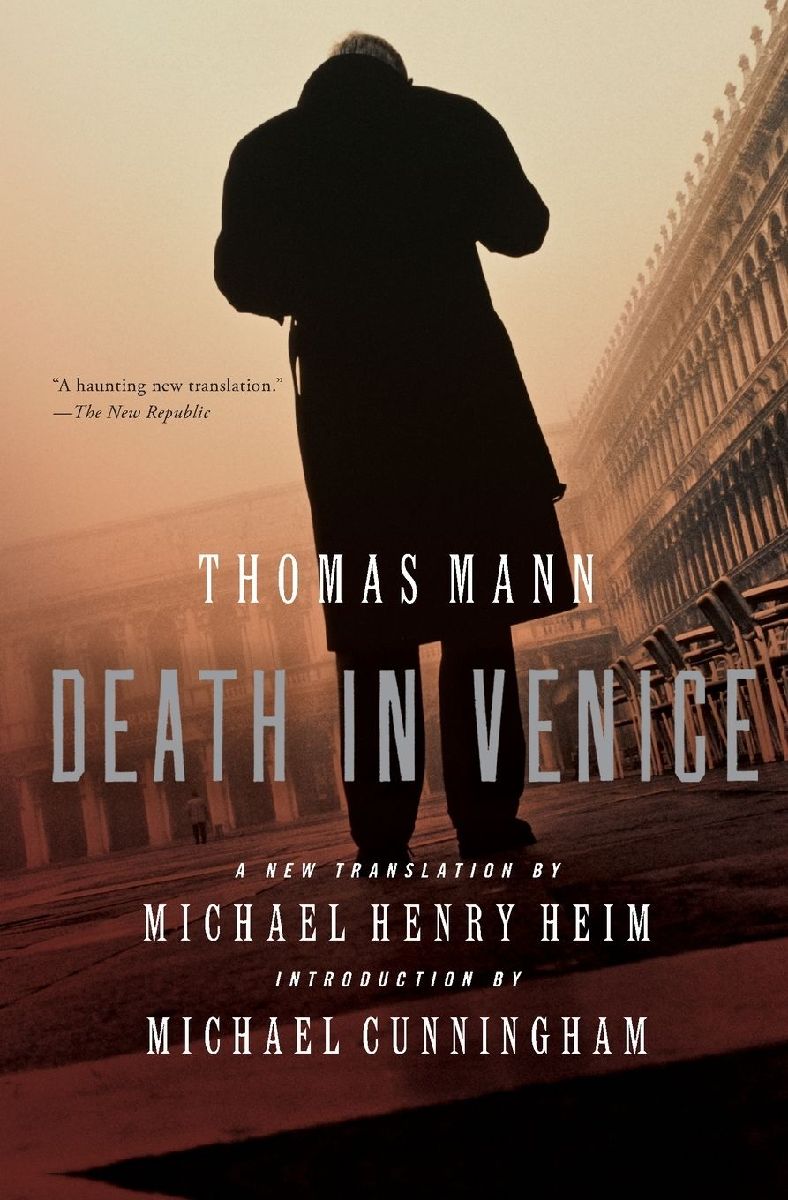
The world-famous masterpiece by Nobel laureate Thomas Mann—here in a new translation by Michael Henry Heim with a new introduction by Michael Cunningham, author of The Hours “It is a story of the voluptuousness of doom,” Mann wrote. “But the problem I had especially in mind was that of the artist’s dignity.”
Ganze Beschreibung lesenWeniger anzeigen
Published on the eve of World War I, a decade after Buddenbrooks had established Thomas Mann as a literary celebrity, Death in Venice tells the story of Gustave von Aschenbach, a successful but aging writer who follows his wanderlust to Venice in search of spiritual fulfillment that instead leads to his erotic doom.
Amid this growing fixation, Venice is struck by an epidemic, and the once-idyllic city devolves into a decaying, ominous backdrop that mirrors Aschenbach’s inner turmoil. Overwhelmed by his unfulfilled desires and the tension between art, morality, and human passion, he chooses to remain in the city, unable to part from Tadzio's presence.
The novella climaxes as Aschenbach, now physically and emotionally enfeebled, watches Tadzio from a distance on the beach one final time. As the boy gazes out at the sea, symbolizing purity and eternal beauty, Aschenbach succumbs to his own deterioration and dies alone.
Through its rich symbolism and classical references, Death in Venice serves as a meditation on the transcendence of beauty, the frailty of human existence, and the paradox of longing for the unattainable.
Details
- Erscheinungstermin
- Mai 2005
- Kategorie
- Fremdsprachige Bücher
- Einband
- Kartoniert
- Seiten
- 160
- Sprache
- Englisch
- Verlag
- Harper Perennial
- Format
- 20,3 × 13,3 cm
- Dicke
- 1,0 cm
- Gewicht
- 210 g
- EAN / ISBN-13
- 9780060576172
Über Thomas Mann
Thomas Mann (1875-1955) was a German novelist, short story writer, social critic, philanthropist, essayist, and the 1929 Nobel Prize in Literature laureate.
Mehr über Thomas MannWeniger anzeigen
His highly symbolic and ironic epic novels and novellas are noted for their insight into the psychology of the artist and the intellectual. His analysis and critique of the European and German soul used modernized versions of German and Biblical stories, as well as the ideas of Johann Wolfgang von Goethe, Friedrich Nietzsche and Arthur Schopenhauer.
He was only twenty-five when Buddenbrooks, his first major novel, was published in 1901. Before it was banned and burned by Hitler, it had sold over a million copies in Germany alone. His second great novel, The Magic Mountain, was published in 1924; and the first volume of his tetralogy Joseph and his Brothers in 1933. When Adolf Hitler came to power, Mann fled to Switzerland. Then, after several previous visits, in 1938 he settled in the United States, where he wrote Doctor Faustus and The Holy Sinner. Among the honours he received in the US was his appointment as a Fellow of the Library of Congress. He revisited his native country in 1949 and returned to Switzerland in 1952, where The Black Swan and Confessions of Felix Krull were written and where he died in 1955.
Mann is one of the best-known exponents of the so-called Exilliteratur, German literature written in exile by those who opposed the Hitler regime.
Versand und Rückgabe
Standardversand: 1 bis 3 Werktage, 3,99 €, kostenlos ab 35 €
Liefergebiet: Deutschland
Rücksendung: 14 Tage Widerrufsrecht. Bei einem Widerruf tragen Sie die Kosten der Rücksendung. Bei einer Falschlieferung oder einem Fehler von uns erstatten wir Ihnen das Rückporto. Den Widerruf erklären Sie über den Knopf „Vertrag widerrufen“ im Fuß der Seite.
Hersteller und ProduktsicherheitHarperCollins Publishers
HarperCollins Publishers
Macken House, 39/40 Mayor Street Upper
D01 C9W8 Dublin 1
Irland
enquiries@harpercollins.ie
Mehr von Thomas Mann

Ähnliche Titel


Bewertungen
Zu diesem Titel gibt es noch keine Bewertung. Bewerten kann, wer ihn bei uns gekauft hat.
So prüfen wir Bewertungen
Eine Bewertung kann bei uns nur abgeben, wer den Titel über sein Kundenkonto bei uns gekauft hat. Jede Bewertung ist fest mit der zugehörigen Bestellung verknüpft; anders kommt sie technisch gar nicht zustande. Deshalb trägt jede angezeigte Bewertung den Hinweis „Verifizierter Kauf". Wir zeigen positive wie negative Bewertungen und löschen nur bei Rechtsverstößen. Für Bewertungen gibt es keine Gegenleistung.
19,20 €Voraussichtlich 3. bis 7. Dez.