
Buch-OWLOnline-Buchhandel

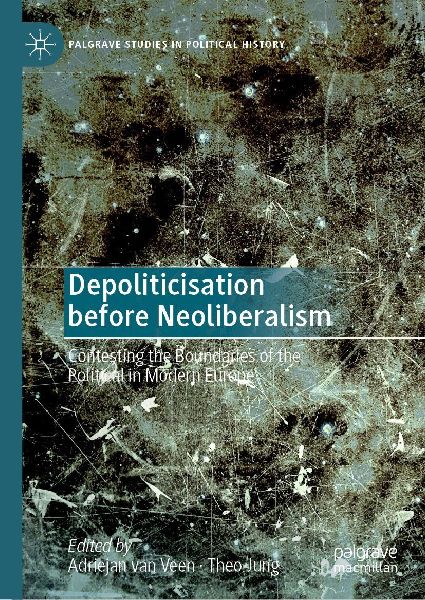
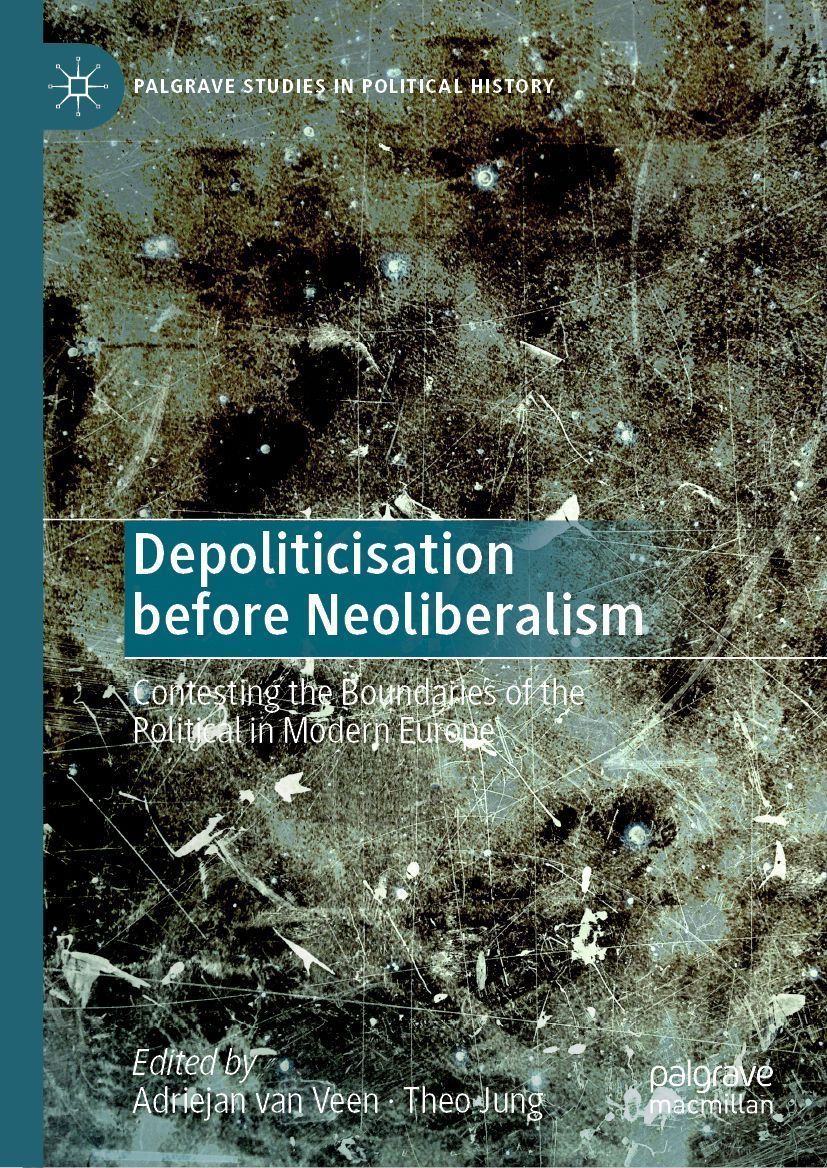
Depoliticisation before Neoliberalism

Contesting the Boundaries of the Political in Modern Europe

von Adriejan van Veen (Hrsg.)

Herausgegeben von: Adriejan van Veen, Herausgegeben von: Theo Jung

Aus der Reihe Palgrave Studies in Political History

Einband
Gebunden
Seiten
420
Sprache
Englisch
Erschienen
Januar 2026
Verlag
Springer

Buchbeschreibung

This book analyses processes of depoliticisation in modern Europe from the emergence of a distinct 'political' sphere in the late eighteenth century until the present day.

Drawing on case studies from across the continent, it demonstrates that depoliticisation has played an integral part in the contestation of modern politics since its inception. Developing a novel conceptual framework, the authors argue that depoliticisation is much more than a simple negation of politics.

Ganze Beschreibung lesenWeniger anzeigen

Rather than an anonymous and amorphous process, depoliticisation often presents an express, actor-driven effort, with modes and forms no less varied than the more familiar manifestations of politicisation. Consequently, the chapters encompass a whole range of depoliticising discursive strategies, performative practices, and institutional rearrangements, playing out across different regime types, from revolutionary orders and representative governments with limited franchises to mass democracies and totalitarian dictatorships.

Illustrating how historical actors understood 'the political' and in which ways they intervened to renegotiate its boundaries, this book seeks to enhance our understanding of modern politics and pose questions that still resonate today.

At a time when the boundaries of the political are once more heavily contested, this book offers thought-provoking insights that will appeal to scholars of history, political science, and sociology, as well as to activists and political practitioners.

Inhaltsverzeichnis

  • 1. Depoliticisation in Modern European Politics: An Introduction; Adriejan van Veen and Theo Jung
  • 2. Historicising Depoliticisation: Dimensions of the Political and its Alternatives; Ido de Haan
  • Part I: Discursive Depoliticisation: Ideas, Concepts, and Rhetoric
  • 3. Depoliticisation after Revolution: Moderation, Science, and the State in the Nineteenth Century; Matthijs Lok
  • 4. Between Religion and Politics: Constructing an Apolitical Sphere after the 1848–1849 German Revolutions; Tamar Kojman
  • 5. Depoliticising Democracy: Technocratic Antipolitics in Dutch Interwar Political Culture (1917–1939); Ruben Ros
  • 6. Depoliticising the Economy? Semantic Struggles about ‘Politics’ and ‘the Economy’ during the Weimar Republic and National Socialism; Stefan Scholl
  • Part II: Doing Depoliticisation: Practices and Performances
Ganzes Inhaltsverzeichnis anzeigen (19 Einträge)Weniger anzeigen
  • 7. “The Silent Citizen Became a Hero!” State, Civil Society, and the Depoliticisation of Dutch Society in the Restoration Era; Adriejan van Veen
  • 8. Not Only Apathy and Disinterest: Abstention and the Blank Vote as Modes of Repoliticisation in Nineteenth-Century Europe; Oriol Luján
  • 9. Planning the Technate: The Apolitical Politics of the 1930s’ Technocratic Movement in North America and Europe; Eva Visser
  • 10. Depoliticisation in Danger of Repoliticisation? The Ambiguities of Gaullist Get-Out-the-Vote Campaigns in the Early French Fifth Republic (1958–1969); Zoé Kergomard
  • 11. Antipolitics as a Political Tool of Czech Dissent: From Earlier Roots to its Second Life after 1989; Adéla Gjuri¿ová
  • Part III: Institutional Depoliticisation: Delegation and Neutralisation
  • 12. Access Denied: The Institutional Depoliticisation of Representative Government during the Dutch Revolution, 1780–1801; Mart Rutjes
  • 13. (Un)Political Islam? Contesting the Turkish State’s Depoliticisation of Islam; Jan-Markus Vömel
  • 14. The Police and the Political: The Problem of Depoliticisation in Dutch Municipal Policing, 1945–2002; Wim de Jong
  • 15. An Administered Society? Economic Planning and (De)Politicisation in the Late Franco Dictatorship; Anna Catharina Hofmann
  • 16. Eliminating Pests, Eliminating Politics? The European Community’s Regulation of Pesticides, 1958–1991; Koen van Zon

Details

Erscheinungstermin
Januar 2026
Kategorie
Fremdsprachige Bücher
Einband
Gebunden
Seiten
420
Sprache
Englisch
Verlag
Springer
Reihe
Palgrave Studies in Political History
Format
21,6 × 15,3 cm
Dicke
2,8 cm
Gewicht
614 g
EAN / ISBN-13
9783031741005
Maßstabsgetreu: Deckel und Buchrücken neben einer Hand (18 cm).

Über Adriejan van Veen (Hrsg.)

Adriejan van Veen is Assistant Professor of Political History at Radboud University Nijmegen, in the Netherlands. He specialises in the political culture of the Netherlands and Western Europe in the modern age.

Mehr über Adriejan van Veen (Hrsg.)Weniger anzeigen

Specifically, Adriejan is interested in the history of political and societal organisation, and the theory and practice of such concepts as political representation and depoliticisation.

Theo Jung is Professor of Modern History at the Martin Luther University of Halle-Wittenberg, in Germany, where he specialises in the history of European culture and politics during the long nineteenth century. His research focuses on structures and moments of political interaction, historical temporalities, and the history of various social practices.

Versand und Rückgabe

Standardversand: 1 bis 3 Werktage, 3,99 €, kostenlos ab 35 €

Liefergebiet: Deutschland

Rücksendung: 14 Tage Widerrufsrecht. Bei einem Widerruf tragen Sie die Kosten der Rücksendung. Bei einer Falschlieferung oder einem Fehler von uns erstatten wir Ihnen das Rückporto. Den Widerruf erklären Sie über den Knopf „Vertrag widerrufen“ im Fuß der Seite.

Hersteller und ProduktsicherheitSpringer Nature Customer Service Center GmbH
Springer Nature Customer Service Center GmbH
Europaplatz 3
69115 Heidelberg
Deutschland
ProductSafety@springernature.com

Mehr aus der Reihe Palgrave Studies in Political History

Ähnliche Titel

Bewertungen

Zu diesem Titel gibt es noch keine Bewertung. Bewerten kann, wer ihn bei uns gekauft hat.

So prüfen wir Bewertungen
Eine Bewertung kann bei uns nur abgeben, wer den Titel über sein Kundenkonto bei uns gekauft hat. Jede Bewertung ist fest mit der zugehörigen Bestellung verknüpft; anders kommt sie technisch gar nicht zustande. Deshalb trägt jede angezeigte Bewertung den Hinweis „Verifizierter Kauf". Wir zeigen positive wie negative Bewertungen und löschen nur bei Rechtsverstößen. Für Bewertungen gibt es keine Gegenleistung.
160,49 €Voraussichtlich 7. bis 9. Dez.

Inhalte ab 18

Cover von Titeln für Erwachsene, etwa erotische Romane, Manga oder Comics, bleiben unscharf, bis Sie bestätigen. Die Bestätigung gilt für alle Seiten und Tabs, bis Sie den Browser schließen.

Zurück zum Katalog