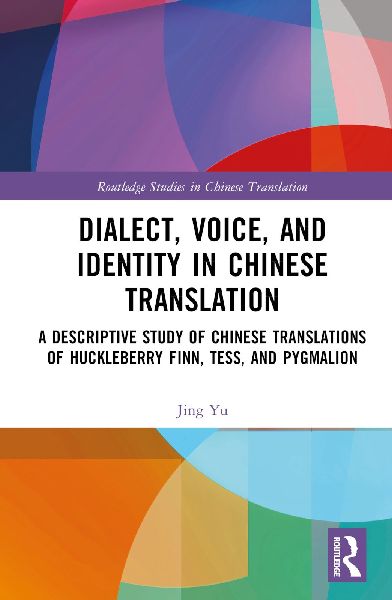
Dialect, Voice, and Identity in Chinese Translation
A Descriptive Study of Chinese Translations of Huckleberry Finn, Tess, and Pygmalion
von Jing Yu
- Einband
- Gebunden
- Seiten
- 236
- Sprache
- Englisch
- Erschienen
- Juli 2023
- Verlag
- Routledge
Buchbeschreibung
Dialect, Voice, and Identity in Chinese Translation is the first book-length attempt to undertake a descriptive investigation of how dialect in British and American novels and dramas is translated into Chinese.
Dialect plays an essential role in creating a voice of difference for the regional, social, or ethnic Others in English fiction.
Ganze Beschreibung lesenWeniger anzeigen
Translating dialect involves not only the textual representation of a different voice with target linguistic resources but also the reconstruction of various cultural, social, and ethnic identities and relations on the target side.
This book provides a descriptive study of 277 Chinese translations published from 1931 to 2020 for three fictions - The Adventures of Huckleberry Finn, Tess of the d'Urbervilles, and Pygmalion - with a special focus on how the Dorset dialect, African American Vernacular English, and cockney in them have been translated in the past century in China.
It provides a comprehensive description of the techniques, strategies, tendencies, norms, and universals as well as diachronic changes and stylistic evolutions of the language used in dialect translation into Chinese. An interdisciplinary perspective is adopted to conduct three case studies of each fiction to explore the negotiation, reformulation, and reconstruction via dialect translation of the identities for Others and Us and their relations in the Chinese context.
This book is intended to act as a useful reference for scholars, teachers, translators, and graduate students from disciplines such as translation, sociolinguistics, literary and cultural studies, and anyone who shows interest in dialect translation, the translation of American and British literature, Chinese language and literature, identity studies, and cross-cultural studies.
Inhaltsverzeichnis
- Acknowledgments
- 1. Translating dialect, recreating a voice of difference 1.1 Distinguishing literary dialect from dialect literature 1.2 Voice of difference and the construction of identity for Others 1.3 The (un)translatability of literary dialect 1.4 Approaches and research methods 1.5 Originality and contribution 1.6 Outline of the book
- 2. Dialect in literature and the various voices in translation 2.1 Dialect in society 2.2 Literary dialect in British and American fiction 2.3 Dialect in Chinese literature 2.4 Literary dialect in translation
- 3. Standard Chinese and the standardization of dialect 3.1 Dialect in Huck, Tess, and Pygmalion 3.2 Publication of the Chinese translations 3.3 Standardization and the norm of standard Chinese 3.4 Colloquialization and the norm of colloquial speech
- 4. Creating a different voice: Strategies, tendencies and norms 4.1 Linguistic features and varieties for creating a different voice 4.2 Linguistic varieties for creating a different voice 4.3 Lexicalization and the universal of dialect normalization 4.4 Phoneticization and the translation of African American English 4.5 A diachronic tendency from heterogeneity to homogeneity
- 5. Register varieties in dialect translation and the reconstruction of Jim's identity in Huck5.1 Misconception about standard language in dialect translation 5.2 The myth of standard language and the colloquial variety 5.3 Register variety as identity index 5.4 The multiple variations in Twain's Huck 5.5 The vulgar variety and the reconstruction of Jim as Us5.6 Translating dialects and registers: An integrated approach
- 6. Dialect frequency and the translation of various dialect voices in Tess6.1 Dialect frequency and the sub-voices in literary dialect 6.2 A quantitative method for dialect frequency measure 6.3 Translating the various dialectal voices in Tess 6.4 The simplification tendency between early and late translations6.5 Pioneer translators and follower translators
- 7. Eliza's two voices and the translation of gender identity in Pygmalion 7.1 Identity reframing in translation 7.2 Multiple themes of Shaw's Pygmalion and Eliza's gendered voice 7.3 Eliza's engendered voice in the 1945 translation 7.4 Eliza's equalitarian voice in the 1956 translation 7.5 The paradox of gender (in)equality and (in)visibility
- 8. Conclusion
- Appendix: List of Chinese translations for Huckleberry Finn, Tess, and Pygmalion from 1931 to 2020 Index
Details
- Erscheinungstermin
- Juli 2023
- Kategorie
- Fremdsprachige Bücher
- Einband
- Gebunden
- Seiten
- 236
- Sprache
- Englisch
- Verlag
- Routledge
- Format
- 24,0 × 16,1 cm
- Dicke
- 1,7 cm
- Gewicht
- 472 g
- EAN / ISBN-13
- 9781032025988
Über Jing Yu
Jing Yu is an associate professor at School of Foreign Languages, Shanghai Jiao Tong University, China, with a PhD in translation and interpreting studies from The Hong Kong Polytechnic University.
Mehr über Jing YuWeniger anzeigen
Her research interests include literary translation, translation theories, dialect translation, and audio-visual translation, on which she has published two books in Chinese and over two dozen articles in peer-reviewed journals including Target, Translation and Interpreting Studies, Perspectives, IRCL, Neohelicon, Language and Literature, and Chinese Translators Journal.
Versand und Rückgabe
Standardversand: 1 bis 3 Werktage, 3,99 €, kostenlos ab 35 €
Liefergebiet: Deutschland
Rücksendung: 14 Tage Widerrufsrecht. Bei einem Widerruf tragen Sie die Kosten der Rücksendung. Bei einer Falschlieferung oder einem Fehler von uns erstatten wir Ihnen das Rückporto. Den Widerruf erklären Sie über den Knopf „Vertrag widerrufen“ im Fuß der Seite.
Hersteller und ProduktsicherheitRoutledge
Routledge
Europaallee 1
36244 Bad Hersfeld
Deutschland
gpsr@libri.de
Verantwortliche Person in der EU
Libri GmbHEuropaallee 1
36244 Bad Hersfeld
Deutschland
gpsr@libri.de
Mehr von Jing Yu

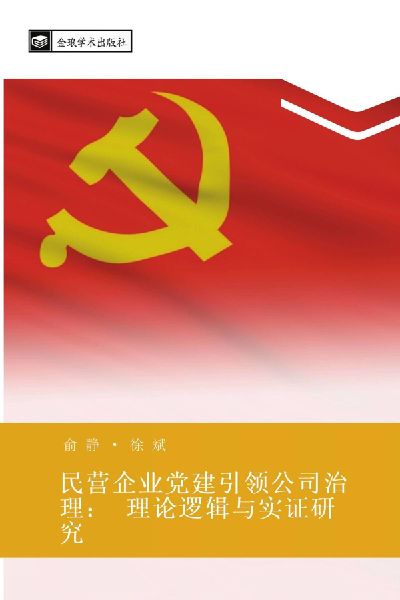
min ying qi ye dang jian yin ling gong si zhi li li lun luo ji yu shi zheng yan jiu
Jing Yu
Kartoniert, Chinesisch
43,90 €
Ähnliche Titel
Bewertungen
Zu diesem Titel gibt es noch keine Bewertung. Bewerten kann, wer ihn bei uns gekauft hat.
So prüfen wir Bewertungen
Eine Bewertung kann bei uns nur abgeben, wer den Titel über sein Kundenkonto bei uns gekauft hat. Jede Bewertung ist fest mit der zugehörigen Bestellung verknüpft; anders kommt sie technisch gar nicht zustande. Deshalb trägt jede angezeigte Bewertung den Hinweis „Verifizierter Kauf". Wir zeigen positive wie negative Bewertungen und löschen nur bei Rechtsverstößen. Für Bewertungen gibt es keine Gegenleistung.
255,80 €Voraussichtlich 4. bis 8. Dez.