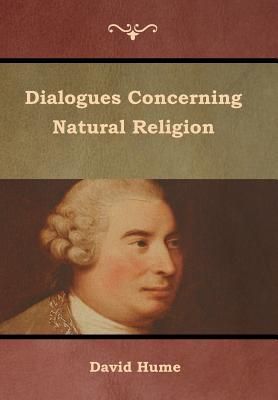
Dialogues Concerning Natural Religion
von David Hume
- Einband
- Gebunden
- Seiten
- 102
- Sprache
- Englisch
- Erschienen
- Juli 2019
- Verlag
- Bibliotech Press
Buchbeschreibung
Dialogues Concerning Natural Religion is a philosophical work written by the Scottish philosopher David Hume.
Through dialogue, three fictional characters named Demea, Philo, and Cleanthes debate the nature of God's existence. While all three agree that a god exists, they differ sharply in opinion on God's nature or attributes and how, or if, humankind can come to knowledge of a deity.
Ganze Beschreibung lesenWeniger anzeigen
In the Dialogues, Hume's characters debate a number of arguments for the existence of God, and arguments whose proponents believe through which we may come to know the nature of God. Such topics debated include the argument from design — for which Hume uses a house — and whether there is more suffering or good in the world (argument from evil)
Details
- Erscheinungstermin
- Juli 2019
- Kategorie
- Fremdsprachige Bücher
- Einband
- Gebunden
- Seiten
- 102
- Sprache
- Englisch
- Verlag
- Bibliotech Press
- Format
- 23,5 × 15,7 cm
- Dicke
- 1,0 cm
- Gewicht
- 325 g
- EAN / ISBN-13
- 9781618955890
Über David Hume
David Hume (/hjüm/; born David Home; 7 May 1711 NS (26 April 1711 OS) - 25 August 1776)[9] was a Scottish Enlightenment philosopher, historian, economist, and essayist, who is best known today for his …
Mehr über David HumeWeniger anzeigen
David Hume (/hjüm/; born David Home; 7 May 1711 NS (26 April 1711 OS) - 25 August 1776)[9] was a Scottish Enlightenment philosopher, historian, economist, and essayist, who is best known today for his highly influential system of philosophical empiricism, scepticism, and naturalism.[1] Beginning with A Treatise of Human Nature (1739-40), Hume strove to create a naturalistic science of man that examined the psychological basis of human nature. Hume argued against the existence of innate ideas, positing that all human knowledge derives solely from experience. This places him with Francis Bacon, Thomas Hobbes, John Locke, and George Berkeley, as a British Empiricist.[10]Hume argued that inductive reasoning and belief in causality cannot be justified rationally; instead, they result from custom and mental habit. We never actually perceive that one event causes another, but only experience the "constant conjunction" of events. This problem of induction means that to draw any causal inferences from past experience it is necessary to presuppose that the future will resemble the past, a presupposition which cannot itself be grounded in prior experience.[11]An opponent of philosophical rationalists, Hume held that passions rather than reason govern human behaviour, famously proclaiming that "Reason is, and ought only to be the slave of the passions".[10] Hume was also a sentimentalist who held that ethics are based on emotion or sentiment rather than abstract moral principle. He maintained an early commitment to naturalistic explanations of moral phenomena, and is usually taken to have first clearly expounded the is-ought problem, or the idea that a statement of fact alone can never give rise to a normative conclusion of what ought to be done.[12]Hume also denied that humans have an actual conception of the self, positing that we experience only a bundle of sensations, and that the self is nothing more than this bundle of causally-connected perceptions. Hume's compatibilist theory of free will takes causal determinism as fully compatible with human freedom.[13] His views on philosophy of religion, including his rejection of miracles and the argument from design for God's existence, were especially controversial for their time.
Hume influenced utilitarianism, logical positivism, the philosophy of science, early analytic philosophy, cognitive science, theology, and many other fields and thinkers. Immanuel Kant credited Hume as the inspiration who had awakened him from his "dogmatic slumbers".
Versand und Rückgabe
Standardversand: 1 bis 3 Werktage, 3,99 €, kostenlos ab 35 €
Liefergebiet: Deutschland
Rücksendung: 14 Tage Widerrufsrecht. Bei einem Widerruf tragen Sie die Kosten der Rücksendung. Bei einer Falschlieferung oder einem Fehler von uns erstatten wir Ihnen das Rückporto. Den Widerruf erklären Sie über den Knopf „Vertrag widerrufen“ im Fuß der Seite.
Hersteller und ProduktsicherheitBibliotech Press
Bibliotech Press
Europaallee 1
36244 Bad Hersfeld
Deutschland
gpsr@libri.de
Verantwortliche Person in der EU
Libri GmbHEuropaallee 1
36244 Bad Hersfeld
Deutschland
gpsr@libri.de
Mehr von David Hume
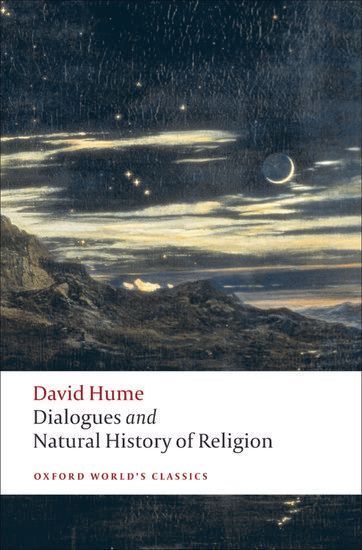
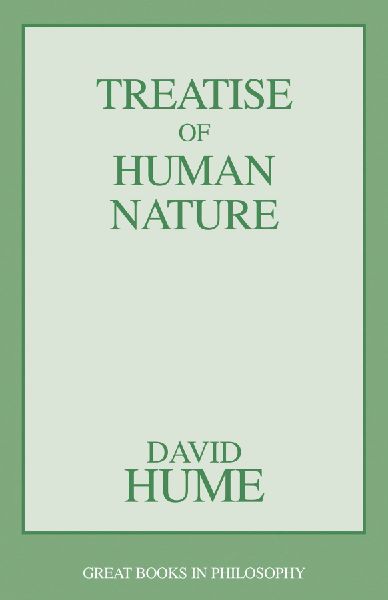
Dialogues Concerning Natural Religion, and The Natural History of Religion
David Hume
Kartoniert, Englisch
14,50 €

Bewertungen
Zu diesem Titel gibt es noch keine Bewertung. Bewerten kann, wer ihn bei uns gekauft hat.
So prüfen wir Bewertungen
Eine Bewertung kann bei uns nur abgeben, wer den Titel über sein Kundenkonto bei uns gekauft hat. Jede Bewertung ist fest mit der zugehörigen Bestellung verknüpft; anders kommt sie technisch gar nicht zustande. Deshalb trägt jede angezeigte Bewertung den Hinweis „Verifizierter Kauf". Wir zeigen positive wie negative Bewertungen und löschen nur bei Rechtsverstößen. Für Bewertungen gibt es keine Gegenleistung.
25,50 €