Embodiment
von Smith
- Einband
- Gebunden
- Seiten
- 382
- Sprache
- Englisch
- Erschienen
- März 2011
- Verlag
- ACADEMIC
Buchbeschreibung
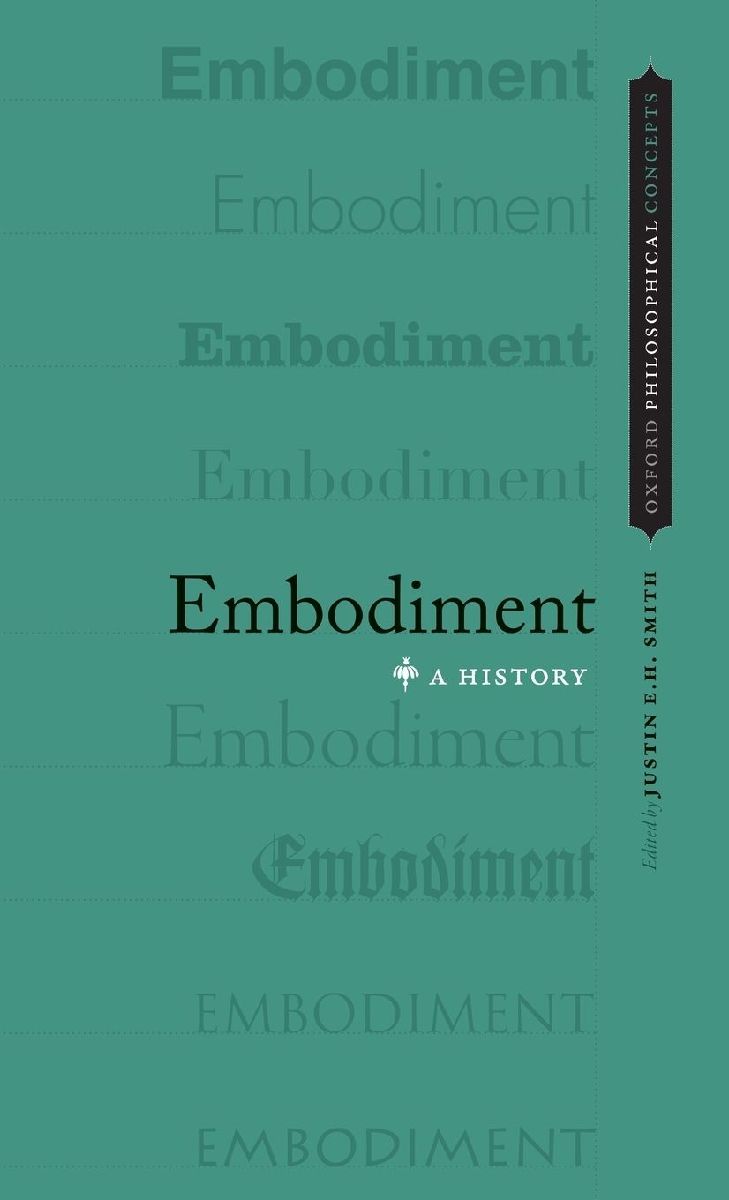
Embodiment--defined as having, being in, or being associated with a body--is a feature of the existence of many entities, perhaps even of all entities.
Why entities should find themselves in this condition is the central concern of the present volume. The problem includes, but also goes beyond, the philosophical problem of body: that is, what the essence of a body is, and how, if at all, it differs from matter.
Ganze Beschreibung lesenWeniger anzeigen
On some understandings there may exist bodies, such as stones or asteroids, that are not the bodies of any particular subjects.
To speak of embodiment by contrast is always to speak of a subject that variously inhabits, or captains, or is coextensive with, or even is imprisoned within, a body. The subject may in the end be identical to, or an emergent product of, the body. That is, a materialist account of embodied subjects may be the correct one.
But insofar as there is a philosophical problem of embodiment, the identity of the embodied subject with the body stands in need of an argument and cannot simply be assumed. The reasons, nature, and consequences of the embodiment of subjects as conceived in the long history of philosophy in Europe as well as in the broader Mediterranean region and in South and East Asia, with forays into religion, art, medicine, and other domains of culture, form the focus of these essays.
More precisely, the contributors to this volume shine light on a number of questions that have driven reflection on embodiment throughout the history of philosophy. What is the historical and conceptual relationship between the idea of embodiment and the idea of subjecthood? Am I who I am principally in virtue of the fact that I have the body I have?
Relatedly, what is the relationship of embodiment to being and to individuality? Is embodiment a necessary condition of being? Of being an individual? What are the theological dimensions of embodiment? To what extent has the concept of embodiment been deployed in the history of philosophy to contrast the created world with the state of existence enjoyed by God?
What are the normative dimensions of theories of embodiment? To what extent is the problem of embodiment a distinctly western preoccupation? Is it the result of a particular local and contingent history, or does it impose itself as a universal problem, wherever and whenever human beings begin to reflect on the conditions of their existence?
Ultimately, to what extent can natural science help us to resolve philosophical questions about embodiment, many of which are vastly older than the particular scientific research programs we now believe to hold the greatest promise for revealing to us the bodily basis, or the ultimate physical causes, of who we really are?
Inhaltsverzeichnis
- Contributors
- Series Editor's Foreward
- Introduction, Justin E.H. Smith
- 1. "The Body of Western Embodiment: Classical Antiquity and the Early History of a Problem" Brooke Holmes
- 2. "Embodied or Ensouled: Aristotle on the Relation of Soul and Body" Helen Lang
- 3. "Asceticism and Aestheticism: The Paradox of Embodiment in Plotinus' Enneads" Lesley-Anne Dyer Williams
- 4. "Augustinian Puzzles about Body, Soul, Flesh, and Death" Sarah Byers
- 5. "Medieval Jewish Philosophers and the Human Body" Yoav Meyrav
Ganzes Inhaltsverzeichnis anzeigen (20 Einträge)Weniger anzeigen
- 6. "Scholastic Philosophers on the Role of the Body in Knowledge" Rafael Nájera
- 7. "Hobbes's Embodied God" Geoffrey Gorham
- 8. "Leibniz's View of Individuals: Nested or Embodied Individuals" Ohad Nachtomy
- 9. "Descartes and Spinoza: Two Approaches to Embodiment" Alison Peterman
- 10. "Man-Machines and Embodiment: From Cartesian Physiology to Claude Bernard's 'Living Machine'" Philippe Huneman and Charles T. Wolfe
- 11. "The Embodiment of Virtue: Towards a Cross-Cultural Cognitive Science" Jake H. Davis
- Reflections
- 1. "The Devil in the Flesh: On Witchcraft and Possession" Véronique Decaix
- 2. "Phantom Limbs" Stephen Gaukroger
- 3. "Embodied Geometry in Early Modern Theatre" Yelda Nasifoglu
- 4. "Ghosts in the Celestial Machine: Embodiment in the Late Renaissance" Jonathan Regier
- 5. "The Genotype/Phenotype Distinction" Emily Herring
Details
- Erscheinungstermin
- März 2011
- Kategorie
- Fremdsprachige Bücher
- Einband
- Gebunden
- Seiten
- 382
- Sprache
- Englisch
- Verlag
- ACADEMIC
- Format
- 22,2 × 14,5 cm
- Dicke
- 2,4 cm
- Gewicht
- 551 g
- EAN / ISBN-13
- 9780190490447
Über Smith
Justin E. H. Smith is professor in the department of history and philosophy of science at the Université Paris Diderot - Paris 7.
Mehr über SmithWeniger anzeigen
He is the author of The Philosopher: A History in Six Types (2016), Nature, Human Nature, and Human Difference: Race in Early Modern Philosophy (2015), and Divine Machines: Leibniz and the Sciences of Life (2011), all from Princeton University Press.
Versand und Rückgabe
Standardversand: 1 bis 3 Werktage, 3,99 €, kostenlos ab 35 €
Liefergebiet: Deutschland
Rücksendung: 14 Tage Widerrufsrecht. Bei einem Widerruf tragen Sie die Kosten der Rücksendung. Bei einer Falschlieferung oder einem Fehler von uns erstatten wir Ihnen das Rückporto. Den Widerruf erklären Sie über den Knopf „Vertrag widerrufen“ im Fuß der Seite.
Hersteller und ProduktsicherheitACADEMIC
ACADEMIC
Europaallee 1
36244 Bad Hersfeld
Deutschland
gpsr@libri.de
Verantwortliche Person in der EU
Libri GmbHEuropaallee 1
36244 Bad Hersfeld
Deutschland
gpsr@libri.de
Mehr von Smith


Ähnliche Titel


Bewertungen
Zu diesem Titel gibt es noch keine Bewertung. Bewerten kann, wer ihn bei uns gekauft hat.
So prüfen wir Bewertungen
Eine Bewertung kann bei uns nur abgeben, wer den Titel über sein Kundenkonto bei uns gekauft hat. Jede Bewertung ist fest mit der zugehörigen Bestellung verknüpft; anders kommt sie technisch gar nicht zustande. Deshalb trägt jede angezeigte Bewertung den Hinweis „Verifizierter Kauf". Wir zeigen positive wie negative Bewertungen und löschen nur bei Rechtsverstößen. Für Bewertungen gibt es keine Gegenleistung.
206,80 €Voraussichtlich 4. bis 8. Dez.