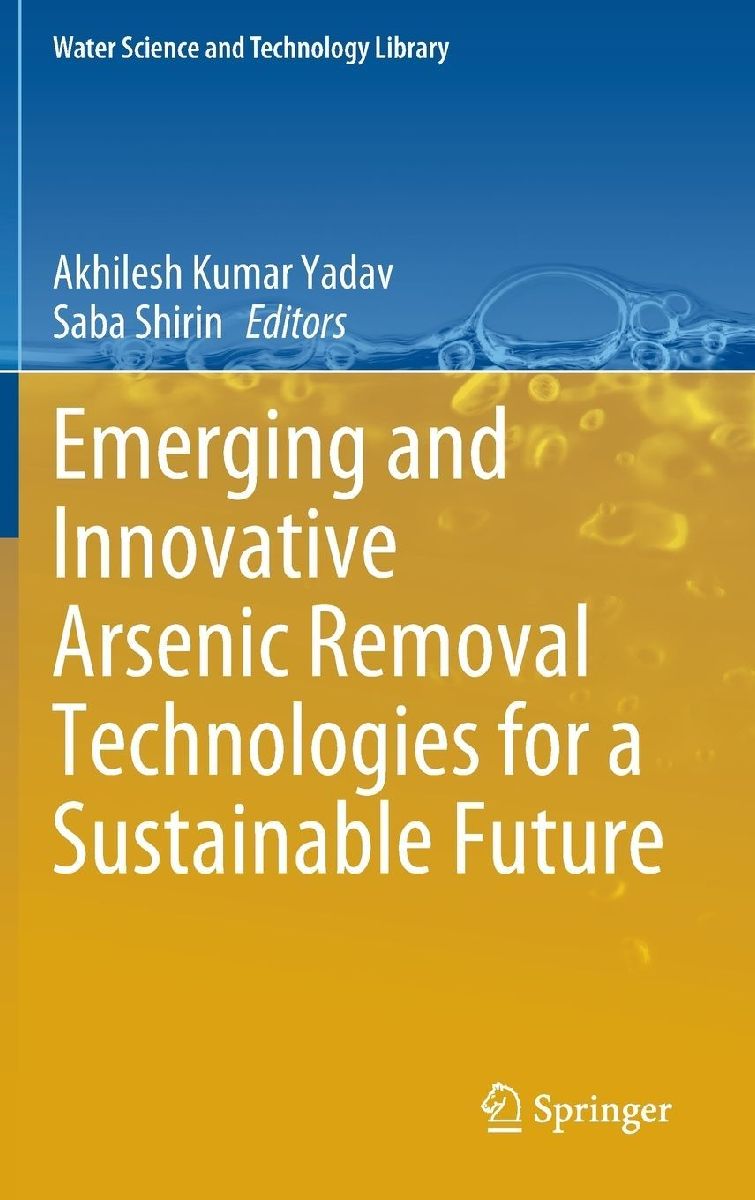
Emerging and Innovative Arsenic Removal Technologies for a Sustainable Future
von Akhilesh Kumar Yadav (Hrsg.)
Herausgegeben von: Akhilesh Kumar Yadav, Herausgegeben von: Saba Shirin
Aus der Reihe Water Science and Technology Library
- Einband
- Gebunden
- Seiten
- 316
- Sprache
- Englisch
- Erschienen
- August 2025
- Verlag
- Springer
Buchbeschreibung
This book presents an overview of the techniques available today to remove arsenic contamination, pollutants, and species from water.
Traditionally applied techniques for removal of arsenic pollutants/species, including oxidation, coagulation-flocculation, and membrane techniques. Furthermore, recent progress has been made on the utility of various nanoparticles for the extraction of contaminated water.
Ganze Beschreibung lesenWeniger anzeigen
Arsenic contamination affects the quality of water resources worldwide as a result of human activities (pesticides and other uses).
Due to the insufficiency of water treatment facilities in developing countries, oral exposure to chemical toxicants through drinking water is a health threat. Arsenic is a mobile element with a crustal abundance of 1.8 mg kg-1 and can travel in different components of the environment, including air, soil, and water before entering into its ultimate sink, that is, bottom sediments and sea.
Arsenic may enter groundwater from both geogenic and anthropogenic sources and primarily exists in inorganic form as oxy-anions. Groundwater is relatively more vulnerable to arsenic contamination from geothermal inputs, including the weathering and dissolution of arsenic-bearing rocks and minerals.
Arsenic mobility is enhanced in subsurface anoxic conditions, making groundwater more vulnerable to arsenic contamination. Ingestion of groundwater-laden arsenic may cause carcinogenic and non-carcinogenic health ailments.
Chronic oral exposure – 50 µg L-1 of arsenic can cause skin lesions, skin cancer, melanosis, hyperkeratosis, hypertension, gangrene, cardiovascular problems, black foot disease, neuropathy, peripheral vascular disease, restrictive lung disease, bladder cancer, lung cancer etc. Hence, specific water treatment processes are required to meet anticipated more severe water quality standards.
A better understanding of currently available processes is necessary to develop economical, efficient and effective methods for arsenic removal. Arsenic can be coated, adsorbed using a wide range of mineral and organic or can be directly rejected by membrane processes such as reverse osmosis and nanofiltration.
The recent development of submerged hybrid membrane systems, such as membrane bioreactors in wastewater treatment, provides alternative technologies for arsenic treatment.
Inhaltsverzeichnis
- Arsenic in water: Understanding the silent threat
- Smart sensor technologies for arsenic monitoring
- Emerging innovations in arsenic detection and removal
- Removal of arsenic from water using adsorption and phytoremediation techniques
- Role of adsorption on arsenic contamination in groundwater
- Electrochemical processes for arsenic mitigation
- Arsenic removal from the environment using biological methods
- Arsenic biological treatment using microorganisms in the environment
Ganzes Inhaltsverzeichnis anzeigen (14 Einträge)Weniger anzeigen
- Bioremediation of arsenic poisoned environments using bacteria and fungi
- Ex-situ and in situ arsenic removal from contaminated environments
- Biological treatment of arsenic contaminated soil and water by using phytoremediation and microbial bioremediation
- Integration of nanotechnologies for sustainable remediation of Arsenic removal
- Harnessing nanoparticles for sustainable arsenic remediation in food crops: A comprehensive study.-Challenges and opportunities in implementing arsenic technologies
- Current research and future directions in affordable arsenic removal technologies
Details
- Erscheinungstermin
- August 2025
- Kategorie
- Fremdsprachige Bücher
- Einband
- Gebunden
- Seiten
- 316
- Sprache
- Englisch
- Verlag
- Springer
- Reihe
- Water Science and Technology Library
- Format
- 24,1 × 16,0 cm
- Dicke
- 2,3 cm
- Gewicht
- 589 g
- EAN / ISBN-13
- 9783032011756
Versand und Rückgabe
Standardversand: 1 bis 3 Werktage, 3,99 €, kostenlos ab 35 €
Versandbeginn: in der Regel am selben oder am nächsten Werktag
Liefergebiet: Deutschland
Rücksendung: 14 Tage Widerrufsrecht. Bei einem Widerruf tragen Sie die Kosten der Rücksendung. Bei einer Falschlieferung oder einem Fehler von uns erstatten wir Ihnen das Rückporto. Den Widerruf erklären Sie über den Knopf „Vertrag widerrufen“ im Fuß der Seite.
Hersteller und ProduktsicherheitSpringer Nature Customer Service Center GmbH
Springer Nature Customer Service Center GmbH
Europaplatz 3
69115 Heidelberg
Deutschland
ProductSafety@springernature.com
Mehr von Akhilesh Kumar Yadav

Powering Future: Clean Energy Solutions for a Sustainable Planet
Akhilesh Kumar Yadav (Hrsg.)
Gebunden, Englisch, 2 Ausgaben
ab 192,59 €
Integrated Management of Water Resources in India: A Computational Approach
Akhilesh Kumar Yadav (Hrsg.)
Gebunden, Englisch, 2 Ausgaben
ab 181,89 €
Advanced Treatment Technologies for Fluoride Removal in Water
Akhilesh Kumar Yadav (Hrsg.)
Gebunden, Englisch
160,49 €
Mehr aus der Reihe Water Science and Technology Library

Innovations and Challenges in Water and Sustainable Agriculture
Bhupender Singh (Hrsg.)
Gebunden, Englisch
171,19 €

Hydrological Processes Modelling and Data Analysis
Vijay P. Singh
Kartoniert, Englisch, 2 Ausgaben
ab 69,54 €
Water Resources Management and Sustainability
Ahmed Sefelnasr (Hrsg.)
Gebunden, Englisch, 2 Ausgaben
ab 181,89 €
Ähnliche Titel
Assessment and Management of Environmental Risks
José Palma-Oliveira (Hrsg.)
Gebunden, Englisch, 2 Ausgaben
ab 160,49 €



Air Pollution Modeling and Its Application XVI
Selahattin Incecik (Hrsg.)
Kartoniert, Englisch, 2 Ausgaben
ab 53,49 €
Bewertungen
Zu diesem Titel gibt es noch keine Bewertung. Bewerten kann, wer ihn bei uns gekauft hat.
So prüfen wir Bewertungen
Eine Bewertung kann bei uns nur abgeben, wer den Titel über sein Kundenkonto bei uns gekauft hat. Jede Bewertung ist fest mit der zugehörigen Bestellung verknüpft; anders kommt sie technisch gar nicht zustande. Deshalb trägt jede angezeigte Bewertung den Hinweis „Verifizierter Kauf". Wir zeigen positive wie negative Bewertungen und löschen nur bei Rechtsverstößen. Für Bewertungen gibt es keine Gegenleistung.
171,19 €Voraussichtlich 30. Nov. bis 2. Dez.