Buch-OWLOnline-Buchhandel

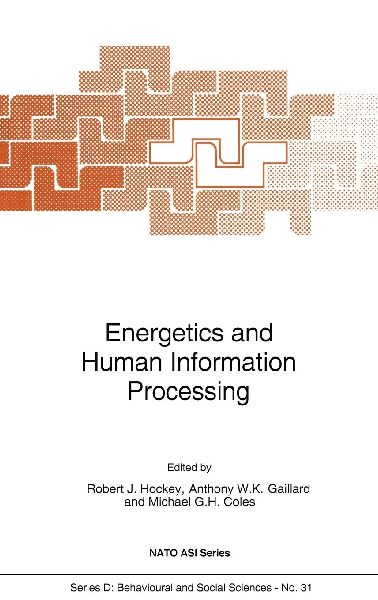
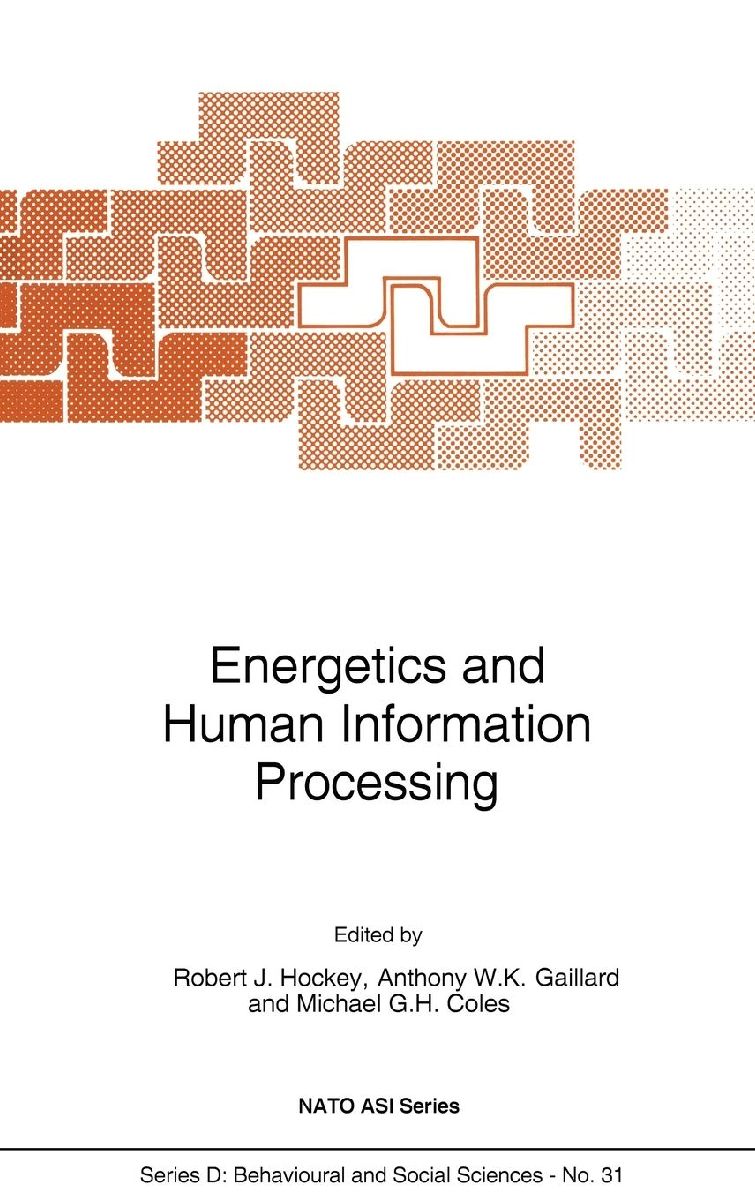
Energetics and Human Information Processing

von G. M. Hockey (Hrsg.)

Herausgegeben von: G. M. Hockey, Herausgegeben von: Michael G. H. Coles, Herausgegeben von: Anthony W. K. Gaillard

Aus der Reihe NATO Science Series D:

Einband
Gebunden
Seiten
472
Sprache
Englisch
Erschienen
September 1986
Verlag
Springer Netherlands

Buchbeschreibung

The central theme of this book is the role of energetical factors in the regulation of human information processing activity.

This is a restatement of one of the classic problems of psychology - that of acc­ ounting for motivational or intensive aspects of behaviour, as opposed to structural or directional aspects. The term "energetics" was first used in the 1930's by Freeman, Duffy and others, following Cannon's energy mobilization view of emotion and motivation.

Ganze Beschreibung lesenWeniger anzeigen

The original concept had a limited life, probably because of its unnecessary focus on relativ­ ely peripheral processes, but it provided the foundations for the con­ cepts of "arousal" and "activation" which became the popular motivational constructs of the 1950's and 1960's. Now, these too are found wanting.

The original assumptions of a unitary, non-specific process based on activation of the brain stem reticular formation have been shown to be misleading. Current work in neurobiology has demonstrated evidence of discrete neurotransmitter systems having quite specific information processing functions, and central roles in the regulation of behaviour.

Even the venerable curvilinear relationship between motivation and per­ formance (the Yerkes-Dodson law) has been shown to be, at best, an unhelpful oversimplification. On a different front psychophysiologists have found complex patterns in the response of different bodily systems to external stressors and to task demands.

Inhaltsverzeichnis

  • Section I Introduction
  • 1: Energetical Issues in Research on Human Information Processing
  • 2: The Concept of Energy in Psychological Theory
  • Section II Biological Foundations of Energetics
  • 3: Computation, Control and Energetics: A Biological Perspective
  • 4: Energetics and the Self-Regulation of Behaviour
  • 5: Psychopharmacological and Neurobiological Aspects of the Energetics of Information Processing
  • 6: The Orienting Response: A Combination of Informational and Energetical Aspects of Brain Function
Ganzes Inhaltsverzeichnis anzeigen (36 Einträge)Weniger anzeigen
  • 7: Behavioural Efficiency: A Biological Link Between Informational and Energetic Processes
  • 8: Responses to Stress: An Interdisciplinary Approach
  • 9: On the Relation Between Energy Transformations in the Brain and Mental Activities
  • Section III Stress, Effort and Task Performance
  • 10: Energetical States Underlying Task Performance
  • 11: Models and Paradigms in the Study of Stress Effects
  • 12: The Concept and Measurement of Mental Effort
  • 13: Do Cardiovascular Changes Indicate Energetic Support of Information Processing?
  • 14: A State Model for Mental Effort
  • 15: An Efficiency Model of Information Processing
  • 16: Stress and Adaptability
  • Section IV Individual Differences, Adaptation and Coping
  • 17: Individual Differences in Anxiety, Cognition and Coping
  • 18: Effort Regulation and Individual Differences in Effort Expenditure
  • 19: A State Control Theory of Adaptation to Stress and Individual Differences in Stress Management
  • 20: Some Effects of Everyday Moods and Possible Individual Differences in these Effects
  • 21: The Verbal Approach to Energetics: Constructs and Individual Differences
  • 22: Individual Differences in Respiration and Stress
  • 23: Short-Term Adaptation to Stress and Task Demands: Covariation of Psychological and Physiological Manifestations
  • Section V The Place of Energetics in Information Processing Theory
  • 24: Integrating Energetic and Information Processing Concepts: Emotion from a Functional - Evolutionary Perspective
  • 25: In Defence of Resources: On Structures, Energies, Pools and the Allocation of Attention
  • 26: Gain and Energetics in Information Processing
  • 27: Constraints on Cognitive Performance: Some Problems with and Alternatives to Resource Theory
  • 28: Energetics of Attention and Alzheimer's Disease
  • 29: Cognitive Psychophysiology and the Study of States and Processes
  • 30: Energetical Aspects of Information Processing: Some Pretheoretical Issues
  • Author Index

Details

Erscheinungstermin
September 1986
Kategorie
Fremdsprachige Bücher
Einband
Gebunden
Seiten
472
Sprache
Englisch
Verlag
Springer Netherlands
Reihe
NATO Science Series D:
Format
24,1 × 16,0 cm
Dicke
3,0 cm
Gewicht
818 g
EAN / ISBN-13
9789024733811
Maßstabsgetreu: Deckel und Buchrücken neben einer Hand (18 cm).
Versand und Rückgabe

Standardversand: 1 bis 3 Werktage, 3,99 €, kostenlos ab 35 €

Liefergebiet: Deutschland

Rücksendung: 14 Tage Widerrufsrecht. Bei einem Widerruf tragen Sie die Kosten der Rücksendung. Bei einer Falschlieferung oder einem Fehler von uns erstatten wir Ihnen das Rückporto. Den Widerruf erklären Sie über den Knopf „Vertrag widerrufen“ im Fuß der Seite.

Hersteller und ProduktsicherheitSpringer Nature Customer Service Center GmbH
Springer Nature Customer Service Center GmbH
Europaplatz 3
69115 Heidelberg
Deutschland
ProductSafety@springernature.com

Mehr aus der Reihe NATO Science Series D:

Ähnliche Titel

Bewertungen

Zu diesem Titel gibt es noch keine Bewertung. Bewerten kann, wer ihn bei uns gekauft hat.

So prüfen wir Bewertungen
Eine Bewertung kann bei uns nur abgeben, wer den Titel über sein Kundenkonto bei uns gekauft hat. Jede Bewertung ist fest mit der zugehörigen Bestellung verknüpft; anders kommt sie technisch gar nicht zustande. Deshalb trägt jede angezeigte Bewertung den Hinweis „Verifizierter Kauf". Wir zeigen positive wie negative Bewertungen und löschen nur bei Rechtsverstößen. Für Bewertungen gibt es keine Gegenleistung.
320,99 €Voraussichtlich 4. bis 8. Dez.

Inhalte ab 18

Cover von Titeln für Erwachsene, etwa erotische Romane, Manga oder Comics, bleiben unscharf, bis Sie bestätigen. Die Bestätigung gilt für alle Seiten und Tabs, bis Sie den Browser schließen.

Zurück zum Katalog