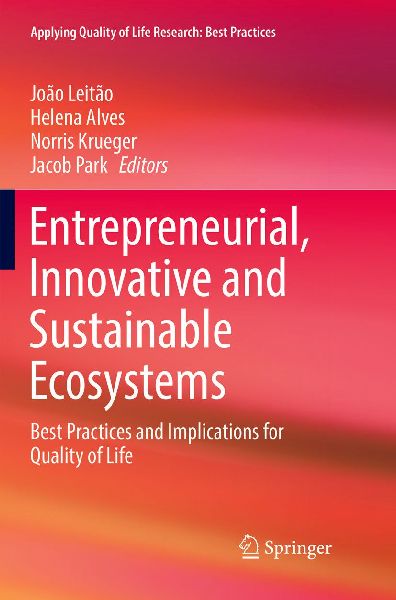
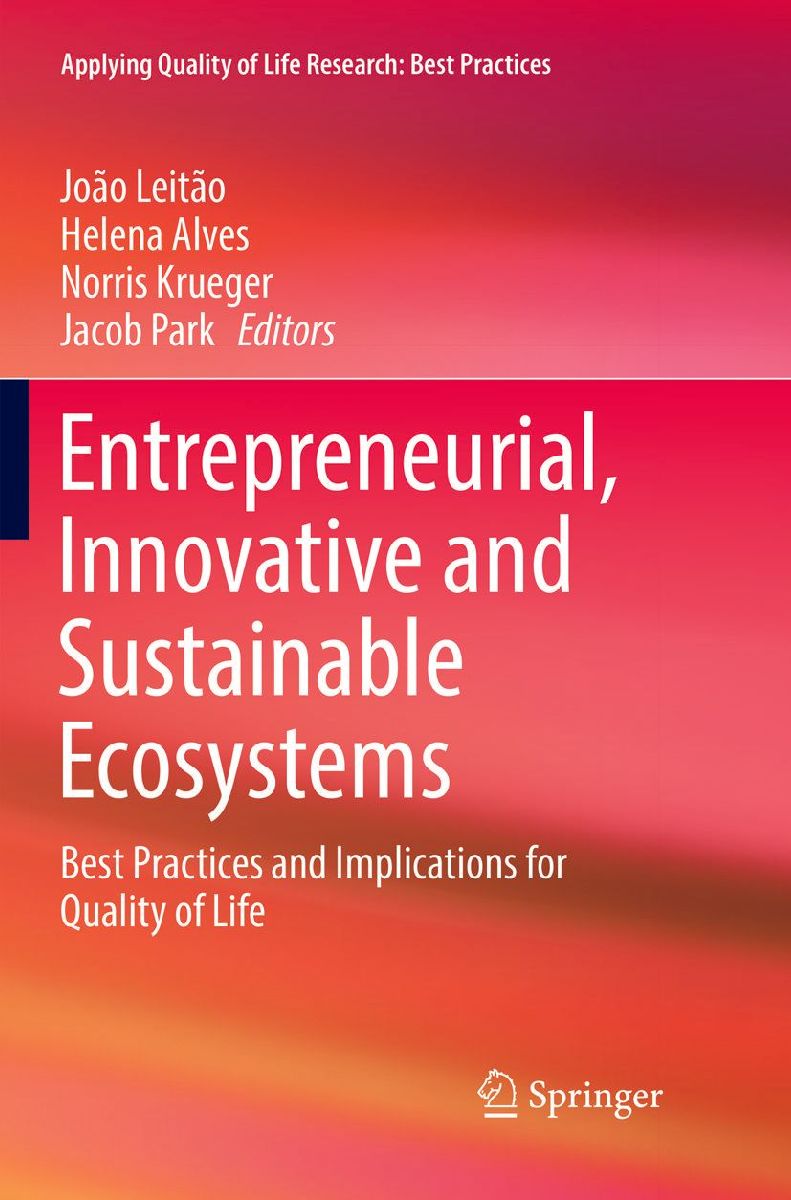
Entrepreneurial, Innovative and Sustainable Ecosystems
Best Practices and Implications for Quality of Life
Herausgegeben von: João Leitão, Herausgegeben von: Helena Alves, Herausgegeben von: Norris Krueger, und weitere
Aus der Reihe Applying Quality of Life Research
- Einband
- Kartoniert
- Seiten
- 336
- Sprache
- Englisch
- Erschienen
- Juni 2019
- Verlag
- Springer
Buchbeschreibung
This book presents a multidimensional approach by providing a state of the art on EIS ecosystems, as well as structural and changing dynamics and its impact on citizens' quality of life.
It provides a set of international benchmarking case studies on good practices and initiatives aimed at creating and fostering EIS ecosystems.
Ganze Beschreibung lesenWeniger anzeigen
It shows how these international benchmarks can be replicated to foster the creation of entrepreneurial and innovative units and promote sustainable practices, under an open innovation paradigm, which conjoins the participation of both public and private stakeholders, using co-creation, transparency and participatory budget practices the jointly improve accountability and public management.
This book is a true reference guide for scholars, policy makers and practitioners interested on entrepreneurship, public procurement, innovation and sustainability engaged in building EIS ecosystems, which can enhance citizens' quality of life.
Inhaltsverzeichnis
- Chapter 1. The EIS Ecosystem in the Curitiba Public Transport System: The B100 Project (Orsiolli)
- Chapter 2. Creating a Supportive Ecosystem for Street Vendors in India: the Role of the National Association of Street Vendors in India (NASVI) (Swamy)
- Chapter 3. Sustainable Ecosystems through Indigenous Social Enterprises (Maguirre)
- Chapter 4. Private Standards in a Multiple World: Opportunity or Threat for Developing Countries? (Machado)
- Chapter 5. Local Public Management Focused on Quality of Life in Sustainable Cities (Rodrigues)
- Chapter 6. Application of Structural Equation Modelling for Studying Eco-innovation at Brazilian Industrial SMEs through the PINTEC Survey (Basso)
- Chapter 7. Revitalising the Forest: Innovative and Entrepreneurial Ecosystem Development in the Finnish Bioeconomy (Kautonen)
- Chapter 8. Impact of Global Warming on Business Planning in Mexico (Vargas-Hernández)
Ganzes Inhaltsverzeichnis anzeigen (24 Einträge)Weniger anzeigen
- Chapter 9. Activity System Analysis of an EIS Ecosystem. The Case of Boulder Colorado (Thompson)
- Chapter 10. Employment and People with Disabilities: an Emerging Entrepreneurial Ecosystem (Markel)
- Chapter 11. Can Credit Unions Pursue Social Goals While Remaining Financially Sustainable? Evidence from Spain Before and During the Crisis (Martínez-Campillo)
- Chapter 12. Public Innovation and Collaborative Governance (Navarro)
- Chapter 13. Sustainable Practices in Small and Medium Enterprises in the State of Santa Catarina: Motivations and Benefits (Machado)
- Chapter 14. The Contribution of Smart Cities Enhancing Quality of Life from a Citizen’s Perspective (Vázquez)
- Chapter 15. Revisiting EIS Ecosystem: a Systematic Literature Review and Conceptual Model Proposal (Leitão)
- Chapter 16. Mapping an Entrepreneurial, Innovative and Sustainable Ecosystem Using Social Network Analysis: an Exploratory Approach of Publicly-funded Innovative Projects Data (Pinto)
- Chapter 17. Corporative Social and Management Responsibility for Overall Quality: Additional Study between the Two Approaches in the Dimensions of Sustainability (Dias)
- Chapter 18. Product Innovation as Territory Sustainability Added Value: The Case Study of Douro Skin
- Care (Paiva)
- Chapter 19. From Brokering to Platform Models. A Case Study of Best Practices for the Enactment of Hybrid Partnerships Between Public Institutions (Macrì)
- Chapter 20. Entrepreneurship and Innovation Ecosystem’s Drivers: The Role of Higher Education Organizations in Emerging Economies (Herrera-Pons)
- Chapter 21. Sustainability-Driven Entrepreneurs: Solutions for Social and Environmental Problems or Business as Usual (Zahraie)
- Chapter 22. Learning from Natural Systems to Understand Social Systems (Barros)
- Chapter 23. The Social Process of Constructing Sustainable Business Models: a Network Approach (Neumeyer)
Details
- Erscheinungstermin
- Juni 2019
- Kategorie
- Fremdsprachige Bücher
- Einband
- Kartoniert
- Seiten
- 336
- Sprache
- Englisch
- Verlag
- Springer
- Reihe
- Applying Quality of Life Research
- Format
- 23,5 × 15,5 cm
- Dicke
- 1,8 cm
- Gewicht
- 572 g
- EAN / ISBN-13
- 9783319890296
Versand und Rückgabe
Standardversand: 1 bis 3 Werktage, 3,99 €, kostenlos ab 35 €
Liefergebiet: Deutschland
Rücksendung: 14 Tage Widerrufsrecht. Bei einem Widerruf tragen Sie die Kosten der Rücksendung. Bei einer Falschlieferung oder einem Fehler von uns erstatten wir Ihnen das Rückporto. Den Widerruf erklären Sie über den Knopf „Vertrag widerrufen“ im Fuß der Seite.
Hersteller und ProduktsicherheitSpringer Nature Customer Service Center GmbH
Springer Nature Customer Service Center GmbH
Europaplatz 3
69115 Heidelberg
Deutschland
ProductSafety@springernature.com
Mehr von João Leitão
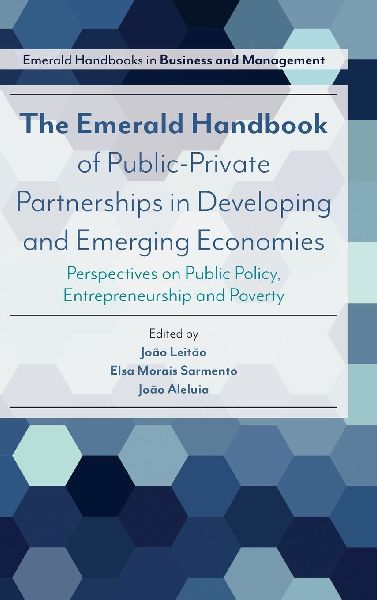
The Emerald Handbook of Public-Private Partnerships in Developing and Emerging Economies
João Leitão (Hrsg.)
Gebunden, Englisch
237,80 €
Tourism Innovation in Spain and Portugal
João Leitão (Hrsg.)
Gebunden, Englisch, 2 Ausgaben
ab 149,79 €
Latin American and Iberian Entrepreneurship
João Leitão (Hrsg.)
Gebunden, Englisch, 2 Ausgaben
ab 149,79 €
Mehr aus der Reihe Applying Quality of Life Research
Applied Social Marketing and Quality of Life
M. Mercedes Galan-Ladero (Hrsg.)
Gebunden, Englisch
160,49 €
Best Practices in Hospitality and Tourism Marketing and Management
Ana María Campón-Cerro (Hrsg.)
Kartoniert, Englisch, 2 Ausgaben
ab 139,09 €
Entrepreneurial and Innovative Practices in Public Institutions
João Leitão (Hrsg.)
Gebunden, Englisch, 2 Ausgaben
ab 106,99 €
Ähnliche Titel


Ageing Asia and the Pacific in Changing Times
Subas Dhakal (Hrsg.)
Gebunden, Englisch, 2 Ausgaben
ab 128,39 €
Bewertungen
Zu diesem Titel gibt es noch keine Bewertung. Bewerten kann, wer ihn bei uns gekauft hat.
So prüfen wir Bewertungen
Eine Bewertung kann bei uns nur abgeben, wer den Titel über sein Kundenkonto bei uns gekauft hat. Jede Bewertung ist fest mit der zugehörigen Bestellung verknüpft; anders kommt sie technisch gar nicht zustande. Deshalb trägt jede angezeigte Bewertung den Hinweis „Verifizierter Kauf". Wir zeigen positive wie negative Bewertungen und löschen nur bei Rechtsverstößen. Für Bewertungen gibt es keine Gegenleistung.
106,99 €Voraussichtlich 3. bis 7. Dez.