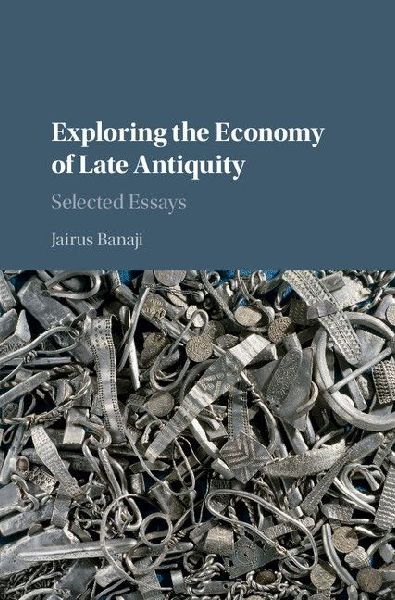
Exploring the Economy of Late Antiquity
von Jairus Banaji
- Einband
- Gebunden
- Seiten
- 274
- Sprache
- Englisch
- Erschienen
- Dezember 2015
- Verlag
- Cambridge University Press
Buchbeschreibung
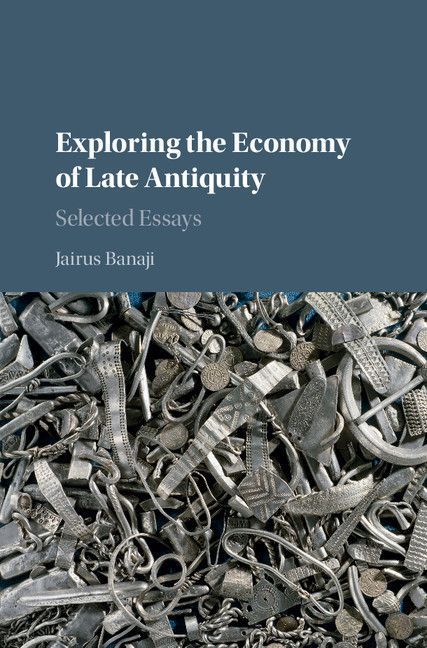
This collection of essays, by leading historian Jairus Banaji, provides a stimulating rebuttal to the prevailing minimalism in late antique studies.
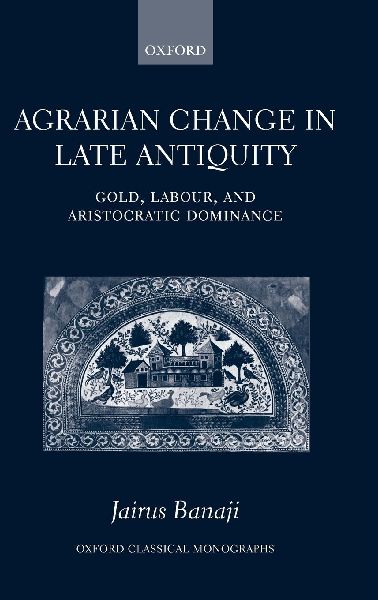
Together, they strike a balance between the wide lens and more specialised discussion, expanding on the perspective and argumentation laid out in an earlier book, Agrarian Change in Late Antiquity (2001).
Ganze Beschreibung lesenWeniger anzeigen
Successive chapters discuss the scale of the late Roman gold currency, the economic nature of the aristocracy, the importance of trade, relations between the state and the ruling class, and the problem of continuity into the early Middle Ages.
A substantial introduction pulls together the themes of the book into a coherent synopsis, while the preface clarifies the broad aims behind the study. The book as a whole deploys a wide range of sources in various languages and is intended for ancient historians, students of late antiquity, and economic historians more generally.
Inhaltsverzeichnis
- Preface
- Introductory essay: 1. Mass production, monetary economy and the commercial vitality of the Mediterranean
- Part I. Mapping the Late Antique Economy: 2. Mickwitz's modernism: the writings of 1932-6
- 3. State and aristocracy in the economic evolution of the Late Empire
- 4. The economic trajectories of late antiquity
- Part II. Money Circulation (Rules, Rhythms): 5. Discounts, weight standards and the exchange rate between gold and copper
- 6. Precious metal coinages and monetary expansion in late antiquity
- Part III. Aristocracies and Estates: 7. Aristocracies, peasantries and the framing of the early Middle Ages: 8. Late antique aristocracies: the case of Iran
- Part IV. Beyond the Mediterranean and Late Antiquity: 9. Late antique legacies and Muslim economic expansion
- 10. 'Regions that look seaward' - changing fortunes, submerged histories, and the slow capitalism of the sea.
Details
- Erscheinungstermin
- Dezember 2015
- Kategorie
- Fremdsprachige Bücher
- Einband
- Gebunden
- Seiten
- 274
- Sprache
- Englisch
- Verlag
- Cambridge University Press
- Format
- 23,5 × 15,7 cm
- Dicke
- 1,9 cm
- Gewicht
- 504 g
- EAN / ISBN-13
- 9781107101944
Über Jairus Banaji
Jairus Banaji is Research Professor at the School of Oriental and African Studies, University of London.
Mehr über Jairus BanajiWeniger anzeigen
He has published on a wide range of subjects and very different periods, and his last book Theory as History (2010) won the 2011 Isaac and Tamara Deutscher Memorial Prize.
Versand und Rückgabe
Standardversand: 1 bis 3 Werktage, 3,99 €, kostenlos ab 35 €
Liefergebiet: Deutschland
Rücksendung: 14 Tage Widerrufsrecht. Bei einem Widerruf tragen Sie die Kosten der Rücksendung. Bei einer Falschlieferung oder einem Fehler von uns erstatten wir Ihnen das Rückporto. Den Widerruf erklären Sie über den Knopf „Vertrag widerrufen“ im Fuß der Seite.
Hersteller und ProduktsicherheitCambridge University Press
Cambridge University Press
Europaallee 1
36244 Bad Hersfeld
Deutschland
gpsr@libri.de
Verantwortliche Person in der EU
Libri GmbHEuropaallee 1
36244 Bad Hersfeld
Deutschland
gpsr@libri.de
Mehr von Jairus Banaji

Ähnliche Titel

Bewertungen
Zu diesem Titel gibt es noch keine Bewertung. Bewerten kann, wer ihn bei uns gekauft hat.
So prüfen wir Bewertungen
Eine Bewertung kann bei uns nur abgeben, wer den Titel über sein Kundenkonto bei uns gekauft hat. Jede Bewertung ist fest mit der zugehörigen Bestellung verknüpft; anders kommt sie technisch gar nicht zustande. Deshalb trägt jede angezeigte Bewertung den Hinweis „Verifizierter Kauf". Wir zeigen positive wie negative Bewertungen und löschen nur bei Rechtsverstößen. Für Bewertungen gibt es keine Gegenleistung.
129,40 €Voraussichtlich 7. bis 9. Dez.