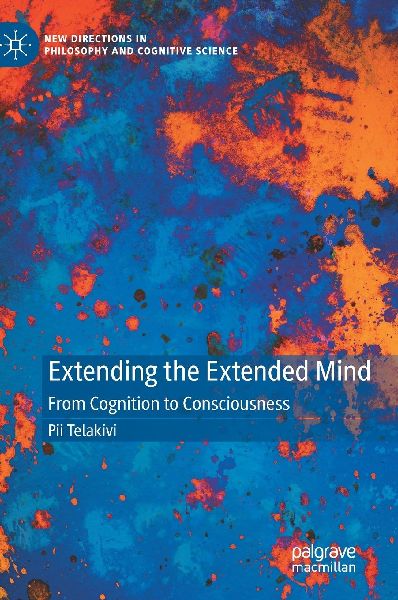
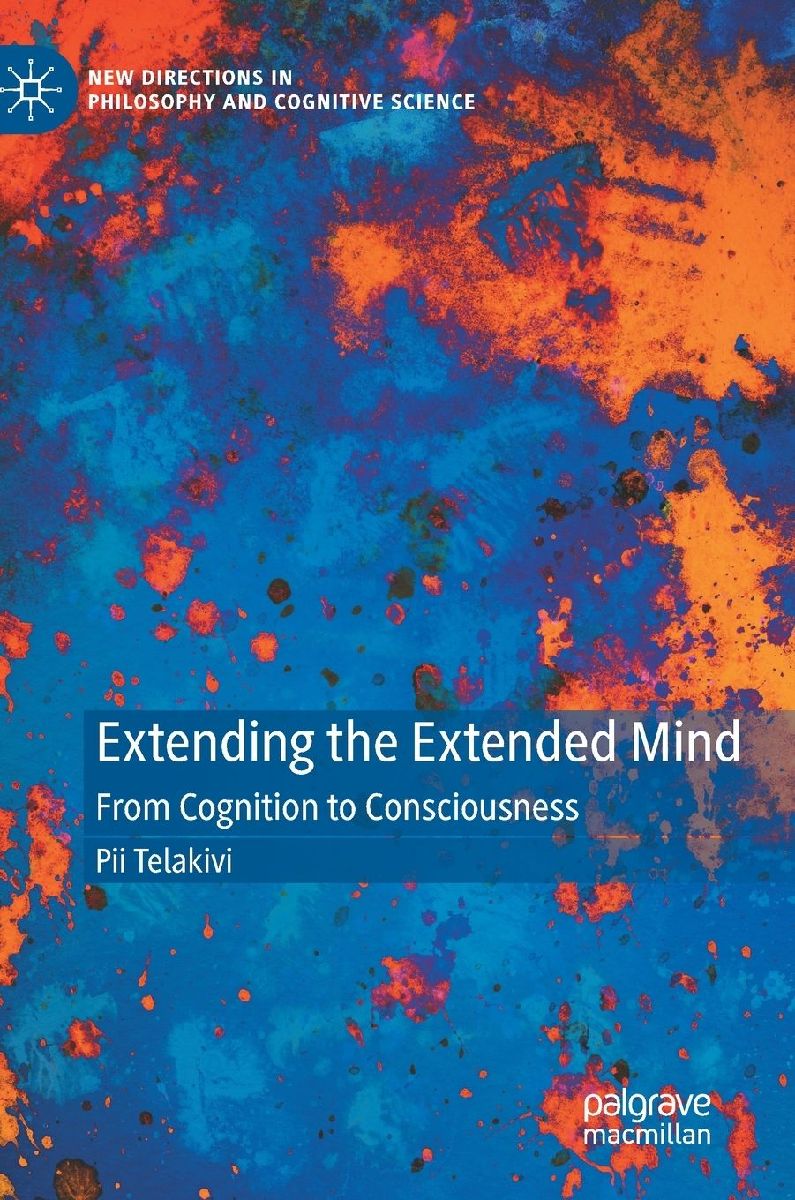
Extending the Extended Mind
From Cognition to Consciousness
von Pii Telakivi
Aus der Reihe New Directions in Philosophy and Cognitive Science
- Einband
- Gebunden
- Seiten
- 236
- Sprache
- Englisch
- Erschienen
- Juli 2023
- Verlag
- Palgrave Macmillan
Buchbeschreibung
This book argues that conscious experience is sometimes extended outside the brain and body into certain kinds of environmental interaction and tool use.
It shows that if one accepts that cognitive states can extend, one must also accept that consciousness can extend. The proponents of Extended Mind defend the former claim, but usually oppose the latter claim. The most important undertaking of this book is to show that this partition is not possible on pain of inconsistency.
Ganze Beschreibung lesenWeniger anzeigen
Pii Telakivi presents three arguments for the hypothesis of Extended Conscious Mind, examines and answers the most common counterarguments, and introduces a novel means to interpret and apply the concept of constitution.
She also addresses the tensions between analytic philosophy of mind and enactivism, and builds a bridge between two different traditions: on the one hand, extended mind, and on the other, enactivism and embodied mind-and maintains that a unifying approach is necessary for a theory about extended consciousness.
Inhaltsverzeichnis
- 1 A Roadmap from the Extended Mind to the Extended Conscious Mind
- 1.1 Where Does the Mind Stop?
- 1.2 Concepts of Cognition and Consciousness
- 1.3 4E's: Embodied, Embedded, Enacted, Extended
- 1.3.1 Embodied
- 1.3.2 Embedded
- 1.3.3 Enacted
- 1.3.4 Extended
Ganzes Inhaltsverzeichnis anzeigen (76 Einträge)Weniger anzeigen
- 1.4 From the Extended Mind to the Extended Conscious Mind
- 1.4.1 The Extended Mind
- 1.4.2 The Waves to the Extended Conscious Mind
- 1.4.3 Vehicular Externalism
- 1.5 Conclusions and Methodological Remarks
- References
- 2 Arguments for Extended Conscious Mind
- 2.1 Introduction
- 2.2 First Argument for ECM: Parity Argument
- 2.2.1 Cognition and Consciousness Are Often Inseparable
- 2.2.2 Occurrent EM
- 2.2.3 Wheeler's Objection
- 2.2.4 Summing Up the First Argument
- 2.3 Second Argument for ECM: Sensorimotor Enactivism
- 2.3.1 Landscapes of Sensorimotor Enactivism
- 2.3.2 Bridging the Comparative Explanatory Gap
- 2.3.3 Sensorimotor Reductionism or Sensorimotor Integrationism?
- 2.3.4 Temporal Nature, Virtual Presence
- 2.3.5 Arguments Drawn from Sensorimotor Enactivism in Support of ECM
- 2.3.6 Does Entailment Hold? From the Personal to the Sub-Personal Level
- 2.3.7 Summing Up the Second Argument
- 2.4 Third Argument for ECM: The Leaky Body
- 2.4.1 Experience Is Embodied
- 2.4.2 The Frontiers of the Body Are Not Rigid
- 2.4.3 External Body Parts as Substrates of Experience
- 2.5 Conclusions to the Three Arguments
- References
- 3 The Constitution-Turn and Extended Conscious Mind
- 3.1 Introduction
- 3.1.1 The Causal-Constitution Fallacy
- 3.1.2 The Constituted Phenomenon: The Dynamic Nature of Experiences
- 3.2 Defining Constitution
- 3.2.1 Material Constitution
- 3.2.2 Mechanist Constitution
- 3.2.3 Diachronic-Dynamical Constitution
- 3.3 Demarcating the System Boundaries
- 3.3.1 Mutual Manipulability as a Demarcation Criterion
- 3.4 Conclusions
- References
- 4 Tools as Extenders: The Pathway to Functional Incorporation
- 4.1 Introduction
- 4.2 The Spectrum of Extensions
- 4.2.1 Momentary Extension.-4.2.2 Integrated Extension
- 4.2.3 Prosthetic Incorporation
- 4.2.4 Functional Incorporation
- 4.2.5 Summing Up the Four Degrees of Extension
- 4.3 "Glue & Trust" Conditions
- 4.3.1 Glue & Trust Conditions for EM
- 4.3.2 Criteria Compared with ECM
- 4.3.3 Glue & Trust Conditions for ECM
- 4.4 An Example of Functional Incorporation: Sensory Substitution
- 4.5 Conclusions
- References
- 5 Possible Objections to Extended Conscious Mind
- 5.1 Introduction
- 5.1.1 Clark's Criticisms of ECM
- 5.2 The Argument from High Bandwidth
- 5.2.1 Answers to the High-Bandwidth Argument
- 5.3 Predictive Processing
- 5.3.1 Answering the Counter-argument from Predictive Processing
- 5.4 The Brain-in-a-Vat Thought Experiment
- 5.5 Dreams and Hallucinations
- 5.5.1 Revonsuo's Dream Argument
- 5.5.2 Answering the Dream Challenge
- 5.6 Summarising the Counter-arguments
- References
- 6 Concluding Remarks and the Future of Extension
- References
Details
- Erscheinungstermin
- Juli 2023
- Kategorie
- Fremdsprachige Bücher
- Einband
- Gebunden
- Seiten
- 236
- Sprache
- Englisch
- Verlag
- Palgrave Macmillan
- Reihe
- New Directions in Philosophy and Cognitive Science
- Format
- 21,6 × 15,3 cm
- Dicke
- 1,8 cm
- Gewicht
- 384 g
- EAN / ISBN-13
- 9783031356230
Über Pii Telakivi
Pii Telakivi is a post-doctoral researcher in Practical Philosophy at the University of Helsinki and was a Fulbright Finland Junior Scholar in the Department of Philosophy at the University of California, Berkeley.
Mehr über Pii TelakiviWeniger anzeigen
Her research focus lies on extended, embodied cognition and consciousness, and at the intersections between philosophy of mind, artificial intelligence and psychiatry.
Versand und Rückgabe
Standardversand: 1 bis 3 Werktage, 3,99 €, kostenlos ab 35 €
Liefergebiet: Deutschland
Rücksendung: 14 Tage Widerrufsrecht. Bei einem Widerruf tragen Sie die Kosten der Rücksendung. Bei einer Falschlieferung oder einem Fehler von uns erstatten wir Ihnen das Rückporto. Den Widerruf erklären Sie über den Knopf „Vertrag widerrufen“ im Fuß der Seite.
Hersteller und ProduktsicherheitSpringer Nature Customer Service Center GmbH
Springer Nature Customer Service Center GmbH
Europaplatz 3
69115 Heidelberg
Deutschland
ProductSafety@springernature.com
Mehr aus der Reihe New Directions in Philosophy and Cognitive Science


Challenges of the Technological Mind
Paulo Alexandre E Castro (Hrsg.)
Gebunden, Englisch, 2 Ausgaben
ab 64,19 €

Ähnliche Titel

Derrida and Technology: Life, Politics, and Religion
Björn Sjöstrand
Gebunden, Englisch, 2 Ausgaben
ab 106,99 €


Søren Kierkegaard's and Jean-Paul Sartre's conception towards meaning of life
Eden Abate Getahun
Kartoniert, Englisch
27,95 €

Bewertungen
Zu diesem Titel gibt es noch keine Bewertung. Bewerten kann, wer ihn bei uns gekauft hat.
So prüfen wir Bewertungen
Eine Bewertung kann bei uns nur abgeben, wer den Titel über sein Kundenkonto bei uns gekauft hat. Jede Bewertung ist fest mit der zugehörigen Bestellung verknüpft; anders kommt sie technisch gar nicht zustande. Deshalb trägt jede angezeigte Bewertung den Hinweis „Verifizierter Kauf". Wir zeigen positive wie negative Bewertungen und löschen nur bei Rechtsverstößen. Für Bewertungen gibt es keine Gegenleistung.
128,39 €Voraussichtlich 3. bis 7. Dez.