The Extracellular Matrix in Genetic Skeletal Disorders
Antonio Rossi (Hrsg.)
Gebunden, Englisch, 2 Ausgaben
ab 235,39 €
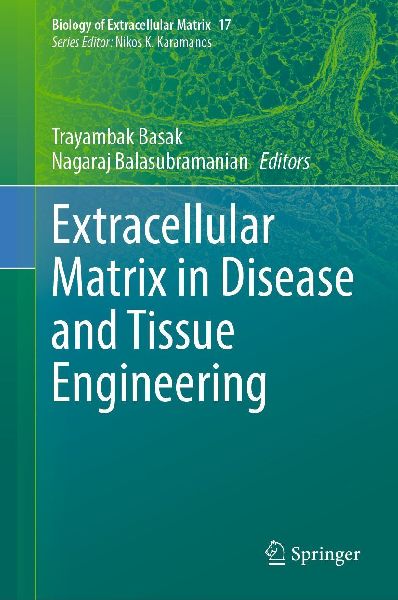
Herausgegeben von: Trayambak Basak, Herausgegeben von: Nagaraj Balasubramanian
Aus der Reihe Biology of Extracellular Matrix
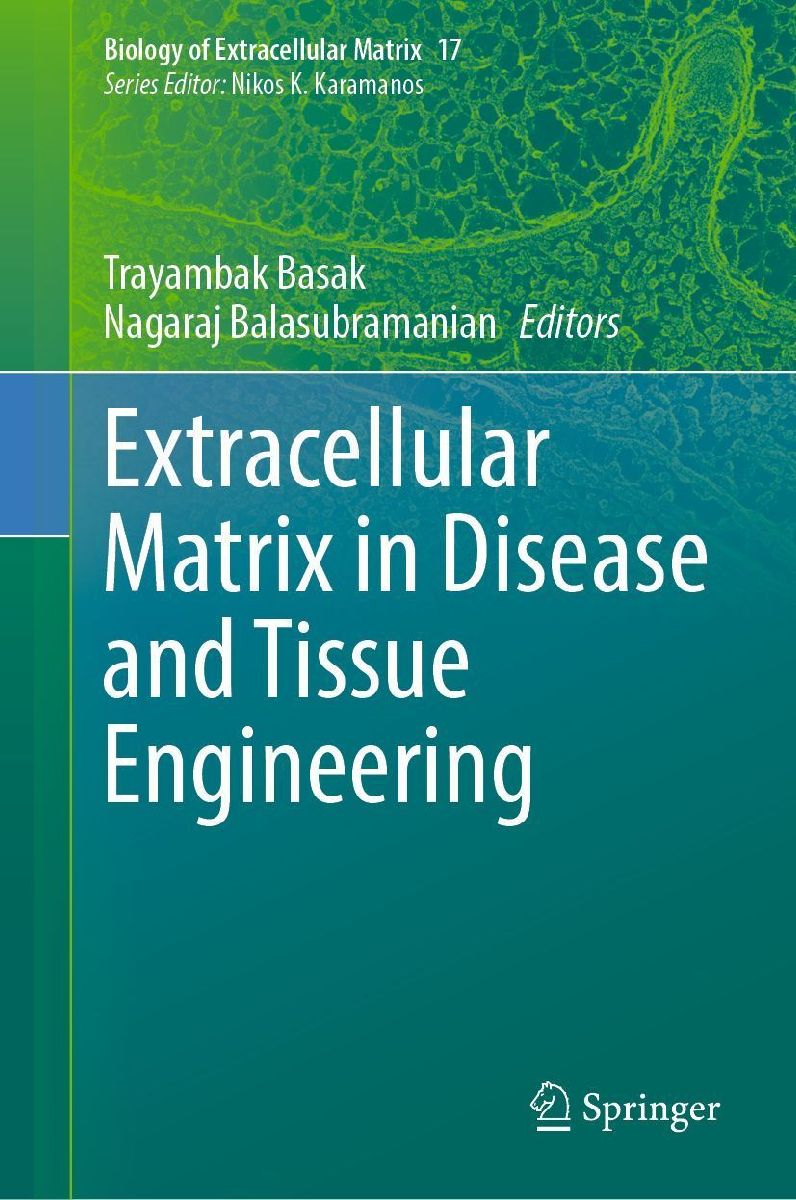
This book emphasizes the importance of the extracellular matrix (ECM) in diseases and explains how this knowledge can be applied to tissue engineering.
It provides a comprehensive analysis of the extracellular matrix (ECM) as a key regulator of cellular behavior, tissue architecture, and pathological processes.
Integrating current advances in matrix biology, it elucidates how ECM composition, mechanical properties and biochemical signaling shape normal physiology and diverse disease states.
The book examines the bidirectional crosstalk between cells and the ECM, detailing how matrix¿derived cues influence organelle dynamics, intracellular signaling pathways, and gene regulatory networks. Chapters analyze the contribution of ECM remodeling to cancer initiation, tumor dormancy, metastatic competence, inflammatory responses, and fibrotic progression.
Special emphasis is placed on collagen and its post¿translational modifications, highlighting how molecular and supramolecular features underpin ECM stability, tissue mechanics, and disease susceptibility.
At the same time, the book looks at how important ECM mimicking and ECM-derived materials are for tissue engineering and regenerative medicine. These scaffolds, designed to mimic natural signals in the microenvironment, create platforms for tissue repair, guiding stem cell differentiation and modelling disease mechanisms that are more relevant to the body.
By combining molecular knowledge with new biomaterial strategies, the book highlights the potential of ECM-based approaches for new therapies.
This work is targeted towards researchers, clinicians and advanced trainees in cell biology, biomedical engineering, oncology and regenerative medicine. It helps to understand how the structure and function of the extracellular matrix (ECM) intersects with disease mechanisms and therapeutic development.
By emphasising mechanistic depth and interdisciplinary perspectives, the text provides readers with the conceptual and methodological foundations essential for advancing ECM-focused research and designing the next generation of biomedical interventions.
Dr. Trayambak Basak is currently an Associate Professor in the School of Biosciences and Bioengineering at the Indian Institute of Technology (IIT) Mandi.
His current work focuses on extracellular matrix biology, collagen post-translational modifications, and mass-spectrometry-based proteomics. His research aims to understand how enzymatic modifications of collagen regulate tissue structure, function, and regeneration in both physiological and cardiac fibrosis contexts.
Dr. Basak received his doctoral training at the CSIR-IGIB in the biological sciences, with a focus on proteomics and disease biology, following completion of his master's at the University of Calcutta. His postdoctoral work extensively focused on the discovery of site-specific basement membrane collagen IV PTMs at the Vanderbilt University Medical Center, Nashville, TN, USA. Over the course of his academic career, he has developed interdisciplinary expertise spanning biochemistry, quantitative proteomics, and systems-level analysis of protein modifications. His work integrates experimental approaches with computational and quantitative analyses to address complex biological questions in connective tissue biology and enzyme function. The major interests of his research group are three-fold: dissecting the key changes in cell-ECM interactions during cardiac fibrosis, gaining a mechanistic understanding of cardiac fibrosis, and discovering new biomarkers for heart failure progression. A cell biologist by training, Dr. Nagaraj Balasubramanian graduated from the University of Mumbai (Bombay) with a bachelor's and master's degrees in Microbiology. He received his PhD in Biochemistry from the Cancer Research Institute (now ACTREC) at the Tata Memorial Center, Mumbai. Taking a break from adhesion and cancer biology, he studied mammalian phototransduction at the University of Miami, before returning to study cell adhesion, focusing on membrane trafficking in the lab of Dr. Martin Schwartz at the University of Virginia. Dr. Balasubramainan moved to IISER Pune to start his research lab. The research interests of his group include understanding how cell adhesion regulates endocytic (caveolae) and exocytic (Ral-exocyst) trafficking, and its implications for cell migration and anchorage dependence in 2D and 3D microenvironments. The lab also studies the impact of targeting AURKA-mediated regulation of Ral in targeting tumor growth in cancers. More recently, the lab has also explored the role of cell adhesion in regulating organelle function and the implications for anchorage-dependent and -independent signalling and growth.
Standardversand: 1 bis 3 Werktage, 3,99 €, kostenlos ab 35 €
Liefergebiet: Deutschland
Rücksendung: 14 Tage Widerrufsrecht. Bei einem Widerruf tragen Sie die Kosten der Rücksendung. Bei einer Falschlieferung oder einem Fehler von uns erstatten wir Ihnen das Rückporto. Den Widerruf erklären Sie über den Knopf „Vertrag widerrufen“ im Fuß der Seite.
Antonio Rossi (Hrsg.)
Gebunden, Englisch, 2 Ausgaben
ab 235,39 €
Kirsi Rilla (Hrsg.)
Gebunden, Englisch, 2 Ausgaben
ab 213,99 €
Anuj Kumar (Hrsg.)
Gebunden, Englisch, 2 Ausgaben
ab 160,49 €
R. Jayakumar (Hrsg.)
Gebunden, Englisch, 2 Ausgaben
ab 320,99 €
Mariappan Rajan (Hrsg.)
Gebunden, Englisch, 2 Ausgaben
ab 213,99 €
Zu diesem Titel gibt es noch keine Bewertung. Bewerten kann, wer ihn bei uns gekauft hat.