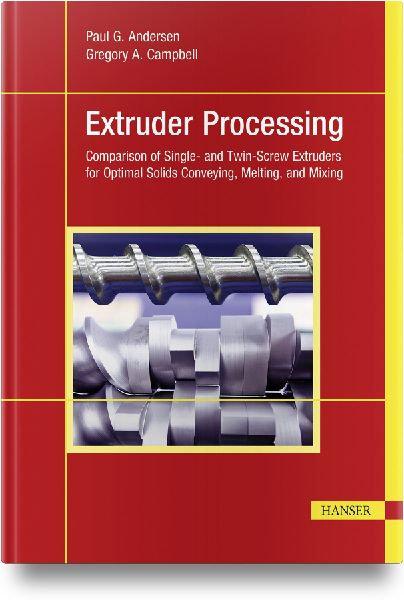
Extruder Processing
Comparison of Single- and Twin-Screw Extruders for Optimal Solids Conveying, Melting, and Mixing
von Paul G. Andersen und Gregory A. Campbell
- Einband
- Gebunden
- Seiten
- 234
- Sprache
- Englisch
- Erschienen
- September 2022
- Verlag
- Hanser Fachbuchverlag
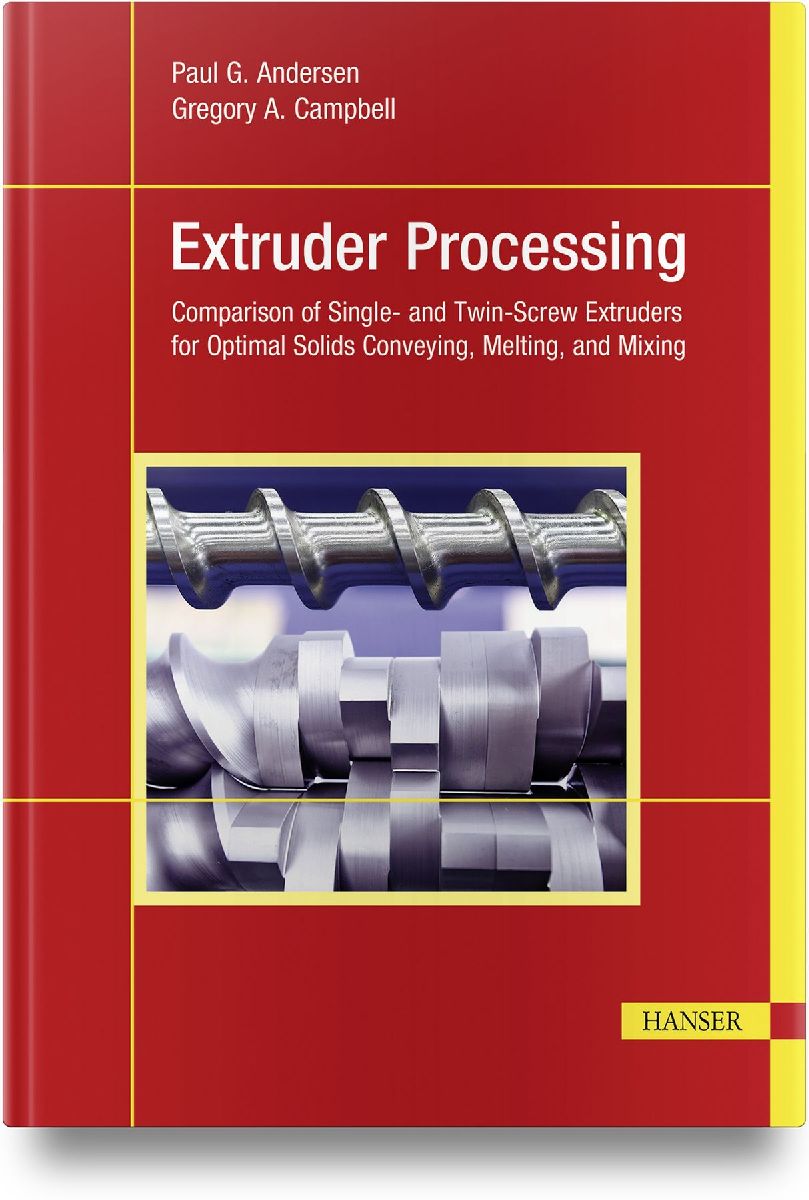
Buchbeschreibung
Single-screw or twin-screw extruder?
When the need to produce a homogeneous polymer melt occurs in the industrial environment, both product attributes and equipment cost must be evaluated. For many applications both the single and twin-screw extruder will produce the desired homogeneous melt needed to form the product through an extrusion die.
Ganze Beschreibung lesenWeniger anzeigen
Some applications such as dispersive mixing of solids in a polymer matrix are best accomplished in a twin-screw extruder. On the other hand, applications involving chemical reactions, color concentrate distributive mixing, and in line polymer-polymer distributive mixing can be accomplished with either device.
However, for the same production rate, twin-screw extruders are generally more expensive than single-screw extruders with a diameter less than 200 mm. Therefore, a thorough understanding is needed for the concepts of solids conveying, melting, and mixing for the two types of extruders to make appropriate process acquisition decisions.
This book covers engineering and technology concepts that should aid the practitioner in comparing these two types of extrusion equipment relative to process requirements.
The handbook is intended for newcomers interested in the theoretical and regulatory aspects of validation and for thermal analysis practitioners who have to validate their equipment and methods.
Inhaltsverzeichnis
- Part 1: Validation of Computerized Systems- Recent Changes in Regulations and Regulatory Guidance- Instrument Qualification, Computerized System Validation and Method Validation- Regulatory Requirements for Computerized System Validation- Computerized System Validation- Writing the User Requirements Specification (URS)- Auditing the System Supplier- Installation Qualification and Operational Qualification (IQ and OQ)- Performance Qualification (PQ) or End User Testing-
- Part 2: Method Validation- Measurement Errors and Uncertainty of Measurement- Validation of Analytical Procedures and Methods- Interlaboratory Studies in Thermal Analysis- Method Development Through to SOP- Practical Examples- Appendix 1: 21 CFR Part 11 and EU GMP Annex 11- Appendix 2: Basic Statistics- Appendix 3: Standard Test Methods for Thermal Analysis
Details
- Erscheinungstermin
- September 2022
- Kategorie
- Fremdsprachige Bücher
- Einband
- Gebunden
- Seiten
- 234
- Sprache
- Englisch
- Verlag
- Hanser Fachbuchverlag
- Format
- 24,4 × 17,3 cm
- Dicke
- 2,0 cm
- Gewicht
- 708 g
- EAN / ISBN-13
- 9781569908631
Über Paul G. Andersen
Paul G. Andersen, Ph. D., is Process Technology Consultant at Coperion Corporation, Ramsey, NJ, USA. He was previously Director, Process Technology at Coperion, a position he held until 2016.
Mehr über Paul G. AndersenWeniger anzeigen
In 2009/2010, he was President of the Society of Plastics Engineers (SPE).
Professor Gregory A. Campbell is Professor Emeritus at Clarkson University, Potsdam, NY, USA. He formerly directed a research group at GM Research and managed polymer fabrication at Mobil Chemical Research.
Versand und Rückgabe
Standardversand: 1 bis 3 Werktage, 3,99 €, kostenlos ab 35 €
Versandbeginn: in der Regel am selben oder am nächsten Werktag
Liefergebiet: Deutschland
Rücksendung: 14 Tage Widerrufsrecht. Bei einem Widerruf tragen Sie die Kosten der Rücksendung. Bei einer Falschlieferung oder einem Fehler von uns erstatten wir Ihnen das Rückporto. Den Widerruf erklären Sie über den Knopf „Vertrag widerrufen“ im Fuß der Seite.
Hersteller und ProduktsicherheitCarl Hanser Verlag GmbH & Co.KG
Ähnliche Titel
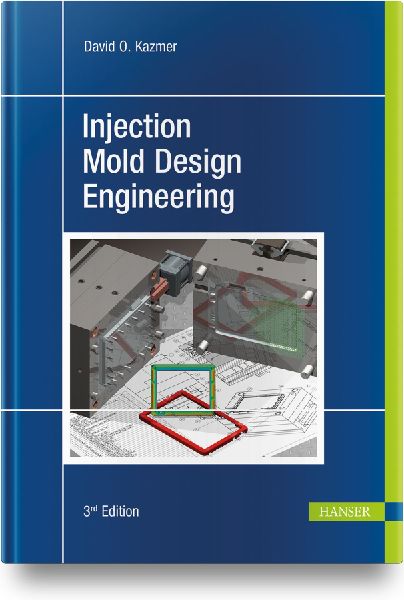
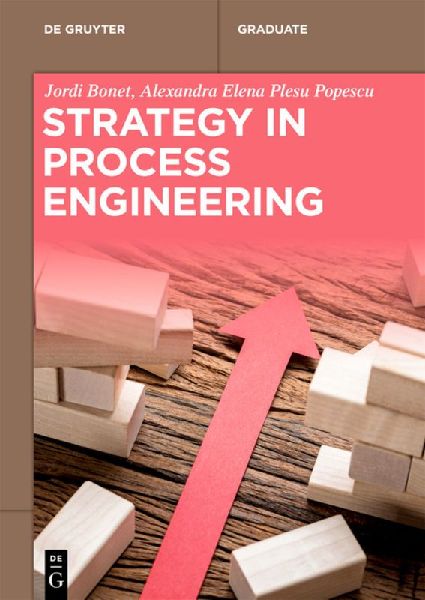
Model-Based Control of Particulate Processes
Panagiotis D. Christofides
Gebunden, Englisch, 2 Ausgaben
ab 160,49 €
Bewertungen
Zu diesem Titel gibt es noch keine Bewertung. Bewerten kann, wer ihn bei uns gekauft hat.
So prüfen wir Bewertungen
Eine Bewertung kann bei uns nur abgeben, wer den Titel über sein Kundenkonto bei uns gekauft hat. Jede Bewertung ist fest mit der zugehörigen Bestellung verknüpft; anders kommt sie technisch gar nicht zustande. Deshalb trägt jede angezeigte Bewertung den Hinweis „Verifizierter Kauf". Wir zeigen positive wie negative Bewertungen und löschen nur bei Rechtsverstößen. Für Bewertungen gibt es keine Gegenleistung.
99,99 €Voraussichtlich 27. Nov. bis 1. Dez.