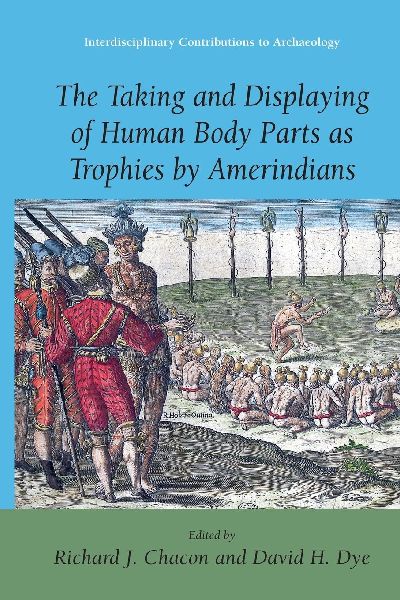
The Taking and Displaying of Human Body Parts as Trophies by Amerindians
Richard J. Chacon (Hrsg.)
Kartoniert, Englisch, 2 Ausgaben
ab 80,24 €
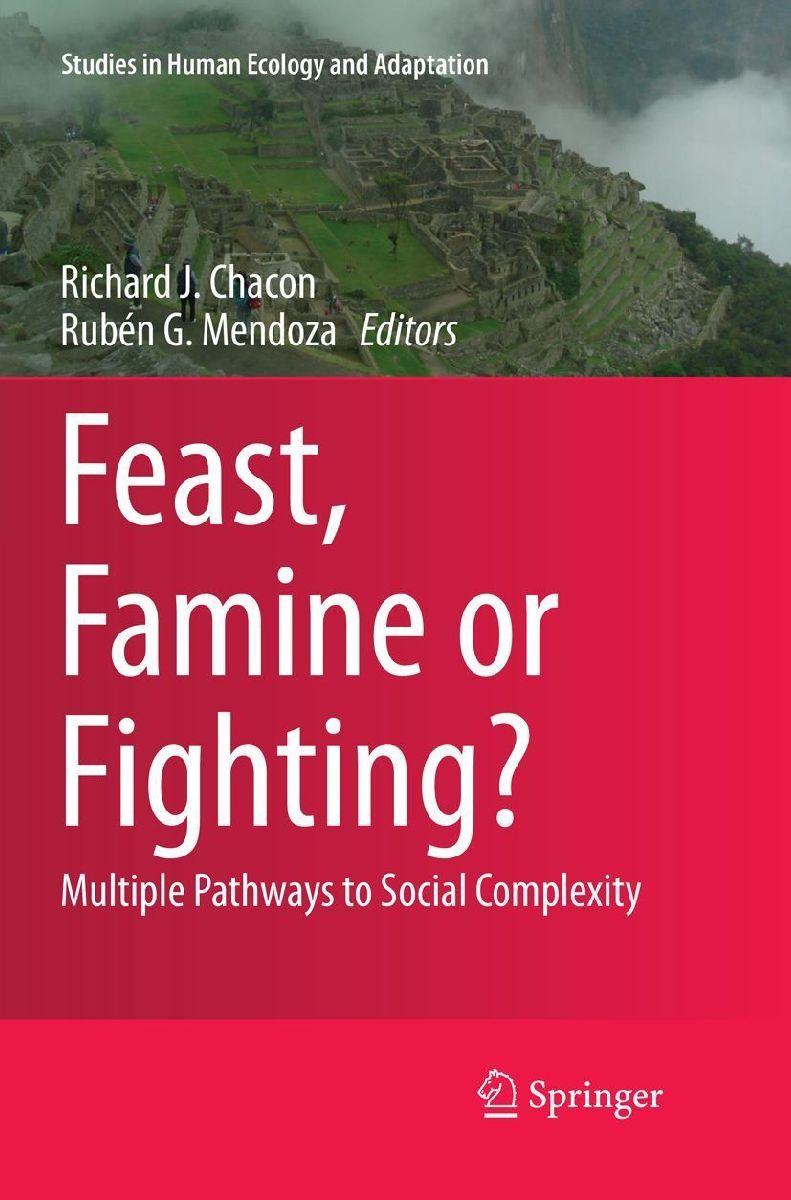
Multiple Pathways to Social Complexity
Herausgegeben von: Richard J. Chacon, Herausgegeben von: Rubén G. Mendoza
Aus der Reihe Studies in Human Ecology and Adaptation
The advent of social complexity has been a longstanding debate among social scientists.
Existing theories and approaches involving the origins of social complexity include environmental circumscription, population growth, technology transfers, prestige-based and interpersonal-group competition, organized conflict, perennial wartime leadership, wealth finance, opportunistic leadership, climatological change, transport and trade monopolies, resource circumscription, surplus and redistribution, ideological imperialism, and the consideration of individual agency.
However, recent approaches such as the inclusion of bioarchaeological perspectives, prospection methods, systematically-investigated archaeological sites along with emerging technologies are necessarily transforming our understanding of socio-cultural evolutionary processes. In short, many pre-existing ways of explaining the origins and development of social complexity are being reassessed.
Ultimately, the contributors to this edited volume challenge the status quo regarding how and why social complexity arose by providing revolutionary new understandings of social inequality and socio-political evolution.
Richard J. Chacon is an Associate Professor of Anthropology at Winthrop University. He has conducted ethnographic fieldwork in Amazonia among the Yanomamo of Venezuela, the Yora of Peru and the Achuar (Shiwiar) of Ecuador.
In the Andes, he has conducted ethnographic fieldwork among the Otavalo and Cotacachi Indians of Highland Ecuador. His research interests include collective action, optimal foraging theory, indigenous subsistence strategies, natural resource conservation, warfare, belief systems, the development of social complexity, ethnohistory, ethics and the effects of globalization on indigenous peoples. Dr. Rubén G. Mendoza is Professor and Chair of the Division of Social, Behavioral, and Global Studies at the California State University, Monterey Bay. He has conducted archaeological and ethnohistorical investigations in California, Colorado, the US Southwest, and Mesoamerica. His research interests include Mesoamerican and South American civilizations and social complexity, long-distance trade and exchange, conflict interaction, and Hispanicized Indian and Amerindian traditional technologies and material cultures. In addition, he is the coordinator for both the Archaeological Science, Technology, and Visualization, and Global Studies, programs at CSU Monterey Bay. Contact information: Dr. Rubén G. Mendoza, Ph. D., RPA, Professor/Chair, Division of Social, Behavioral & Global Studies, California State University, Monterey Bay, Seaside, CA, USA. E-mail: rumendoza@csumb.edu
Standardversand: 1 bis 3 Werktage, 3,99 €, kostenlos ab 35 €
Liefergebiet: Deutschland
Rücksendung: 14 Tage Widerrufsrecht. Bei einem Widerruf tragen Sie die Kosten der Rücksendung. Bei einer Falschlieferung oder einem Fehler von uns erstatten wir Ihnen das Rückporto. Den Widerruf erklären Sie über den Knopf „Vertrag widerrufen“ im Fuß der Seite.
Richard J. Chacon (Hrsg.)
Kartoniert, Englisch, 2 Ausgaben
ab 80,24 €
Richard J. Chacon (Hrsg.)
Gebunden, Englisch, 2 Ausgaben
ab 139,09 €
Richard J. Chacon (Hrsg.)
Gebunden, Englisch, 2 Ausgaben
ab 160,49 €
Richard J. Chacon
Kartoniert, Englisch
69,54 €
E. N. Anderson
Gebunden, Englisch, 2 Ausgaben
ab 106,99 €
Ludomir R. Lozny (Hrsg.)
Gebunden, Englisch, 2 Ausgaben
ab 106,99 €
Zu diesem Titel gibt es noch keine Bewertung. Bewerten kann, wer ihn bei uns gekauft hat.