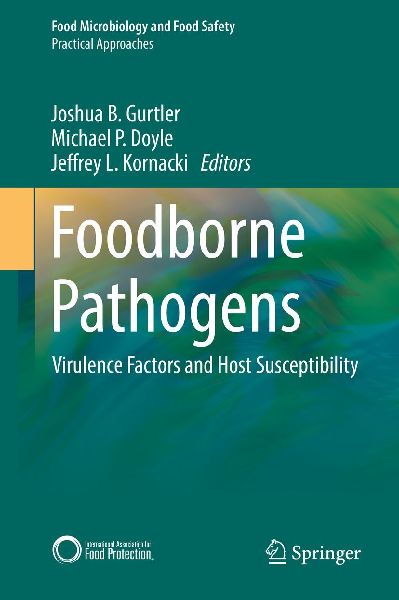
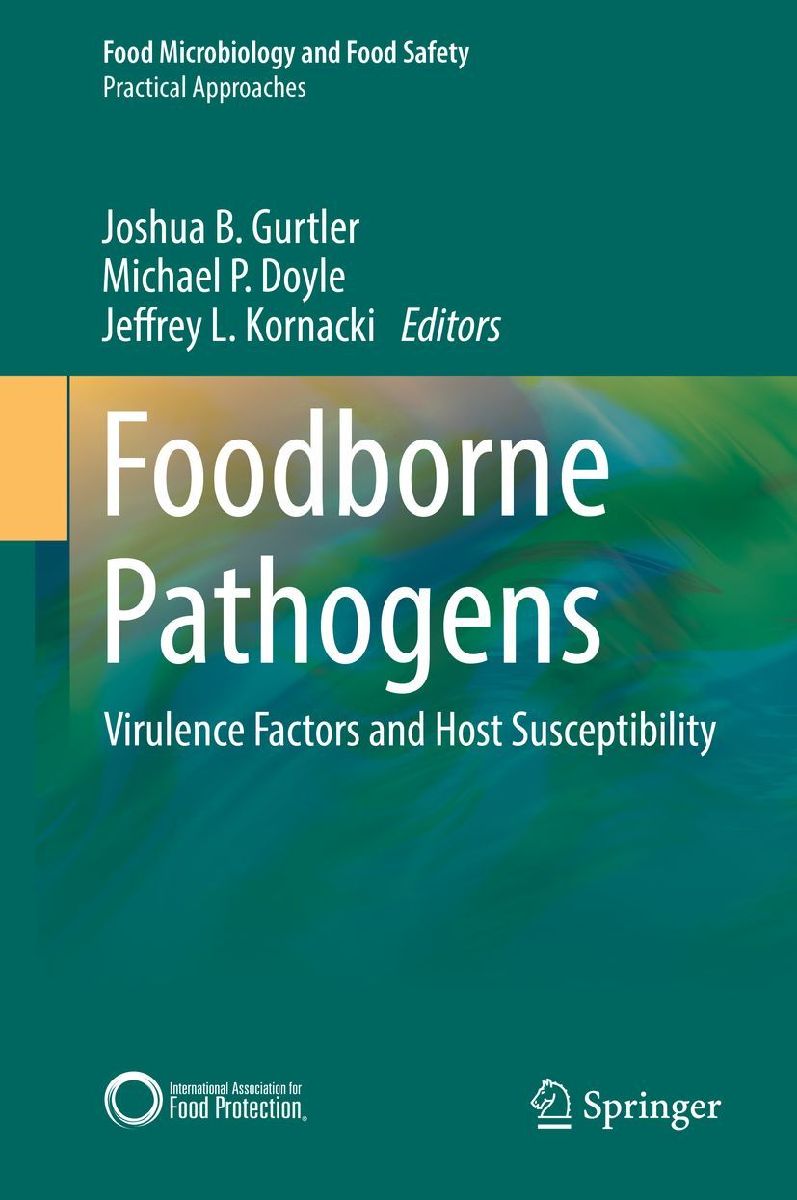
Foodborne Pathogens
Virulence Factors and Host Susceptibility
Herausgegeben von: Joshua B. Gurtler, Herausgegeben von: Michael P. Doyle, Herausgegeben von: Jeffrey L. Kornacki
Aus der Reihe Food Microbiology and Food Safety
- Einband
- Gebunden
- Seiten
- 660
- Sprache
- Englisch
- Erschienen
- Juni 2017
- Verlag
- Springer
Buchbeschreibung
Foodborne illnesses continue to be a major public health concern.
All members of a particular bacterial genera (e.g., Salmonella, Campylobacter) or species (e.g., Listeria monocytogenes, Cronobacter sakazakii) are often treated by public health and regulatory agencies as being equally pathogenic; however, this is not necessarily true and is an overly conservative approach to ensuring the safety of foods.
Ganze Beschreibung lesenWeniger anzeigen
Even within species, virulence factors vary to the point that some isolates may be highly virulent, whereas others may rarely, if ever, cause disease in humans. Hence, many food safety scientists have concluded that a more appropriate characterization of bacterial isolates for public health purposes could be by virotyping, i.e., typing food-associated bacteria on the basis of their virulence factors.
The book is divided into two sections. Section I, "Foodborne Pathogens and Virulence Factors," hones in on specific virulence factors of foodborne pathogens and the role they play in regulatory requirements, recalls, and foodborne illness. The oft-held paradigm that all pathogenic strains are equally virulent is untrue.
Thus, we will examine variability in virulence between strains such as Listeria, Salmonella, Campylobacter, Cronobacter, etc. This section also examines known factors capable of inducing greater virulence in foodborne pathogens. Section II, "Foodborne Pathogens, Host Susceptibility, and Infectious Dose", covers the ability of a pathogen to invade a human host based on numerous extraneous factors relative to the host and the environment.
Some of these factors include host age, immune status, genetic makeup, infectious dose, food composition and probiotics. Readers of this book will come away with a better understanding of foodborne bacterial pathogen virulence factors and pathogenicity, and host factors that predict the severity of disease in humans.
Inhaltsverzeichnis
- 1. Advantages of Virulotyping Pathogens Over Traditional Identification and Characterization Methods
- 2. Varying pathogenicity of Campylobacter jejuni isolates
- 3. Strain-specific virulence differences in Listeria monocytogenes: current perspectives in addressing an old and vexing issue
- 4. The Listeria monocytogenes triad for success: food matrix, stress response and virulence
- 5. Virulence traits in the Cronobacter genus
- 6. Factors Affecting Variation in Salmonella Virulence
- 7. Shigella: Virulence Factors and Pathogenicity
- 8. Alterations in Shiga toxin-producing E. coli colonization and virulence following dietary modulation and administration of antimicrobials
Ganzes Inhaltsverzeichnis anzeigen (20 Einträge)Weniger anzeigen
- 9. The Role of Alternative Sigma Factors in Pathogen Virulence
- 10. The Effects of Food Composition on Foodborne Illness Infectious Dose and Host Susceptibility
- 11. The Rise of Genomics and the Promise of Whole Genome Sequencing for Understanding Microbial Foodborne Pathogens
- 12. Host innate immune factors influencing enterohemorrhagic Escherichia coli pathogenicity
- 13. In Defense of the European 100 CFU of Listeria monocytogenes/g in ready-to-eat foods
- 14. Science to Support the Prevention of Listeria monocytogenes in Ready-to-Eat Foods
- 15. Foodborne Pathogens: Virulence Factors and Host Susceptibility
- 16. Infectious Dose and an Aging Population: Susceptibility of the Aged to Foodborne Pathogens
- 18. Foodborne Pathogens and host predilection
- 19. The influence of virulence factors on dose response of food-borne pathogens
- 20. Clostridium botulinum and the Most Poisonous Poison
- 21. Mitigation of foodborne illnesses by probiotics
Details
- Erscheinungstermin
- Juni 2017
- Kategorie
- Fremdsprachige Bücher
- Einband
- Gebunden
- Seiten
- 660
- Sprache
- Englisch
- Verlag
- Springer
- Reihe
- Food Microbiology and Food Safety
- Format
- 24,1 × 16,0 cm
- Dicke
- 3,9 cm
- Gewicht
- 1.213 g
- EAN / ISBN-13
- 9783319568348
Über Joshua B. Gurtler (Hrsg.)
Editors:
Joshua B. GurtlerU. S. Department of Agriculture
Agricultural Research Service
Eastern Regional ResearchWyndmoor, PA, USA
Jeffrey L. KornackiKornacki Microbiology Solutions, Inc. Madison, WI, USA
Mehr über Joshua B. Gurtler (Hrsg.)Weniger anzeigen
Michael P. Doyle
University of Georgia
Center of Food Safety
Griffin, GA, USA
Versand und Rückgabe
Standardversand: 1 bis 3 Werktage, 3,99 €, kostenlos ab 35 €
Liefergebiet: Deutschland
Rücksendung: 14 Tage Widerrufsrecht. Bei einem Widerruf tragen Sie die Kosten der Rücksendung. Bei einer Falschlieferung oder einem Fehler von uns erstatten wir Ihnen das Rückporto. Den Widerruf erklären Sie über den Knopf „Vertrag widerrufen“ im Fuß der Seite.
Hersteller und ProduktsicherheitSpringer Nature Customer Service Center GmbH
Springer Nature Customer Service Center GmbH
Europaplatz 3
69115 Heidelberg
Deutschland
ProductSafety@springernature.com
Mehr aus der Reihe Food Microbiology and Food Safety
Food Safety and Quality-Based Shelf Life of Perishable Foods
Peter J. Taormina (Hrsg.)
Gebunden, Englisch, 2 Ausgaben
ab 181,89 €
Ähnliche Titel


Propionic Acid Degradation by Syntrophic Bacteria During Anaerobic Biowaste Digestion
Monika Felchner-Zwirello
Kartoniert, Englisch
40,00 €
Bewertungen
Zu diesem Titel gibt es noch keine Bewertung. Bewerten kann, wer ihn bei uns gekauft hat.
So prüfen wir Bewertungen
Eine Bewertung kann bei uns nur abgeben, wer den Titel über sein Kundenkonto bei uns gekauft hat. Jede Bewertung ist fest mit der zugehörigen Bestellung verknüpft; anders kommt sie technisch gar nicht zustande. Deshalb trägt jede angezeigte Bewertung den Hinweis „Verifizierter Kauf". Wir zeigen positive wie negative Bewertungen und löschen nur bei Rechtsverstößen. Für Bewertungen gibt es keine Gegenleistung.
213,99 €Voraussichtlich 4. bis 8. Dez.