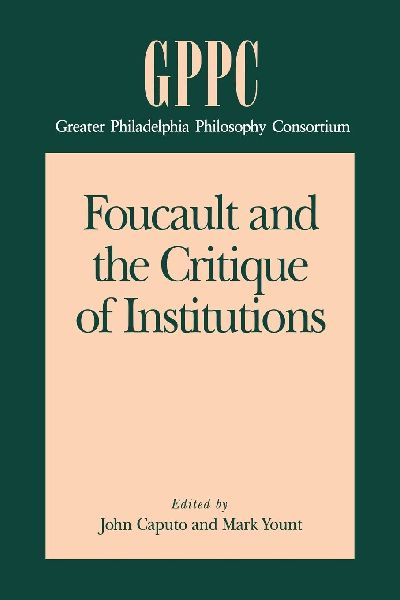
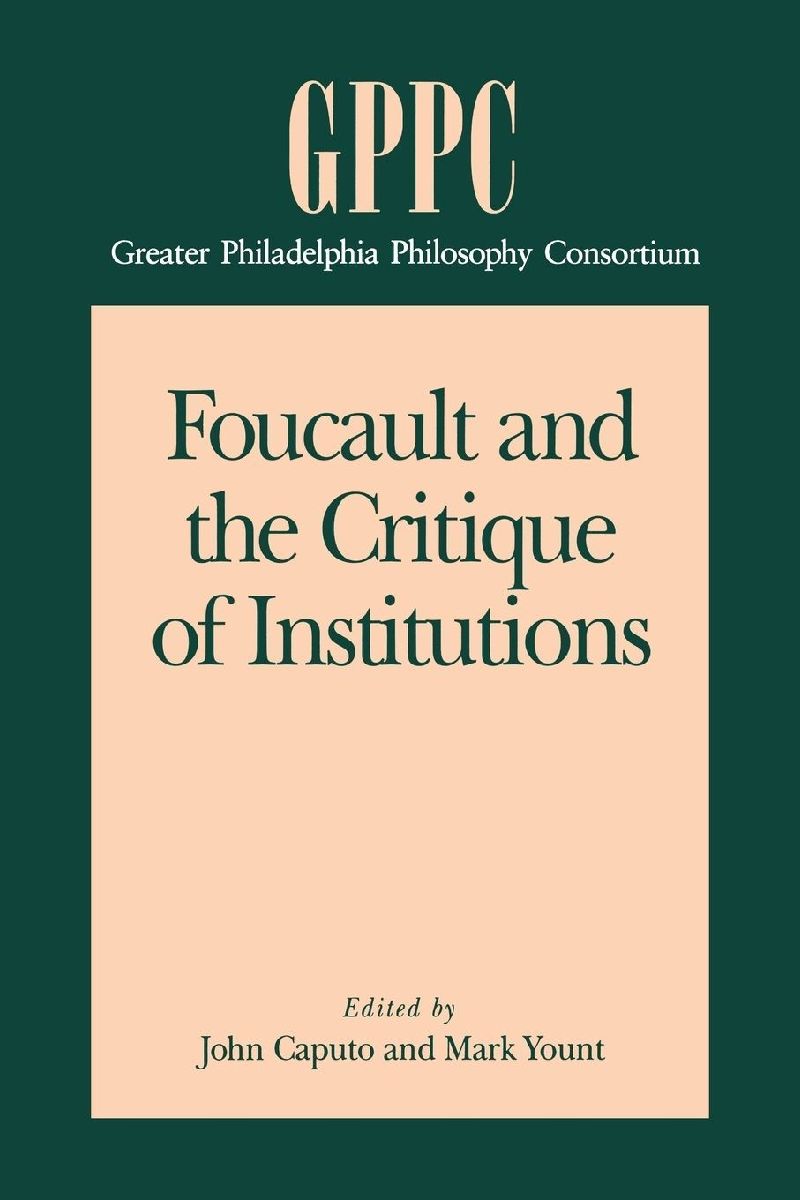
Foucault and the Critique of Institutions
Herausgegeben von: John D. Caputo, Herausgegeben von: Mark Yount
- Einband
- Kartoniert
- Seiten
- 280
- Sprache
- Englisch
- Erschienen
- März 2006
- Verlag
- Pennsylvania State University Press
Buchbeschreibung
The issue of the institution is not addressed systematically anywhere in the literature on Foucault, although it is everywhere to be found in Foucault's writings.
Foucault and the Critique of Institutions not only interprets the work of Foucault but also applies it to the question of the institution. Foucault is a master at analyzing the web of social relations ("power") that effectively shape ("normalize") the modern individual.
Ganze Beschreibung lesenWeniger anzeigen
While these social relations are smaller and finer than institutions, institutions are, by Foucault's account, saturated with such relations.
This study is the first sustained account to follow up the implications of Foucault's provocative theses about power for the analysis of institutions.
Foucault and the Critique of Institutions offers a set of preliminary essays that raise basic questions about the theoretical character of Foucault's thought and then several groups of other essays that go on to take up the practical issues raised by his work. Joseph Margolis and Jitendra Mohanty address one of the most complex problems posed by Foucault's texts: his status as a philosopher.
Mark Poster explores the problem of the "self" in Foucault, while Judith Butler focuses her searching investigation of the self on its gendered nature. Joseph Rouse examines the functioning of the natural sciences within the institutional setting of the university and the academic profession, while Chuck Dyke and Mary Schmelzer present vigorous critiques of the normalizing power of the university.
Robert Moore and Mark Yount offer original studies of the implications of Foucault's work for the workplace, labor law, and affirmative action. Finally, John Caputo studies Foucault's famous history of madness and raises the question of the possibility of exercising a "healing" and not merely a "normalizing" power in the mental hospital and the church.
Details
- Erscheinungstermin
- März 2006
- Kategorie
- Fremdsprachige Bücher
- Einband
- Kartoniert
- Seiten
- 280
- Sprache
- Englisch
- Verlag
- Pennsylvania State University Press
- Format
- 22,9 × 15,2 cm
- Dicke
- 1,7 cm
- Gewicht
- 459 g
- EAN / ISBN-13
- 9780271029665
Über John D. Caputo (Hrsg.)
John Caputo is David R. Cook Professor of Philosophy at Villanova University and author of four books, including Radical Hermeneutics (1987). Mark Yount is Assistant Professor of Philosophy at St. Joseph's University.
Versand und Rückgabe
Standardversand: 1 bis 3 Werktage, 3,99 €, kostenlos ab 35 €
Liefergebiet: Deutschland
Rücksendung: 14 Tage Widerrufsrecht. Bei einem Widerruf tragen Sie die Kosten der Rücksendung. Bei einer Falschlieferung oder einem Fehler von uns erstatten wir Ihnen das Rückporto. Den Widerruf erklären Sie über den Knopf „Vertrag widerrufen“ im Fuß der Seite.
Hersteller und ProduktsicherheitPennsylvania State University Press
Pennsylvania State University Press
Europaallee 1
36244 Bad Hersfeld
Deutschland
gpsr@libri.de
Verantwortliche Person in der EU
Libri GmbHEuropaallee 1
36244 Bad Hersfeld
Deutschland
gpsr@libri.de
Mehr von John D. Caputo


Ähnliche Titel



Bewertungen
Zu diesem Titel gibt es noch keine Bewertung. Bewerten kann, wer ihn bei uns gekauft hat.
So prüfen wir Bewertungen
Eine Bewertung kann bei uns nur abgeben, wer den Titel über sein Kundenkonto bei uns gekauft hat. Jede Bewertung ist fest mit der zugehörigen Bestellung verknüpft; anders kommt sie technisch gar nicht zustande. Deshalb trägt jede angezeigte Bewertung den Hinweis „Verifizierter Kauf". Wir zeigen positive wie negative Bewertungen und löschen nur bei Rechtsverstößen. Für Bewertungen gibt es keine Gegenleistung.
50,00 €Voraussichtlich 3. bis 7. Dez.