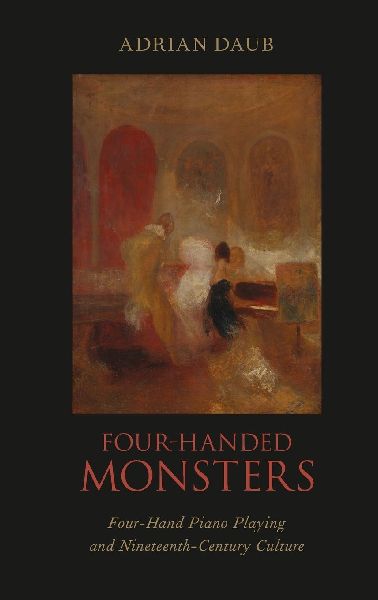
Four-Handed Monsters
Four-Hand Piano Playing and Nineteenth-Century Culture
von Adrian Daub
- Einband
- Gebunden
- Seiten
- 258
- Sprache
- Englisch
- Erschienen
- Juni 2014
- Verlag
- OUP US
Buchbeschreibung
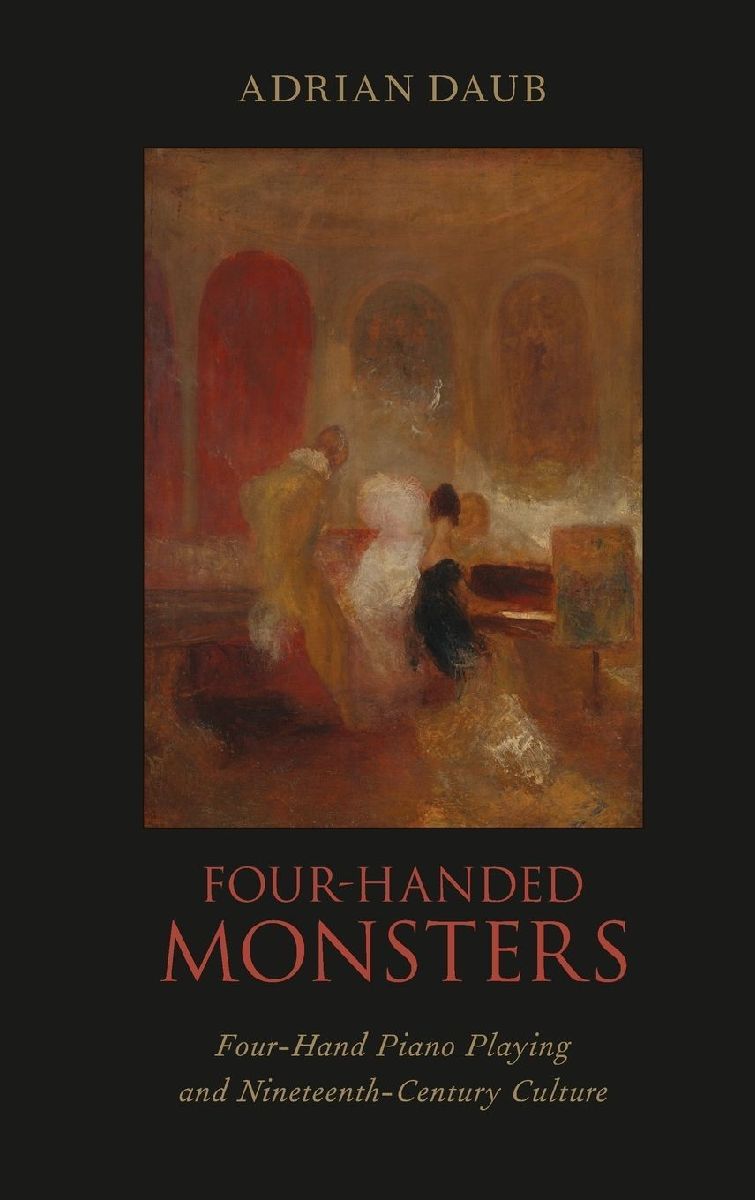
In the course of the nineteenth century, four-hand piano playing emerged across Europe as a popular pastime of the well-heeled classes and of those looking to join them.
Nary a canonic work of classical music that was not set for piano duo, nary a house that could afford not to invest in them. Duets echoed from the student bedsit to the Buckingham Palace, resounded in schools and in hundreds of thousands of bourgeois parlors.
Ganze Beschreibung lesenWeniger anzeigen
Like no other musical phenomenon it could cross national, social and economic boundaries, bringing together poor students with the daughters of the bourgeoisie, crowned heads with penniless virtuosi, and the nineteenth century often regarded it with extreme suspicion for that very reason.
Four-hand piano playing was often understood as a socially acceptable way of flirting, a flurry of hands that made touching, often of men and women, not just acceptable but necessary. But it also became something far more serious than that, a central institution of the home, mediating between inside and outside, family and society, labor and leisure, nature and nurture.
And writers, composers, musicians, philosophers, journalists, pamphleteers and painters took note: in the art, literature and philosophy of the age, four-hand playing emerged as a common motif, something that allowed them to interrogate the very nature of the self, the family, the community and the state.
In the four hands rushing up and down the same keyboard the nineteenth century espied, or thought espy, an astonishing array of things. Four-Handed Monsters tells the story of that practice, but also the story of the astonishing array of things the nineteenth century read into it.
Inhaltsverzeichnis
- Acknowledgements- Introduction-
- Chapter 1: The Sonic Hearth and the "Piano Plague"-
- Chapter 2: Four-Hand Piano Playing between Parlor Music and the Culture Industry-
- Chapter 3: "At Best an Intruder, at Worst a Voyeur": Four-Hand Piano Playing and the Family Unit-
- Chapter 4: Four-Handed Monsters-
- Chapter 5: The Semantics of the Hand-
- Chapter 6: Fordist Chords-
- Chapter 7: Musical Platonism: Four-Hand Playing Among the Philosophers-
- Chapter 8: Kakanian Variations-Four Hands and the Passing of the Nineteenth Century- Index
Details
- Erscheinungstermin
- Juni 2014
- Kategorie
- Fremdsprachige Bücher
- Einband
- Gebunden
- Seiten
- 258
- Sprache
- Englisch
- Verlag
- OUP US
- Format
- 24,0 × 16,1 cm
- Dicke
- 2,0 cm
- Gewicht
- 552 g
- EAN / ISBN-13
- 9780199981779
Über Adrian Daub
Adrian Daub is Associate Professor of German Studies at Stanford University, where he works on the intersection between literature, music and philosophy in the long nineteenth century.
Mehr über Adrian DaubWeniger anzeigen
He is the author of Uncivil Unions: The Metaphysics of Marriage in German Idealism and Romanticism (2012) and Tristan's Shadow: Sexuality and the Total Work of Art after Wagner (2013).
Versand und Rückgabe
Standardversand: 1 bis 3 Werktage, 3,99 €, kostenlos ab 35 €
Liefergebiet: Deutschland
Rücksendung: 14 Tage Widerrufsrecht. Bei einem Widerruf tragen Sie die Kosten der Rücksendung. Bei einer Falschlieferung oder einem Fehler von uns erstatten wir Ihnen das Rückporto. Den Widerruf erklären Sie über den Knopf „Vertrag widerrufen“ im Fuß der Seite.
Hersteller und ProduktsicherheitOUP US
OUP US
Europaallee 1
36244 Bad Hersfeld
Deutschland
gpsr@libri.de
Verantwortliche Person in der EU
Libri GmbHEuropaallee 1
36244 Bad Hersfeld
Deutschland
gpsr@libri.de
Mehr von Adrian Daub




Ähnliche Titel
Bewertungen
Zu diesem Titel gibt es noch keine Bewertung. Bewerten kann, wer ihn bei uns gekauft hat.
So prüfen wir Bewertungen
Eine Bewertung kann bei uns nur abgeben, wer den Titel über sein Kundenkonto bei uns gekauft hat. Jede Bewertung ist fest mit der zugehörigen Bestellung verknüpft; anders kommt sie technisch gar nicht zustande. Deshalb trägt jede angezeigte Bewertung den Hinweis „Verifizierter Kauf". Wir zeigen positive wie negative Bewertungen und löschen nur bei Rechtsverstößen. Für Bewertungen gibt es keine Gegenleistung.
55,30 €Voraussichtlich 4. bis 8. Dez.