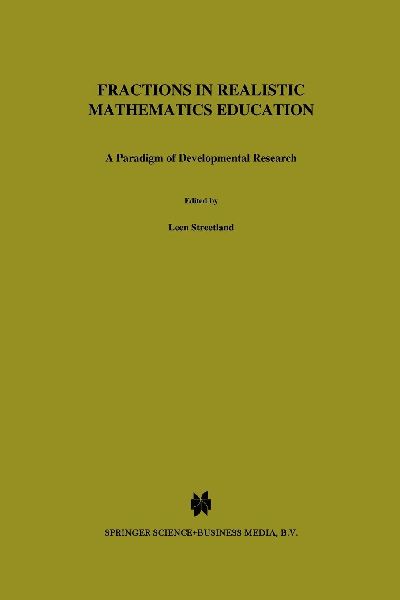
Fractions in Realistic Mathematics Education
A Paradigm of Developmental Research
von Leen Streefland
Aus der Reihe Mathematics Education Library
- Einband
- Kartoniert
- Seiten
- 368
- Sprache
- Englisch
- Erschienen
- September 2012
- Verlag
- Springer
Buchbeschreibung
and overview.
Ganze Beschreibung lesenWeniger anzeigen
- Notes Introduction.- 1 Description of the fraction problem.- 1.1 Introduction and overview.- 1.2 Pointing out the problem.- 1.3 Description of the problem.- 1.4 Overview and outlook.
- Notes chapter 1.- 2 Currents-standpoint-proposal.- 2.1 Introduction and overview.- 2.2 Currents.- 2.3 Standpoint.- 2.4 Proposal.- 2.5 Review and outlook.
- Notes chapter 2.- 3 The context of the research.- 3.1 Introduction and overview.- 3.2 Starting from the construction principle.- 3.3 Development research.- 3.4 Design and method.- 3.5 The research group.- 3.6 The researcher's position.- 3.7 Conclusion.
- Notes chapter 3.- 4 The course in theory and practice.- 4.1 Introduction and overview.- 4.2 Global outline of the fraction course.- 4.3 Producing fractions: the teaching experiment.- 4.4 In view of mathematization.- 4.5 Review and outlook.
- Notes chapter 4.- 5 Individual portraits of the fraction researchers.- 5.1 Introduction and overview.- 5.2 Indicators for the (improvement in) quality of the individual learning processes.- 5.3 The student portraits.- 5.4 Review and outlook.
- Notes chapter 5.- 6 Internal evaluation of the learning process.- 6.1 Introduction and overview.- 6.2 Yielding to and building up resistance to IN-distractors.- 6.3 Progression in schematizating through abbreviations.- 6.4 Models and diagrams.- 6.5 Acquiring representations fitting formally posed problems.- 6.6 Constructions and productions on a symbolic level.- 6.7 The framework of the level-theory and the course construction.- 6.8 Review and outlook.
- Notes chapter 6.- 7 External or summative evaluation.- 7.1 Introduction and overview.- 7.2 Weighing the groups.- 7.3 Comparing and characterizing the programs.- 7.4 The tests.- 7.5 Results.- 7.6 Summary and conclusions.- 7.7 Realistic andmechanistic: a difference in effects?.- 7.8 A look ahead.
- Notes chapter 7.- 8 Theoretical review.- 8.1 Introduction and overview.- 8.2 Teaching and learning fractions.- 8.3 Conclusion.
- Notes chapter 8.
- Epilogue: Sketch of a new course -fractions, an integrated perspective-.
Inhaltsverzeichnis
- and overview
- Notes Introduction
- 1 Description of the fraction problem
- 1.1 Introduction and overview
- 1.2 Pointing out the problem
- 1.3 Description of the problem
- 1.4 Overview and outlook
- Notes chapter 1
Ganzes Inhaltsverzeichnis anzeigen (63 Einträge)Weniger anzeigen
- 2 Currents-standpoint-proposal
- 2.1 Introduction and overview
- 2.2 Currents
- 2.3 Standpoint
- 2.4 Proposal
- 2.5 Review and outlook
- Notes chapter 2
- 3 The context of the research
- 3.1 Introduction and overview
- 3.2 Starting from the construction principle
- 3.3 Development research
- 3.4 Design and method
- 3.5 The research group
- 3.6 The researcher's position
- 3.7 Conclusion
- Notes chapter 3
- 4 The course in theory and practice
- 4.1 Introduction and overview
- 4.2 Global outline of the fraction course
- 4.3 Producing fractions: the teaching experiment
- 4.4 In view of mathematization
- 4.5 Review and outlook
- Notes chapter 4
- 5 Individual portraits of the fraction researchers
- 5.1 Introduction and overview
- 5.2 Indicators for the (improvement in) quality of the individual learning processes
- 5.3 The student portraits
- 5.4 Review and outlook
- Notes chapter 5
- 6 Internal evaluation of the learning process
- 6.1 Introduction and overview
- 6.2 Yielding to and building up resistance to IN-distractors
- 6.3 Progression in schematizating through abbreviations
- 6.4 Models and diagrams
- 6.5 Acquiring representations fitting formally posed problems
- 6.6 Constructions and productions on a symbolic level
- 6.7 The framework of the level-theory and the course construction
- 6.8 Review and outlook
- Notes chapter 6
- 7 External or summative evaluation
- 7.1 Introduction and overview
- 7.2 Weighing the groups
- 7.3 Comparing and characterizing the programs
- 7.4 The tests
- 7.5 Results
- 7.6 Summary and conclusions
- 7.7 Realistic andmechanistic: a difference in effects?
- 7.8 A look ahead
- Notes chapter 7
- 8 Theoretical review
- 8.1 Introduction and overview
- 8.2 Teaching and learning fractions
- 8.3 Conclusion
- Notes chapter 8
- Epilogue: Sketch of a new course -fractions, an integrated perspective-
Details
- Erscheinungstermin
- September 2012
- Kategorie
- Fremdsprachige Bücher
- Einband
- Kartoniert
- Seiten
- 368
- Sprache
- Englisch
- Verlag
- Springer
- Reihe
- Mathematics Education Library
- Format
- 23,5 × 15,5 cm
- Dicke
- 2,0 cm
- Gewicht
- 557 g
- EAN / ISBN-13
- 9789401053976
Versand und Rückgabe
Standardversand: 1 bis 3 Werktage, 3,99 €, kostenlos ab 35 €
Liefergebiet: Deutschland
Rücksendung: 14 Tage Widerrufsrecht. Bei einem Widerruf tragen Sie die Kosten der Rücksendung. Bei einer Falschlieferung oder einem Fehler von uns erstatten wir Ihnen das Rückporto. Den Widerruf erklären Sie über den Knopf „Vertrag widerrufen“ im Fuß der Seite.
Hersteller und ProduktsicherheitSpringer Nature Customer Service Center GmbH
Springer Nature Customer Service Center GmbH
Europaplatz 3
69115 Heidelberg
Deutschland
ProductSafety@springernature.com
Mehr aus der Reihe Mathematics Education Library

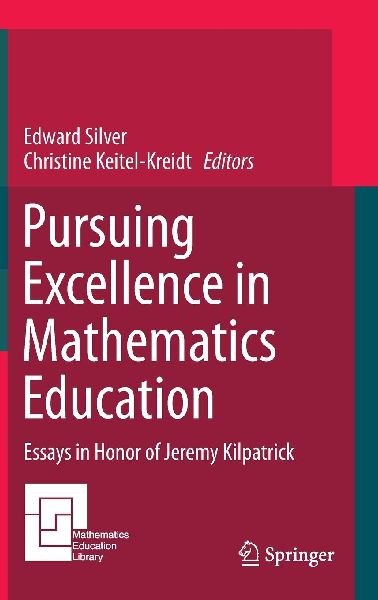
Pursuing Excellence in Mathematics Education
Edward Silver (Hrsg.)
Gebunden, Englisch, 2 Ausgaben
ab 53,49 €
Ähnliche Titel

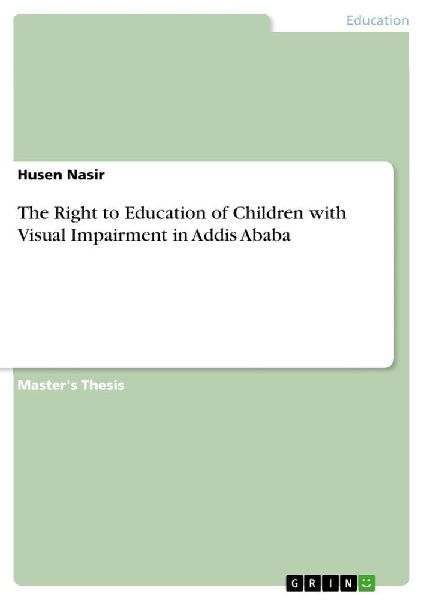
The Right to Education of Children with Visual Impairment in Addis Ababa
Husen Nasir
Kartoniert, Englisch
42,95 €


Bewertungen
Zu diesem Titel gibt es noch keine Bewertung. Bewerten kann, wer ihn bei uns gekauft hat.
So prüfen wir Bewertungen
Eine Bewertung kann bei uns nur abgeben, wer den Titel über sein Kundenkonto bei uns gekauft hat. Jede Bewertung ist fest mit der zugehörigen Bestellung verknüpft; anders kommt sie technisch gar nicht zustande. Deshalb trägt jede angezeigte Bewertung den Hinweis „Verifizierter Kauf". Wir zeigen positive wie negative Bewertungen und löschen nur bei Rechtsverstößen. Für Bewertungen gibt es keine Gegenleistung.
235,39 €Voraussichtlich 1. bis 3. Dez.